
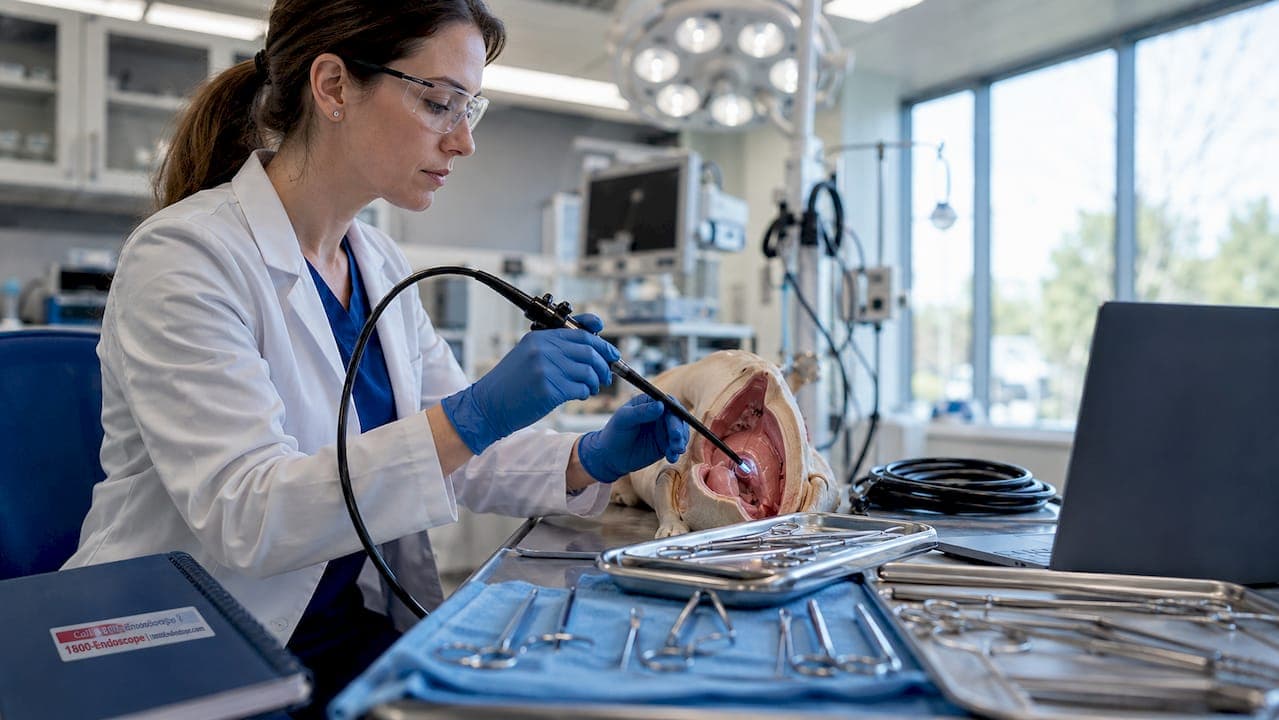
Endoscopes are defined as optical inspection instruments that give quality assurance professionals direct visual access to internal surfaces, channels, and cavities that no external check can reach. Understanding how endoscopes aid QA is the first step toward closing the gap between surface-level inspection and true contamination control. A 2026 study of 540 endoscopes found that combined visual and ATP inspection achieved a pass rate of 99.44–100%, compared to 89.44–94.44% for ATP testing alone. That gap represents real risk: missed debris, hidden damage, and potential patient or product harm. Standards like ANSI/AAMI ST91:2021 and IEC 60601-2-18 now treat internal inspection as a mandatory element of any credible QA program.
How endoscopes aid QA in veterinary and industrial inspection
The core benefit of endoscopes in quality assurance is visibility. External checks confirm surface condition. Internal inspection confirms channel integrity, debris presence, and structural damage that would otherwise go undetected until a failure occurs.
Internal channel damage is the primary reservoir of bioburden in reprocessed scopes. ATP bioluminescence testing and external visual checks both miss it consistently. A 2026 surveillance study found a 43.75% microbiological failure rate linked to improperly maintained irrigation connecting tubes. That number reflects what happens when QA programs rely on external observation alone.
Borescopes and videoscopes give QA teams a direct view inside working channels, biopsy ports, and air/water passages. Scratches, debris accumulation, and channel wall damage become visible in real time. This matters equally in veterinary clinics inspecting flexible gastroscopes and in industrial facilities checking pipe welds or turbine bores.
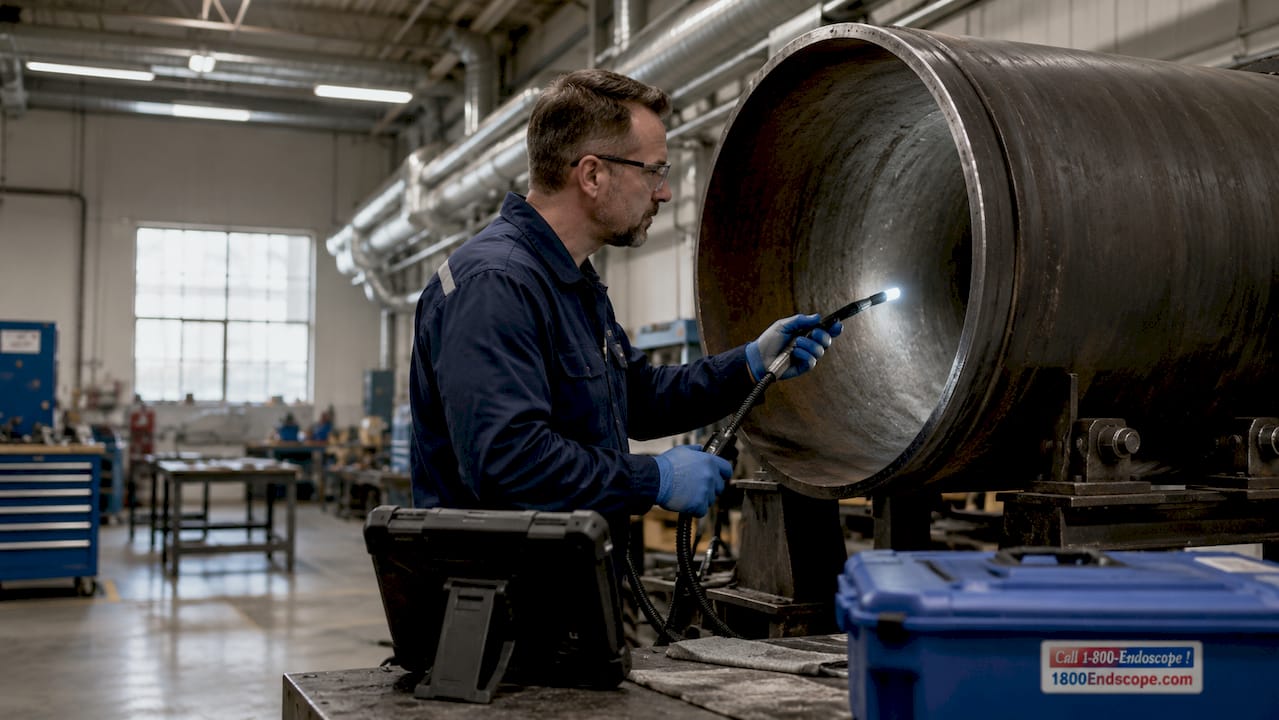
AI-assisted internal inspection technology takes this further. AI inspection revealed scratches and debris that trained technicians had previously missed during manual review. The result was improved compliance, reduced repair costs, and greater technician confidence in the process.
Pro Tip: Document every internal inspection with timestamped video or still images. This creates an audit trail that satisfies ANSI/AAMI ST91:2021 documentation requirements and gives your team objective evidence during compliance reviews.
The role of endoscopes in quality control also extends to operational efficiency. Objective single-operator measurement tools that incorporate endoscopic visualization save approximately 34 seconds per measurement and eliminate the need for a second technician. In high-volume facilities, that adds up to meaningful time savings across a full inspection shift.
How do endoscopes integrate with other QA tools and protocols?
Endoscopes do not replace other QA methods. They complete them. ATP bioluminescence testing measures organic residue but cannot locate where that residue originates. Visual channel inspection with a borescope identifies the exact location of debris or damage. Together, the two methods achieve near-perfect cleanliness verification.
The "golden hour" rule governs how quickly cleaning must begin after a procedure. Delayed cleaning beyond 60 minutes after scope use allows biofilm to form on internal surfaces. Once biofilm establishes, standard reprocessing protocols often fail to remove it fully. Documenting the post-use time, known as POUT timing, is a direct compliance requirement under high-performing QA programs.
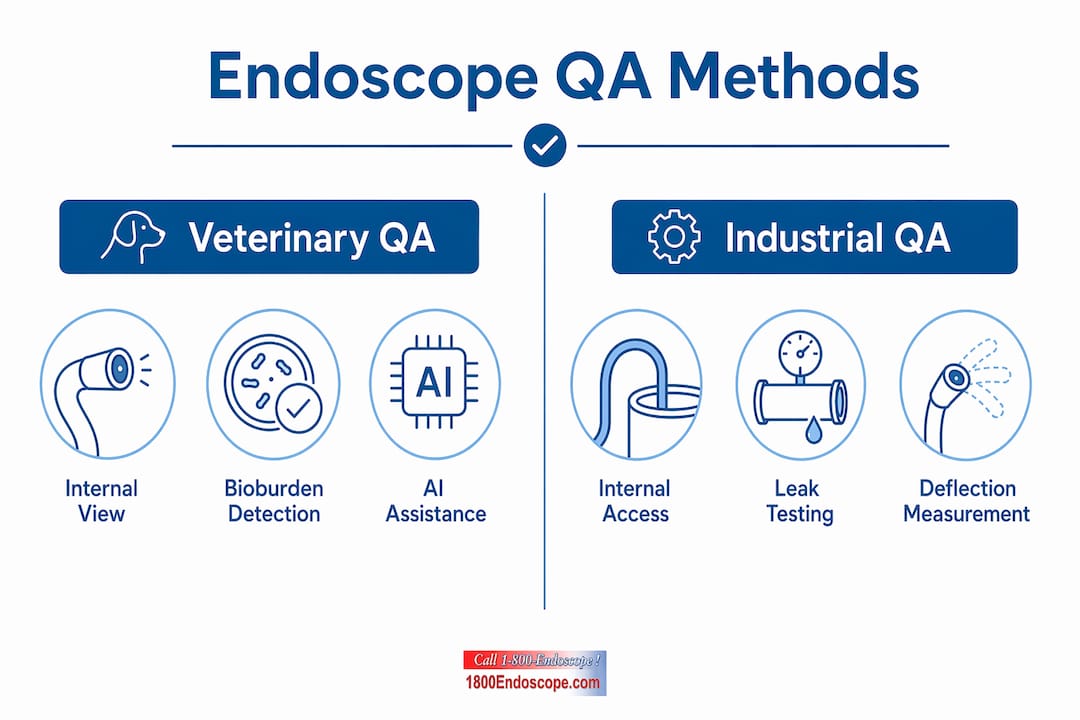
Leak testing sits at the front of every reprocessing cycle under ANSI/AAMI ST91:2021. Leak testing before every cycle acts as the primary gatekeeper for instrument longevity. Fluid invasion through a compromised seal destroys internal components and can result in multi-thousand-dollar rebuilds. Skipping this step to save time is one of the most expensive decisions a QA team can make.
| QA method | What it detects | What it misses |
|---|---|---|
| External visual check | Surface soiling, external damage | Internal channel debris, wall scratches |
| ATP bioluminescence | Organic residue levels | Location and source of contamination |
| Borescope/videoscope | Internal channel damage, debris | Organic residue quantity |
| Leak testing | Seal integrity, fluid invasion risk | Contamination type or location |
Pro Tip: Run quarterly preventive leak checks on all scopes, even those that pass daily tests. Periodic leak testing identifies wear patterns before they become catastrophic failures, reducing unplanned downtime and repair costs.
Bending angle measurement devices add another objective layer. When a scope's deflection range drops below specification, internal cables or angulation wires are wearing. Catching this early through routine measurement prevents the kind of sudden mechanical failure that sidelines equipment for weeks.
What practical steps ensure effective endoscope use in QA workflows?
A repeatable protocol is the foundation of effective endoscopic QA. Without it, inspection quality varies by technician, shift, and workload pressure. The steps below apply to both veterinary and industrial settings, with minor adaptation for scope type and regulatory environment.
- Prep the scope before inspection. Confirm the light source is functioning, the insertion tube is free of visible external damage, and the working channel is clear. Review endoscope prep best practices before establishing your facility's protocol.
- Perform leak testing first. Run the leak test before any cleaning or reprocessing step. A failed leak test means the scope goes to repair, not to the next patient or inspection job.
- Conduct internal channel inspection. Pass a borescope or use the scope's own imaging system to inspect working channels, biopsy ports, and air/water passages. Record findings with timestamped images or video.
- Run ATP bioluminescence testing. Use ATP results alongside visual findings. A channel that looks clean but fails ATP testing needs re-cleaning. A channel that passes ATP but shows visible debris needs mechanical removal.
- Document everything in real time. Record POUT timing, inspection findings, reprocessing steps, and technician identity. This documentation satisfies competency evaluation requirements under ANSI/AAMI ST91 and IEC 60601-2-18.
Staff training determines whether this protocol holds under pressure. Competency evaluations are required at hire, annually, and after any process breach. Written SOPs must reflect current standards. Hands-on training with actual internal inspection builds the kind of technician confidence that translates into consistent compliance, not just test-day performance.
Equipment selection also shapes outcomes. A 6mm flexible videoscope suits veterinary airway and gastrointestinal inspection. A rigid borescope with a 4mm insertion tube works for industrial weld and bore inspection. Choosing the wrong scope for the application produces poor image quality and unreliable findings. Review endoscopic equipment basics to match scope specifications to your specific inspection tasks.
Routine audit closes the loop. Track pass/fail rates by technician, scope model, and inspection type. Patterns in the data reveal training gaps, equipment wear, and protocol weaknesses before they become compliance failures.
What are the challenges of implementing endoscope-based QA?
Technician resistance is the most common obstacle. Introducing internal visual inspection adds a step to an already demanding workflow. Staff who have relied on ATP testing alone often view borescope inspection as redundant. Hands-on training that shows technicians what they have been missing changes that perception quickly.
- Workflow disruption: Adding inspection steps slows throughput initially. The solution is sequencing, not elimination. Leak testing and internal inspection run in parallel with other reprocessing steps when protocols are designed correctly.
- Equipment cost: Quality borescopes and videoscopes represent a real upfront investment. The cost-benefit calculation shifts when you factor in the price of a single scope rebuild, which can reach tens of thousands of dollars, against the cost of the inspection tool that prevented it.
- Documentation burden: Logging POUT times, inspection results, and reprocessing steps manually creates paperwork fatigue. Digital logging tools integrated into existing facility management systems reduce this burden without sacrificing the audit trail.
- Regulatory variation: Veterinary facilities and industrial inspection firms operate under different regulatory frameworks. ANSI/AAMI ST91:2021 governs medical endoscope reprocessing. Industrial NDT borescope inspection follows sector-specific standards. Protocols must reflect the correct framework for each setting.
"Even advanced inspection technology cannot replace thorough manual cleaning. Quality assurance is a system involving protocol, training, and evaluation working together." — Endoscope Reprocessing Best Practices
Adapting to inspection volume is a practical challenge that rarely gets discussed. A small veterinary clinic processing three scopes per day has different protocol needs than an industrial facility inspecting 50 components per shift. The core steps remain the same. The documentation system, staffing model, and equipment selection scale to match volume.
Key Takeaways
Endoscopes deliver quality assurance results that no single alternative method can match, because they combine internal visibility, objective measurement, and real-time documentation into one inspection step.
| Point | Details |
|---|---|
| Combined inspection wins | Pairing borescope inspection with ATP testing achieves 99.44–100% pass rates versus 89.44–94.44% for ATP alone. |
| Leak testing is non-negotiable | ANSI/AAMI ST91:2021 requires leak testing before every reprocessing cycle to prevent costly fluid damage. |
| Golden hour matters | Starting cleaning within 60 minutes of scope use prevents biofilm formation and reduces reprocessing failures. |
| Training drives compliance | Competency evaluations at hire, annually, and after process breaches keep QA programs consistent and audit-ready. |
| Match scope to application | Selecting the right borescope or videoscope for the specific inspection task directly determines image quality and finding reliability. |
What I've learned from watching QA programs succeed and fail
The facilities that get endoscopic QA right share one trait: they treat internal inspection as a standard step, not an optional add-on. The ones that struggle treat it as something they will implement after the next budget cycle or the next audit finding.
I've watched teams adopt AI-assisted internal inspection and immediately identify damage they had been missing for months. The reaction is never "we should have done this sooner." It's usually closer to concern about what passed through undetected. That discomfort is productive. It drives the protocol changes that actually stick.
The technology is not the hard part. Borescopes and videoscopes are mature tools. The hard part is building a culture where every technician understands why internal inspection matters and takes ownership of the documentation. Facilities that invest in veterinary sterilization protocols and industrial inspection training see measurable reductions in repair incidents and extended equipment life within the first year.
AI and automation will expand the role of endoscopic inspection in QA over the next several years. Automated image analysis will flag anomalies faster than manual review. But the underlying principle stays the same: you cannot manage what you cannot see. Endoscopes make the invisible visible. Everything else follows from that.
— Endoscope
Endoscopic inspection tools for your QA program
QA professionals who want to move from external-only inspection to full internal verification need equipment that matches their specific application.
1800endoscope carries a broad selection of portable videoscopes, rigid borescopes, and flexible endoscopes designed for both veterinary and industrial inspection workflows. The borescope inspection catalog includes systems suited for channel inspection, weld verification, and bore examination across a range of insertion tube diameters. For veterinary teams, the veterinary rigid endoscopy catalog covers diagnostic and procedural scopes built for small and large animal work. Every system listed includes compatible accessories, light sources, and recording options to support complete QA documentation from the first inspection.
FAQ
What is the main benefit of using endoscopes in QA?
Endoscopes provide direct internal visualization that external checks and ATP testing cannot deliver. A 2026 study showed combined visual and ATP inspection achieves a 99.44–100% pass rate, compared to 89.44–94.44% for ATP alone.
How do borescopes differ from standard visual inspection in industrial QA?
Borescopes access internal bores, channels, and cavities that are physically unreachable by external inspection. They detect scratches, debris, and structural damage that would otherwise go unnoticed until equipment failure occurs.
What does ANSI/AAMI ST91:2021 require for endoscope QA?
ANSI/AAMI ST91:2021 mandates leak testing before every reprocessing cycle, written SOPs, and competency evaluations at hire, annually, and after any process breach.
How soon after use should endoscope cleaning begin?
Cleaning must begin within 60 minutes of scope use. Delaying beyond this "golden hour" allows biofilm to form on internal surfaces, which standard reprocessing protocols often fail to fully remove.
Can endoscope-based QA reduce repair costs?
Yes. Routine leak testing and internal inspection catch wear and damage before they cause catastrophic failures. Preventing a single major scope rebuild, which can cost tens of thousands of dollars, typically offsets the cost of inspection equipment many times over.