
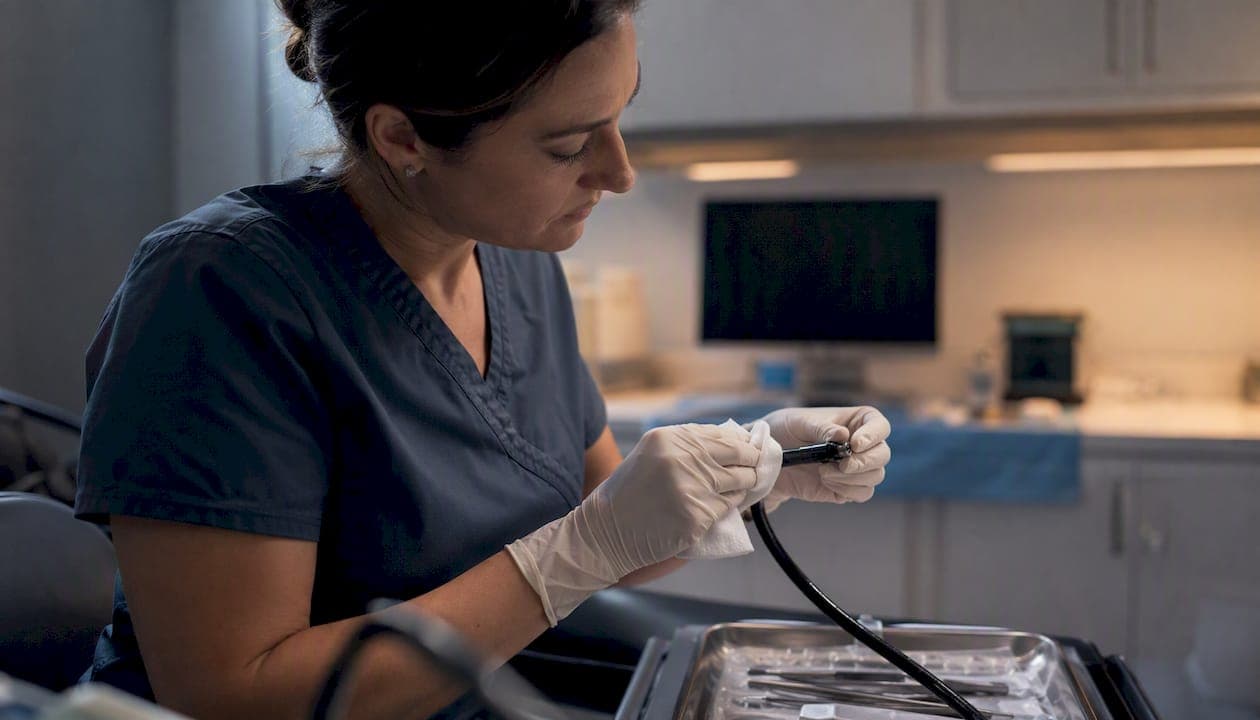
New veterinary and industrial endoscope systems in the U.S. typically run from low-cost basic consumer borescopes up to advanced industrial videoscopes with specialized measurement capabilities, according to market pricing data from OME-TOP Systems. Mid-range veterinary systems, the sweet spot for most clinics, generally land between $1,500 and $5,000. If a repair quote exceeds roughly 40% of what a comparable new unit costs, budget for replacement instead. Below that threshold, and with more than two years of expected service life left, repair usually wins. 1800endoscope's veterinary buying guide breaks down both paths for U.S. clinics.
Table of Contents
- How Much Does It Cost to Replace an Endoscope?
- What Drives the Price of an Endoscope?
- What Are the Ongoing Costs Beyond the Purchase Price?
- When Should You Repair an Endoscope Instead of Replacing It?
- How Do You Calculate Cost-Per-Use and ROI on an Endoscope?
- What Should You Ask a Supplier Before Buying?
- Which Endoscope Should You Buy for Your Clinic or Inspection Work?
- A Publisher's Note on Buying Smart
- Endoscope Buying and Repair Cost, Ready for Quick Reference
- Where to Go for Deeper Product and Pricing Detail
- Get a Working Replacement Without the Repair Guessing Game
- Frequently Asked Questions
How Much Does It Cost to Replace an Endoscope?
The honest answer is: it depends entirely on what you're inspecting and how often. A borescope for occasional engine bay checks costs nothing like a flexible veterinary scope doing daily airway exams. Here's how the categories break down for U.S. buyers in 2026.
A single-operator clinic doing routine ear exams on dogs and cats does not need the same equipment as a mixed-animal practice scoping horses' airways twice a week. The gap between a $1,800 portable USB videoscope and a $12,000 flexible system isn't padding. It reflects real differences in working channel diameter, insertion tube length, and how many procedures the unit can handle before wear becomes a clinical risk.
For clinics leaning toward lower upfront cost, portable systems carry a real financial argument. Comparative procurement analysis shows portable veterinary endoscopes often run 20% to 40% cheaper upfront than tower-based systems, with total cost of ownership running roughly 25% lower over a multi-year horizon. That's not just about the sticker. Towers need more accessories, more calibration, and more floor space, and all of that adds up.
Some quick contrasts worth knowing:
- A basic USB borescope handles visual-only inspection but can't take biopsy forceps or perform therapeutic work.
- A rigid veterinary scope costs less than a comparable flexible one but can't navigate curved anatomy the way a flexible insertion tube can.
- Equine scopes cost more mainly because of length, not sensor quality. A 3-meter insertion tube demands sturdier internal wiring than a 1-meter unit.
What Drives the Price of an Endoscope?
Six or seven specs decide most of the price gap between a $2,000 unit and a $12,000 one. Knowing which ones actually matter for your use case keeps you from overpaying for features you'll never touch.
- Outer diameter: Ranges from about 2.2mm for ultra-fine pediatric or small-exotic work up to 5.8mm or larger for equine bronchoscopy, per SioMedical's veterinary selection guidelines. Smaller diameters cost more per millimeter because manufacturing tolerances get tighter.
- Working channel size: A 2.0mm channel is the practical floor for passing basic interventional tools; 2.8mm to 3.0mm is preferred for biopsy forceps and foreign-body retrieval in larger animals.
- Articulation range: More directional control (up/down/left/right vs. two-way only) adds mechanical complexity and cost.
- Camera resolution: HD sensors cost more than standard-definition but pay off in diagnostic clarity, especially for tissue assessment.
- Light source: LED sources last longer and cost more upfront than halogen; they reduce replacement frequency over the scope's life.
- Materials and sealing: Higher IP-rated waterproofing for sterilization cycles adds to the base price.
- Warranty and support tier: A 2-year warranty with U.S.-based support costs more than a 90-day limited warranty from an offshore-only seller.
Pro Tip: Don't chase overall diameter at the expense of working channel size. A slightly thicker scope with a 2.8mm channel will handle more therapeutic procedures over its life than a thinner one that can only look, not treat.
What Are the Ongoing Costs Beyond the Purchase Price?
The unit price is only the entry fee. Recurring expenses over a scope's working life often rival what you paid upfront if you're not planning for them.
- Disposable sterilization consumables (sheaths, wipes, enzymatic cleaners) add small but constant costs per procedure.
- Replacement light sources or batteries typically need swapping every 12 to 24 months depending on usage.
- Spare insertion tubes or probes should be budgeted for as wear items, not emergency purchases.
- Recording media and software licenses for HD video storage add modest annual fees.
- Calibration and preventive maintenance keep image quality consistent and catch problems before they become expensive repairs.
- Staff training time, especially when a clinic upgrades from rigid to flexible scopes, has a real labor cost.
For mid-range systems, a reasonable rule of thumb is 10% to 15% of the unit price per year for parts and training combined. Warranty coverage varies widely: some suppliers offer U.S.-based depot repair with a one-week turnaround, while others ship overseas for service, adding weeks to your downtime.
When Should You Repair an Endoscope Instead of Replacing It?
The math here is simpler than most clinics assume. A repair quote is a good deal only when it buys you meaningful remaining service life, not just a temporary fix.
- Repair if: the quoted repair cost is under 40% of a comparable new unit's price and the scope has more than two years of realistic service life left.
- Replace if: repair cost exceeds 40% to 50% of replacement price, or if the equipment is critical to daily throughput and any downtime risks patient care or inspection deadlines.
- Check parts availability first: an older model with discontinued insertion tubes or light source assemblies makes repair a gamble even at a low quoted price.
- Weigh warranty status: a scope still under manufacturer warranty should go back to the original supplier before any third-party repair is considered.
- Factor clinical or inspection risk: a scope failing mid-procedure carries a cost that goes beyond the repair invoice.
1800endoscope's videoscope troubleshooting guide walks through common fault patterns that help you diagnose before you call for a quote.
Pro Tip: Before committing to a replacement, confirm your existing biopsy forceps, valves, and light source cables are compatible with the new model. Mismatched accessories can add hundreds of dollars back onto a "cheaper" replacement.
How Do You Calculate Cost-Per-Use and ROI on an Endoscope?
A $6,000 flexible scope used for 300 procedures a year over five years costs about $4 per procedure in depreciation alone, before you add maintenance. That's the kind of math that turns an intimidating sticker price into a manageable budget line.
- Start with purchase price divided by expected lifespan in years to get annual depreciation.
- Add annual maintenance (use the 10 to 15% rule from the accessories section above).
- Divide the total annual cost by estimated procedures per year to get cost-per-procedure.
- Add downtime cost: if a clinic loses $200 in daily revenue while a scope is out for repair, multiply by expected annual downtime days and fold that into your total.
The payback period on the new purchase, once you factor in fewer downtime days and higher procedure capacity, often lands inside 18 to 24 months for a busy clinic.
What Should You Ask a Supplier Before Buying?
A few sharp questions before you sign a purchase order save you from expensive surprises six months in.
- Is this scope compatible with the biopsy forceps, valves, and light sources you already own?
- How readily available are spare insertion tubes and replacement parts, and from where are they shipped?
- What's the warranty length, and does it cover parts, labor, or both?
- Is support U.S.-based, and what's the typical repair turnaround time?
- Does the supplier offer training on the new unit, or is that an added cost?
- Ask for an itemized total cost of ownership, not just a unit price, plus any available bulk or clinic discounts.
1800endoscope's endoscopic equipment basics guide is a useful starting point for procurement teams building out a comparison sheet before requesting quotes.
Which Endoscope Should You Buy for Your Clinic or Inspection Work?
For clinics needing a low-cost entry point, a portable USB videoscope covers routine otoscopy and general visual exams without the investment of a full tower system. For practices doing airway or GI work regularly, a flexible system with a larger working channel makes more sense despite the higher price tag. Equine and large-animal practices need the extended insertion length that only dedicated large-animal scopes provide.
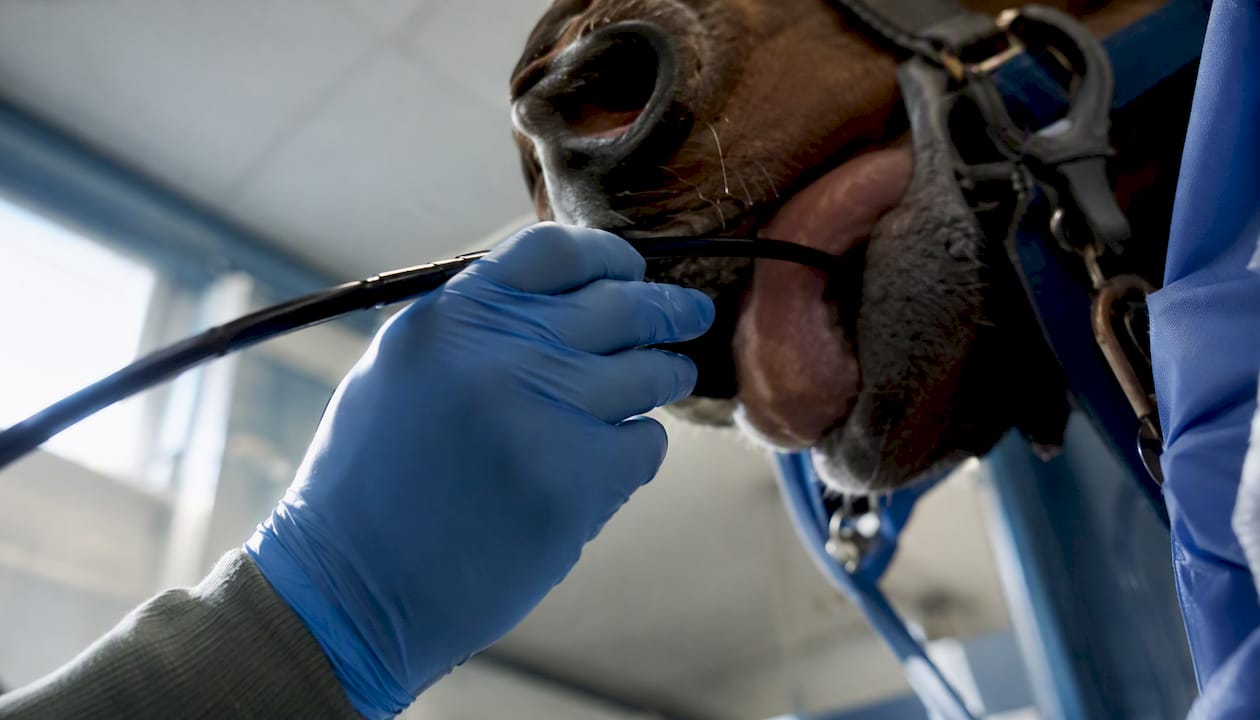
1800endoscope's borescope catalog covers the industrial and entry veterinary end of that spectrum, while the PVSM6150 portable airway inspection system is a concrete example of a 6mm, SD-card recording unit priced for clinics that need a working replacement now, not a custom build in three months. U.S.-based support, published warranty terms, and a published buyer's guide make it easier to compare against whatever quote you're currently sitting on.
A Publisher's Note on Buying Smart
The clinics that come out ahead treat scope purchases as a five-year cost problem, not a one-time invoice. If you need a tailored quote, 1800endoscope's FAQ and support page is the fastest way to get clinic-specific answers.
Endoscope Buying and Repair Cost, Ready for Quick Reference
Repair only makes financial sense when the cost stays under roughly 40% of a comparable new unit's price and meaningful service life remains.
| Point | Details |
|---|---|
| Know your price band | New units range from $100 for basic borescopes to $20,000+ for equine flexible scopes. |
| Use the 40% rule | Repair if cost is under 40% of replacement price with 2+ years of useful life left. |
| Budget for the extras | Set aside 10% to 15% of unit price annually for parts, consumables, and training. |
| Prioritize working channel | A 2.8mm to 3.0mm channel matters more than shaving a millimeter off diameter for therapeutic work. |
| Compare suppliers directly | 1800endoscope offers U.S.-based support, published warranties, and a buyer's guide for clinics comparing new units against repair quotes. |
Where to Go for Deeper Product and Pricing Detail
- Veterinary Endoscope Cost: A U.S. Clinic Buying Guide
- Borescope Endoscope Catalog
- Animal Endoscopy Troubleshooting Guide
Get a Working Replacement Without the Repair Guessing Game
If you're staring down a repair quote that's creeping close to half of what a new unit costs, 1800endoscope gives you a straight path to a working replacement instead of another round of diagnostics and waiting. You get published specs, clear warranty terms, and U.S.-based support, not a vague estimate from an overseas repair shop with a three-week turnaround.
For clinics that need something running this week, the PVSM6150 portable airway inspection system is priced for exactly that situation: a 6mm scope with SD card recording that doesn't require a capital approval process to justify. Larger practices scoping horses or performing rigid procedures can check the veterinary rigid endoscopy catalog for options built around longer insertion lengths and sterilization compatibility. Browse the current lineup, compare it against your repair quote, and request pricing directly from the product page.
Frequently Asked Questions
What is a reasonable endoscope repair cost before I should just replace the unit?
If the repair estimate comes in above roughly 40% to 50% of what a comparable new scope costs, replacement is usually the better financial move, especially if the unit is more than four or five years old.
Do maintenance contracts for endoscopes actually save clinics money?
They can, particularly for clinics running high procedure volumes, because scheduled maintenance catches wear issues before they become expensive repairs.
What's the typical turnaround time for endoscope repair services in the U.S.?
Turnaround varies by supplier and issue complexity. U.S.-based depot repair often runs faster than sending a unit overseas, where round-trip shipping alone can add several weeks to the timeline.
Is it cheaper to buy a portable videoscope than a traditional tower system?
Generally yes. Portable systems tend to run 20% to 40% less upfront than tower-based setups, with lower total cost of ownership over several years once accessories and calibration needs are factored in.
How much should a mid-range veterinary endoscope cost?
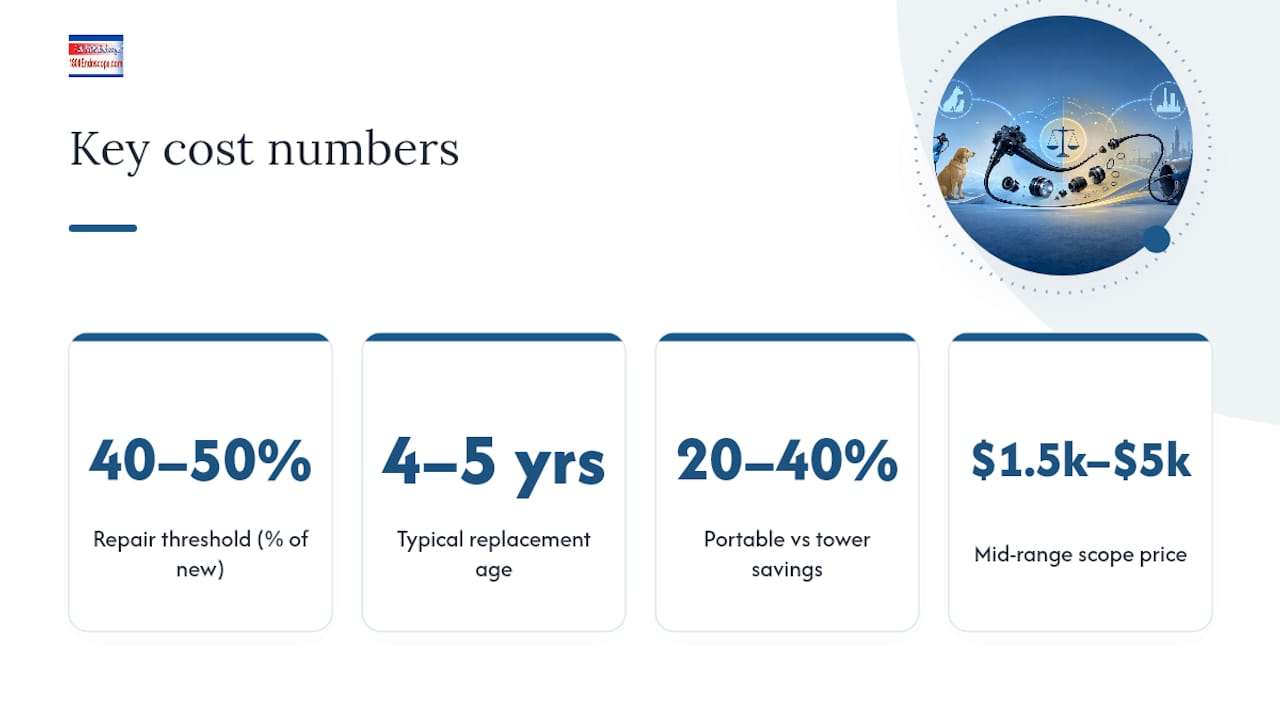
Most mid-range systems for small-animal and general veterinary use fall between $1,500 and $5,000, depending on working channel size, camera resolution, and articulation range.