
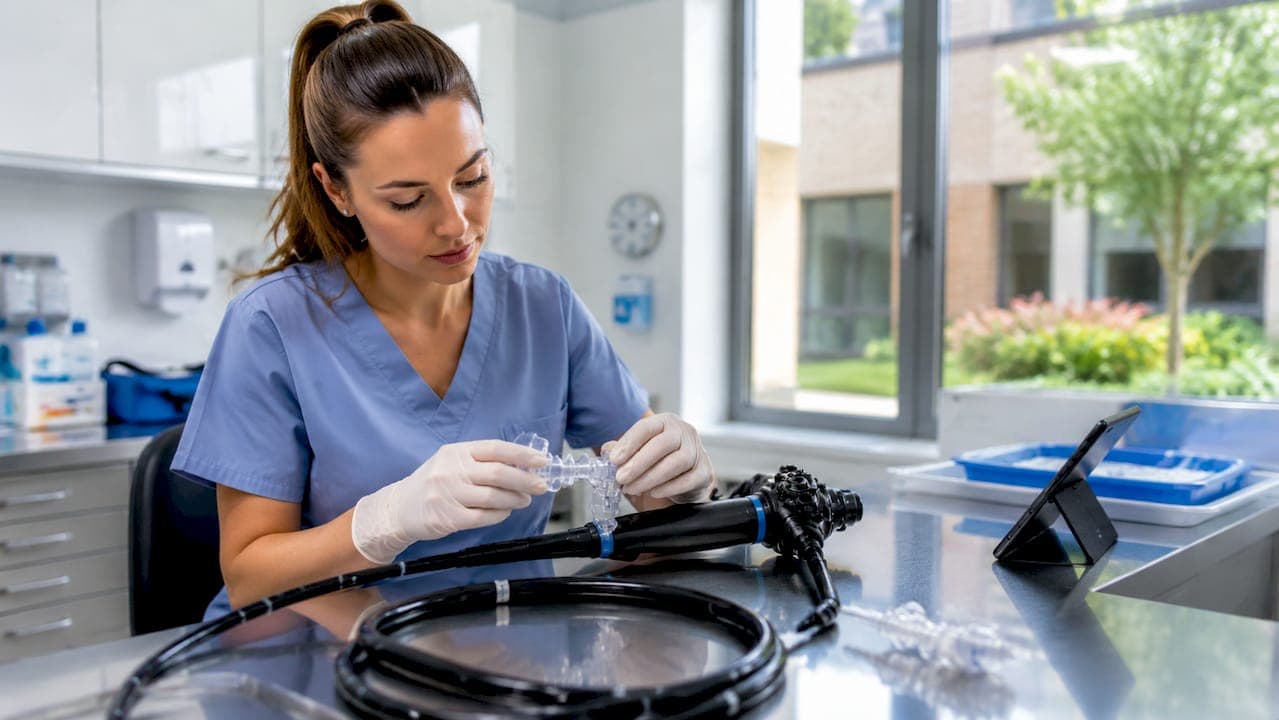
Valves in endoscopic systems are the primary control interface for managing suction, air, and water flow during diagnostic and surgical procedures in both human and veterinary medicine. Without functioning valves, clinicians lose the ability to clear the lens, insufflate tissue, remove fluid, or pass instruments through the working channel. Endoscopic suction valves are Class II devices regulated under FDA 21 CFR 876.1500, which means they require demonstrated substantial equivalence for market clearance. The Society of Gastroenterology Nurses and Associates (SGNA) sets performance standards for valve reprocessing that apply directly to both medical and veterinary endoscopy teams. Understanding valve function, failure, and replacement is not optional. It is the foundation of safe, effective endoscopy.
What types of valves are used in endoscopic systems?
Endoscope valves are the mechanical components that sit atop the control body and give the clinician direct command over fluid and gas pathways. Each valve type serves a distinct function, and failure of any one of them disrupts the entire procedure.
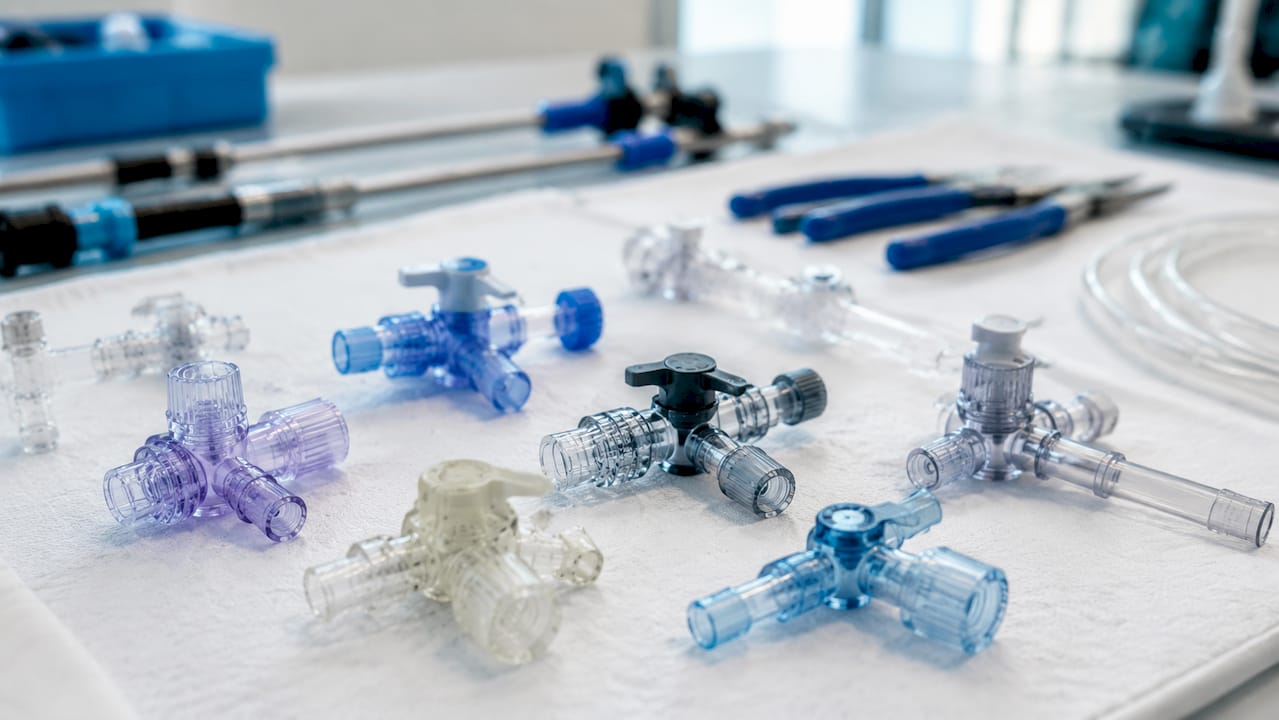
The four core valve types found across medical and veterinary endoscopes are:
- Air/water valves. These two-position buttons control lens washing and tissue insufflation. Pressing halfway delivers air; pressing fully delivers water. They are the most frequently actuated valves in any procedure and therefore the first to wear out.
- Suction valves. A single-press button that opens the suction channel to remove fluid, blood, or debris from the field. In veterinary gastroscopy, suction valves handle significantly more particulate matter than in human GI procedures, which accelerates wear.
- Biopsy valves. Rubber or silicone caps that seal the instrument channel when no tool is inserted. They prevent air loss and fluid backflow while allowing forceps, cytology brushes, or snares to pass through with minimal resistance.
- Disposable valve sets. Pre-packaged kits that include air/water, suction, and biopsy valves in a single-use format. Single-use valve kits eliminate manual cleaning and reprocessing, reducing cross-contamination risk in both human and veterinary settings.
Each valve type connects to a specific channel within the endoscope's internal tubing architecture. A blocked or degraded air/water valve causes lens fogging and poor visualization. A failing suction valve leaves fluid pooled in the field. A torn biopsy valve allows air to escape, collapsing the working channel and preventing instrument passage. Knowing which valve controls which pathway lets you diagnose procedural problems at the source rather than guessing.
Pro Tip: Label your valve replacement logs by valve type, not just by scope serial number. When a specific valve type fails repeatedly on the same scope, the problem is often channel-specific wear or an incompatible cleaning brush, not random component failure.
How long do valves in endoscopic systems typically last?
Valve service life is finite and predictable. Standard air/water valve assemblies are rated for approximately 100 usage cycles, which translates to roughly 5–7 weeks in a high-volume GI unit running 15–20 procedures per week. That figure gives you a concrete replacement schedule rather than a reactive one.
Two forces shorten valve life simultaneously: mechanical wear and chemical degradation. Every button press compresses the internal O-rings and return spring. Every reprocessing cycle exposes those same components to high-level disinfectants. Exposure to high-level disinfectants accelerates elastomeric seal degradation, meaning the silicone or Viton O-rings lose their sealing ability faster in units that reprocess aggressively. The two failure mechanisms compound each other.
Veterinary endoscopy adds variables that human GI units rarely face. Large animal scopes used for equine airway inspection travel to field locations, face temperature extremes, and encounter more biological debris than clinic-based scopes. That combination pushes valve replacement intervals closer to the low end of the rated cycle count. Reviewing veterinary sterilization practices alongside valve cycle data gives a complete picture of component stress in animal healthcare settings.
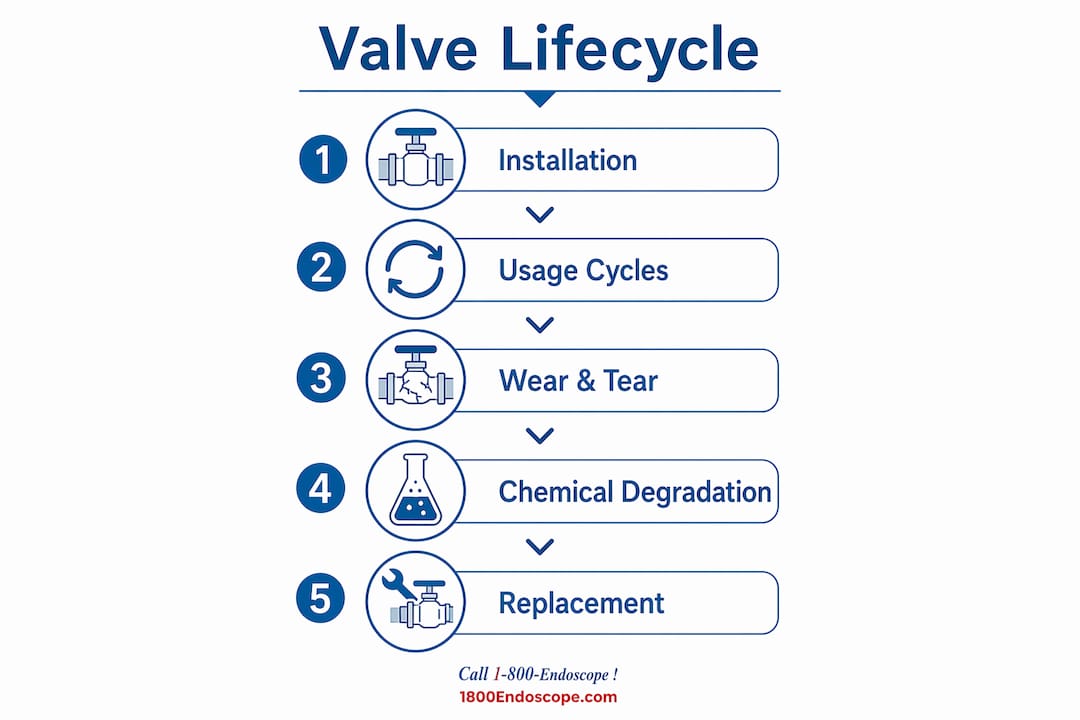
The most reliable way to manage valve life is to track usage cycles per scope, not calendar time. A scope used twice a week lasts far longer between valve replacements than one used ten times a week. Cycle-count logs remove guesswork and prevent the two worst outcomes: replacing valves too early (wasted cost) or too late (procedural failure mid-case).
What are common signs and modes of valve failure?
Valve failure rarely happens without warning. Recognizing the early signs prevents mid-procedure failures and protects patients and animals from contamination risks.
The most common failure symptoms and their root causes are:
- Sluggish or sticky button response. Sluggish button response is the earliest sign of valve degradation, caused by protein deposits or mechanical breakdown of internal O-rings and return springs. Repair technicians consistently identify this as the primary early warning sign.
- Continuous air or water flow. Return springs lose tension after roughly 100 cycles. When spring tension fails, the valve no longer seats correctly, and air or water flows continuously even without button activation.
- Lens fogging during procedures. Fogging indicates the air/water valve is not delivering a clean, directed water jet to the lens. The cause is usually a degraded O-ring that allows partial flow instead of a controlled burst.
- Insufficient suction. A suction valve with a worn seal allows air to bypass the channel, reducing negative pressure and leaving fluid in the field.
- Visible cracks or discoloration on the valve body. Chemical attack from repeated disinfectant exposure causes elastomers to harden, crack, and discolor. Any visible surface change is a replacement indicator.
One critical user error accelerates damage: pushing harder on a sticky button. Repair technicians note that forcing a sluggish valve compounds internal damage rather than clearing the obstruction. The correct response to a sticky button is removal and inspection, not increased force. Clinicians who recognize this distinction protect both the valve and the scope's internal channel from secondary damage.
What innovations in disposable valve technology improve infection control?
Single-use valve technology has changed the infection control calculus for endoscopy units. Integrated disposable valve systems lower cross-contamination risk while reducing preparation time between cases. That dual benefit is particularly valuable in high-throughput clinical environments and in veterinary practices where turnaround between large animal cases is time-sensitive.
The key engineering advances in current disposable valve designs include:
- One-way backflow prevention valves. Backflow valves integrated into disposable sets prevent fluid contamination from traveling upstream into the water supply system. This is a direct infection control mechanism, not just a convenience feature.
- Lubricant-free construction. Reusable valves require periodic lubrication to maintain button feel and O-ring integrity. Single-use designs eliminate that maintenance step entirely, removing a common source of inconsistent reprocessing.
- No re-sterilization requirement. Disposable valve kits are engineered for a single use and must not be re-sterilized. Attempting to reprocess single-use valves degrades the polymer components and defeats the infection control purpose.
- Reduced environmental footprint. Disposable gas water valves designed for CO2 insufflation reduce indoor CO2 emissions during procedures, offering an environmental benefit alongside the clinical one.
- Broad model compatibility. Current disposable valve sets are engineered to fit common endoscope platforms across medical and veterinary applications, reducing the need to stock multiple valve SKUs for different scopes.
The shift to single-use valves does not eliminate the need for scope maintenance. The internal channels, insertion tube, and control body still require full reprocessing after every case. What disposable valves remove is the most failure-prone and contamination-prone component from the reprocessing workflow. That targeted reduction in reprocessing burden improves consistency across technicians and shifts.
How can professionals maintain and troubleshoot valves to maximize safety?
Valve maintenance is a defined process, not a general habit. Following a structured approach extends component life and catches failure before it affects a procedure.
- Inspect cleaning brushes before every use. Damaged cleaning brushes create microscopic scratches in valve channel inlets. Those scratches anchor biofilm, which accelerates valve failure and creates contamination risk. Replace brushes at the first sign of fraying or bent bristles.
- Test button tactile response before each procedure. Press each valve button fully and release. The return should be immediate and consistent. Any hesitation, grinding, or partial return is a replacement indicator, not a "wait and see" situation.
- Log cycle counts per scope, per valve type. A simple spreadsheet tracking procedure date, scope ID, and valve type used gives you the data to replace valves proactively at 80–90 cycles rather than reactively at failure.
- Use only manufacturer-compatible components. Valve geometry varies between endoscope platforms. An incompatible valve may seat incorrectly, creating leaks or button misalignment that damages the scope's control body over time.
- Maintain tubing alongside valves. Valves connect to internal tubing that carries air, water, and suction. Degraded tubing creates back-pressure that stresses valve seals. Reviewing endoscope sterilization steps for tubing care alongside valve maintenance keeps the entire fluid pathway reliable.
Pro Tip: Set a calendar alert at 80 cycles per scope rather than waiting for the 100-cycle rating. The last 20 cycles before rated end-of-life carry the highest failure risk. Replacing slightly early costs far less than a mid-procedure valve failure.
Key takeaways
Valves in endoscopic systems control every fluid and gas pathway that determines procedural success, and proactive cycle tracking combined with proper cleaning technique is the most effective way to prevent failure.
| Point | Details |
|---|---|
| Valve types and functions | Air/water, suction, biopsy, and disposable valve sets each control a distinct pathway critical to visualization and instrument access. |
| Service life benchmark | Standard air/water valves are rated for approximately 100 usage cycles, equating to 5–7 weeks in high-volume settings. |
| Dual failure mechanism | Mechanical wear and chemical disinfectant exposure degrade O-rings and return springs simultaneously, shortening valve life. |
| Early failure warning | Sluggish button response is the first sign of valve degradation; forcing a sticky button worsens internal damage. |
| Disposable valve benefit | Single-use valve sets with backflow prevention eliminate reprocessing inconsistency and reduce cross-contamination risk. |
What I've learned from watching valves get overlooked
Valves are the most handled components on any endoscope, and they are consistently the last thing clinicians think about until something goes wrong mid-procedure. I've seen experienced teams troubleshoot image quality, suction pressure, and scope insertion problems for twenty minutes before anyone checks the valve. Nine times out of ten, a sticky suction valve or a degraded air/water O-ring is the source.
The transition to single-use valve sets is the single most practical infection control upgrade available to most endoscopy units right now. The reprocessing burden reduction is real, the backflow prevention is a genuine safety gain, and the consistency across technicians is something no reprocessing protocol can fully replicate. For veterinary practices doing field work with equine or large animal scopes, disposable valves are not just convenient. They are the only way to maintain consistent infection control outside a clinic environment.
Cycle tracking is the practice that separates reactive teams from proactive ones. A log does not need to be complex. A scope ID, a date, and a tally mark per procedure is enough to tell you when you are approaching the 100-cycle threshold. Teams that track cycles replace valves on schedule. Teams that do not replace valves after failures, which is always more expensive and sometimes dangerous.
The animal endoscopy troubleshooting guide at 1800endoscope covers valve-related failure modes in veterinary scopes with the same depth that human GI literature applies to clinical settings. Both audiences benefit from treating valve maintenance as a scheduled discipline rather than a reactive repair.
— Endoscope
Valve solutions and endoscopic systems at 1800endoscope
1800endoscope stocks endoscopic equipment and accessories built for the realities of clinical and veterinary practice, including systems where valve performance directly affects diagnostic outcomes.
The portable airway inspection system at 1800endoscope is a direct-monitor videoscope designed for field and clinic use, where valve compatibility and fluid control matter as much as image quality. The veterinary rigid endoscopy catalog covers suction valve requirements across small and large animal platforms. For teams sourcing replacement valves, valve kits, and compatible accessories, the full endoscope and accessory catalog lists components organized by scope type and application. 1800endoscope serves veterinary clinics, animal health professionals, and medical endoscopy teams who need reliable components without the overhead of large distributor pricing.
FAQ
What is a valve in endoscopy?
A valve in endoscopy is a mechanical component on the endoscope's control body that regulates the flow of air, water, or suction through internal channels. Each valve type controls a specific pathway essential to visualization, fluid removal, or instrument access.
How many valves does a standard endoscope have?
Most flexible endoscopes have three primary valves: an air/water valve, a suction valve, and a biopsy channel valve. Some systems include additional valves for CO2 insufflation or auxiliary water channels.
When should endoscope valves be replaced?
Standard valve assemblies are rated for approximately 100 usage cycles. Proactive replacement at 80–90 cycles prevents mid-procedure failure. Any valve showing sluggish response, continuous flow, or visible cracking should be replaced immediately regardless of cycle count.
Are disposable endoscope valves safe to reuse?
Disposable valve sets are engineered for single use and must not be re-sterilized. Reprocessing single-use valves degrades the polymer components, compromises the backflow prevention mechanism, and defeats the infection control purpose of the design.
Do valve maintenance practices differ between human and veterinary endoscopy?
The core maintenance principles are identical, but veterinary endoscopy introduces additional stress factors including field use, temperature variation, and higher particulate load. These factors push valve replacement intervals toward the lower end of the rated cycle count and make disposable valve sets particularly practical in veterinary settings.