
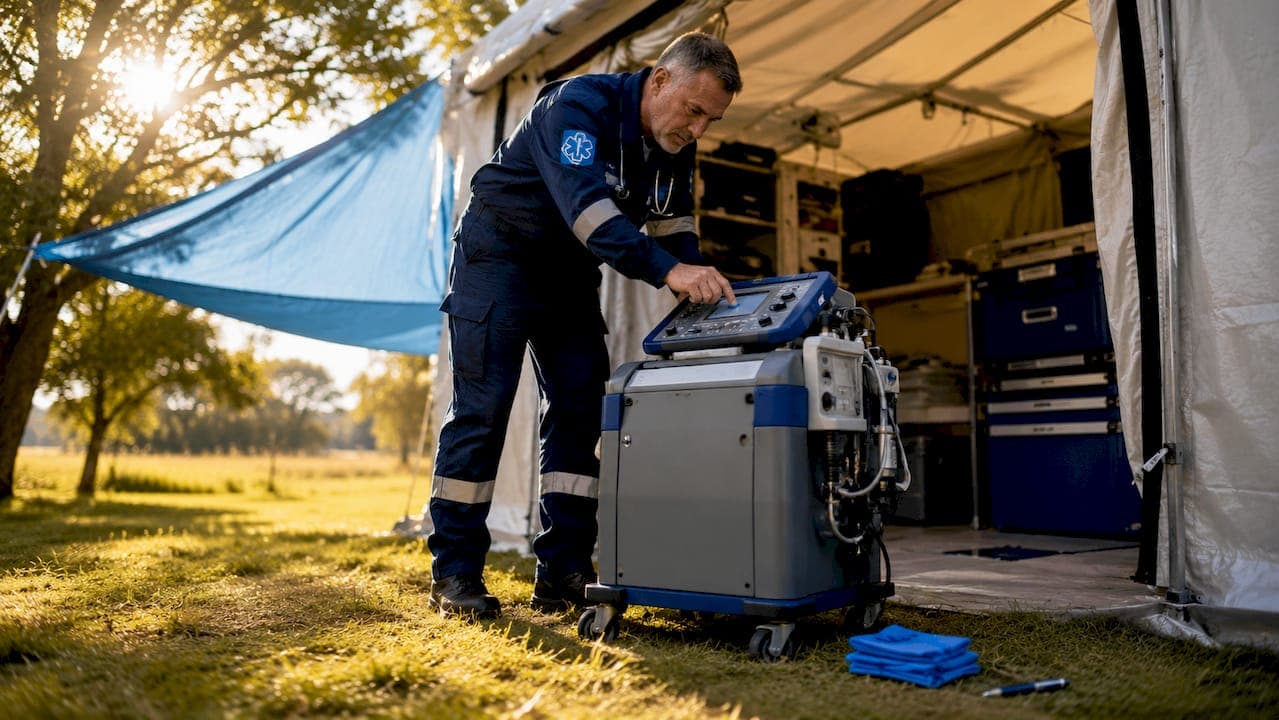
Portable units in field care are specialized diagnostic and treatment systems designed to deliver clinical functionality directly at the point of need, bypassing fixed infrastructure entirely. The role of portable units in field care spans veterinary clinics, industrial inspection sites, disaster zones, and rural outreach programs where permanent facilities are unavailable or impractical. Modern units achieve operational readiness in 15 minutes with a two-person crew, maintaining full climate control and HEPA filtration throughout. That speed changes what is possible in the field. For veterinary and industrial professionals, these systems represent a shift from reactive transport to on-site diagnosis and immediate decision-making.
What technological features enable portable units to work in demanding field environments?
Field-ready portable medical units succeed because of specific engineering choices, not general versatility. Each technology layer addresses a concrete operational constraint.
Climate control and infection prevention are non-negotiable in field care. Mobile triage units maintain 18 air exchanges per hour to minimize cross-contamination. That standard matches many fixed clinical facilities, which means field teams do not sacrifice infection control when they leave a building behind.
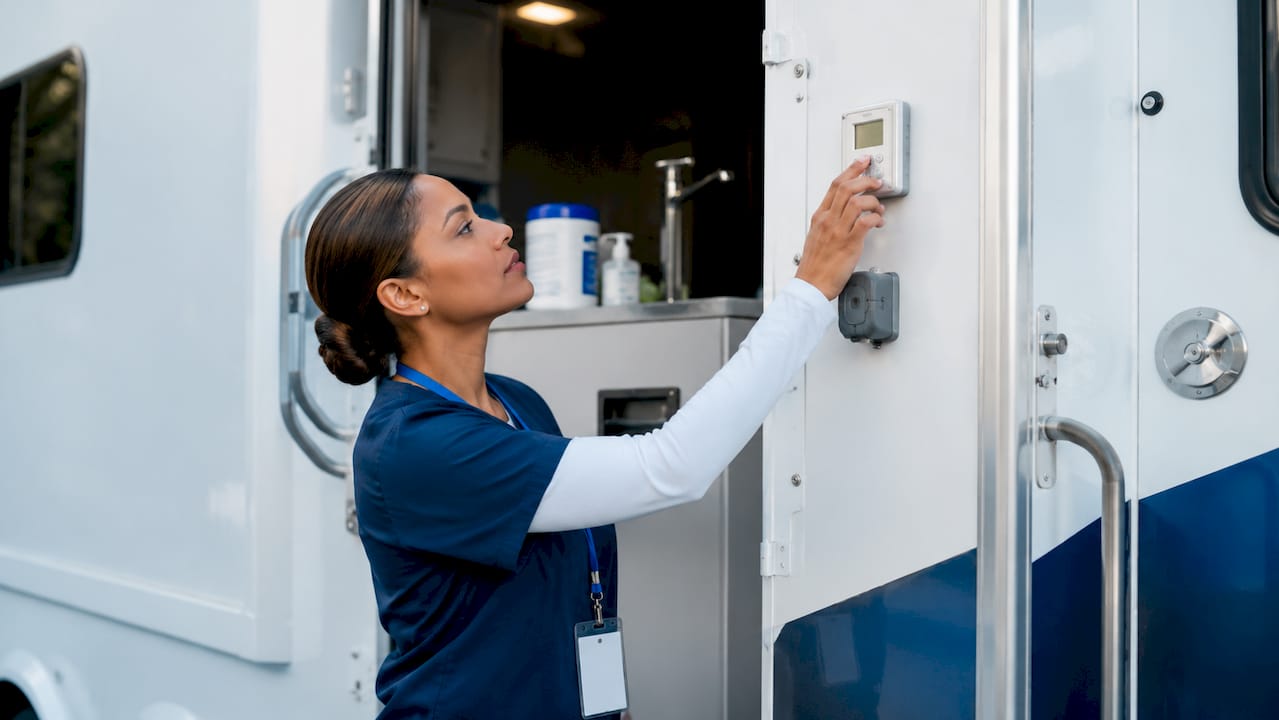
Power supply is the most common failure point in rapid-deploy settings. Solar-compatible refrigeration and hybrid inverters address the vulnerability of traditional diesel generators, which face supply chain disruptions during disasters. Units that combine solar input with battery backup maintain diagnostic functionality even when fuel delivery fails.
Communication integration determines whether field data stays isolated or feeds into a broader care network. Modern portable units support:
- Wi-Fi for local network connectivity within a facility or campus
- Cellular for standard remote data transmission
- Satellite systems for connectivity in areas with no ground infrastructure
That layered approach means a veterinary team in a remote pasture and an industrial inspection crew in a pipeline corridor can both transmit findings in real time.
Compact, multi-role configurations allow a single unit to serve triage, treatment, and recovery functions. Units scale from single-room setups to configurations with up to 11 beds and dedicated nurse stations. Rapid reconfiguration is what makes them viable for both a mass casualty event and a routine large-animal wellness visit.
Pro Tip: When evaluating portable units for field deployment, prioritize hybrid power capability first. A unit with superior diagnostics but unreliable power is less useful than a simpler system that stays online.
How do portable units improve diagnostic and treatment capabilities in the field?
Point-of-care diagnostics are the core value proposition of any portable medical unit. The ability to image, scope, or assess a patient on-site eliminates the delays and risks of transport.
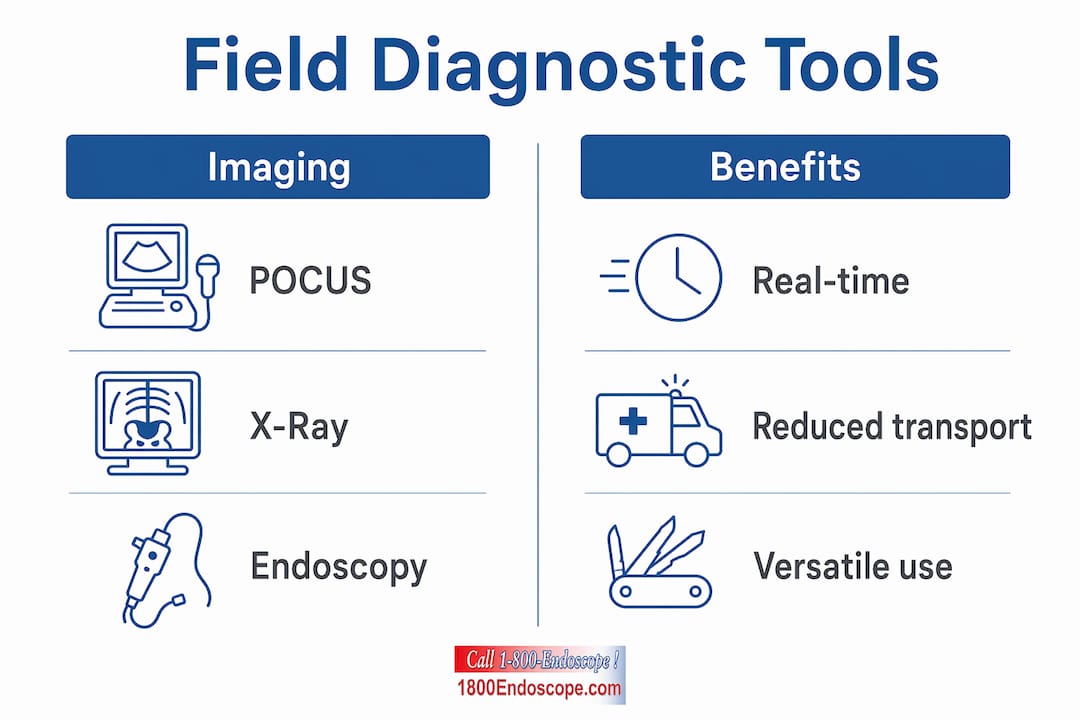
Point-of-care ultrasound (POCUS) is the most widely adopted field diagnostic tool. POCUS bypasses disrupted infrastructure and addresses clinical uncertainty in isolated populations that lack access to high-tech imaging. For a veterinary professional assessing a horse with colic symptoms in a remote paddock, POCUS delivers abdominal imaging without a trailer ride to a referral clinic.
Portable X-ray systems bring imaging directly to the patient, reducing transport costs and time while enabling faster clinical decisions on-site. Flexible workflows built around portable X-ray improve patient safety and expand access to diagnostic services. The tradeoff is radiation management, which is addressed in the next section.
Endoscopy represents one of the most versatile field diagnostic tools available. A portable endoscopy system allows veterinary professionals to perform airway inspections, gastrointestinal evaluations, and reproductive assessments without a fixed procedure room. Industrial professionals use the same class of equipment for pipeline inspection, turbine cavity checks, and structural assessments in confined spaces.
Electronic medical records (EMR) integration closes the loop between field diagnosis and ongoing care. Emergency medical teams integrate POCUS, monitors, and digital radiology into unified EMR systems for efficient field hospital operations. That integration means a field finding does not get lost on a paper form. It enters the patient record immediately and is available to the receiving facility.
The table below compares the primary diagnostic tools used in field care settings:
| Diagnostic tool | Primary field application | Key advantage |
|---|---|---|
| POCUS | Soft tissue and organ imaging | No radiation, real-time results |
| Portable X-ray | Skeletal and thoracic imaging | High-resolution structural detail |
| Endoscopy | Airway, GI, and cavity inspection | Direct visual access to internal structures |
| Digital radiology | Broad imaging with EMR output | Immediate digital record integration |
What operational challenges come with deploying portable units in field care?
Portable units solve access problems, but they introduce a distinct set of operational constraints. Professionals who understand these limits deploy more effectively.
-
Radiation safety limits portable X-ray use. Radiation safety constraints lead field teams to restrict portable X-ray frequency in cramped, non-shielded environments. POCUS fills most of that gap, but skeletal imaging still requires careful protocol management. Field teams must designate controlled zones and use dosimetry monitoring even in temporary setups.
-
Power infrastructure is the most common failure point. Diesel generators face supply chain vulnerabilities that become critical during disasters. Energy-aware units with hybrid power capabilities minimize downtime and maintain diagnostic functionality in unpredictable conditions. Any deployment plan without a backup power strategy is incomplete.
-
Staff expertise determines equipment value. Field hospital success depends on professionalism, adaptability, and specialist integration. A portable endoscope in the hands of an untrained operator produces poor results and potential patient harm. Training programs must be built into any portable unit adoption plan, not added as an afterthought.
-
Environmental and logistic constraints vary by site. Extreme heat degrades battery performance. Dust and moisture compromise optical systems. Veterinary field environments introduce biological contamination risks that require specific cleaning protocols for scopes and sensors.
Pro Tip: Run a tabletop simulation of your field deployment before the first real use. Map every power dependency, communication link, and staff role. Gaps that seem minor in planning become critical failures under operational pressure.
How are portable units applied in veterinary and industrial field care?
Real-world deployments reveal what portable units actually deliver when the theory meets the field.
Veterinary field diagnostics represent one of the most demanding use cases. Large-animal practitioners use remote visual inspection techniques to assess equine airways, reproductive tracts, and gastrointestinal systems without clinic transport. A portable videoscope carried in a field kit replaces a referral appointment that might take days to schedule. Small-animal mobile clinics bring the same capability to underserved rural communities where pet owners have no nearby veterinary facility.
Mobile surgical units (MSUs) extend procedural capacity beyond diagnostics. MSUs improve patient access, reduce wait times, and lower costs compared to conventional operating rooms in rural and austere environments. Their evolution from military field surgery to civilian healthcare delivery demonstrates that portable surgical capability is not a compromise. It is a legitimate care model.
Disaster and mass casualty response is where portable units prove their most critical value. Mobile triage units configured for disaster and pandemic response deploy in rural and remote areas with full clinical capacity. The combination of HEPA filtration, multi-bed configurations, and satellite connectivity means a field hospital can function as a genuine care facility, not just a holding area.
Community health integration determines whether portable units achieve lasting impact. Community health workers and trusted local networks enhance mobile diagnostic deployment success in resource-limited settings. In veterinary contexts, that means partnering with local livestock associations or agricultural extension services to build trust and ensure follow-up care.
Industrial inspection rounds out the application picture. Portable borescopes and videoscopes allow technicians to inspect turbine blades, pipeline interiors, and aircraft engine cavities without disassembly. The portable inspection monitor field guide covers how these systems integrate into non-destructive testing (NDT) workflows. The result is faster inspection cycles, lower downtime, and documented visual records for compliance purposes.
Key Takeaways
Portable units in field care are most effective when power resilience, staff training, and community integration are treated as core requirements, not optional additions.
| Point | Details |
|---|---|
| Speed of deployment matters | Units operational in 15 minutes with two-person crews define the standard for effective field response. |
| Power resilience is non-negotiable | Hybrid inverters and solar compatibility prevent the most common failure point in field deployments. |
| POCUS leads field diagnostics | Point-of-care ultrasound delivers real-time imaging without radiation risk, making it the primary field diagnostic tool. |
| Endoscopy expands field procedures | Portable scopes enable airway, GI, and cavity inspection in both veterinary and industrial settings without fixed infrastructure. |
| Community integration drives outcomes | Trusted local networks and trained staff determine whether portable units achieve lasting diagnostic impact. |
What I've learned from watching portable diagnostics evolve in the field
The conversation around portable units used to center on compromise. Professionals accepted that field diagnostics were inferior to clinic-based care and treated mobile equipment as a stopgap. That framing is now outdated, and I think it is holding some teams back.
The shift I find most significant is the move toward treating portable diagnostics as permanent infrastructure rather than emergency backup. A veterinary practice that deploys a portable endoscopy system for large-animal farm calls is not making a compromise. It is building a service model that a fixed clinic cannot replicate. The same logic applies to industrial inspection teams that carry borescopes to job sites instead of waiting for equipment to come to them.
The technology has caught up to the ambition. Satellite connectivity via systems like Starlink, hybrid power units, and HD video recording on compact scopes have removed most of the practical objections. What remains is a training and adoption gap. Professionals who invest in learning their portable systems deeply, rather than treating them as backup tools, consistently get better diagnostic results.
The next frontier is smart-grid integration. Resilient, energy-aware field systems that treat portable diagnostics as embedded primary care infrastructure will define the next generation of field medicine and industrial inspection. Teams that build those habits now will be ahead when the standards catch up.
— Endoscope
Portable field diagnostics from 1800endoscope
1800endoscope builds portable diagnostic systems for veterinary and industrial professionals who need reliable performance away from fixed facilities. The fully portable 6mm airway inspection system with direct monitor and SD card video recording is designed specifically for field use, delivering HD visual access to airways and cavities without a cart, tower, or external processor. It is one of the most affordable systems in its class. For broader veterinary applications, the veterinary rigid endoscopy catalog covers rigid scope options optimized for field procedures across small and large animals. Both lines are built for professionals who cannot afford equipment downtime in the field.
FAQ
What is the role of portable units in field care?
Portable units deliver clinical diagnostic and treatment capabilities directly at the point of need, eliminating the requirement for fixed infrastructure. They are used in veterinary field work, industrial inspection, disaster response, and rural outreach.
How quickly can a portable medical unit be deployed?
Modern rapid-response mobile medical units are operational within 15 minutes using a two-person crew. That speed makes them viable for both emergency response and planned field operations.
Why is POCUS preferred over portable X-ray in many field settings?
Radiation safety constraints limit portable X-ray use in non-shielded field environments. POCUS provides real-time imaging without radiation risk, making it the default field diagnostic tool in cramped or uncontrolled spaces.
How do portable endoscopes support veterinary field care?
Portable endoscopes allow veterinary professionals to perform airway, gastrointestinal, and reproductive inspections on-site without transporting animals to a clinic. Systems like those available from 1800endoscope are compact enough to carry in a field kit and deliver HD video output for documentation.
What is the biggest operational risk when deploying portable units?
Power infrastructure failure is the most common breakdown point in field deployments. Units with hybrid inverter and solar-compatible power systems maintain diagnostic functionality when diesel fuel supply is disrupted.