
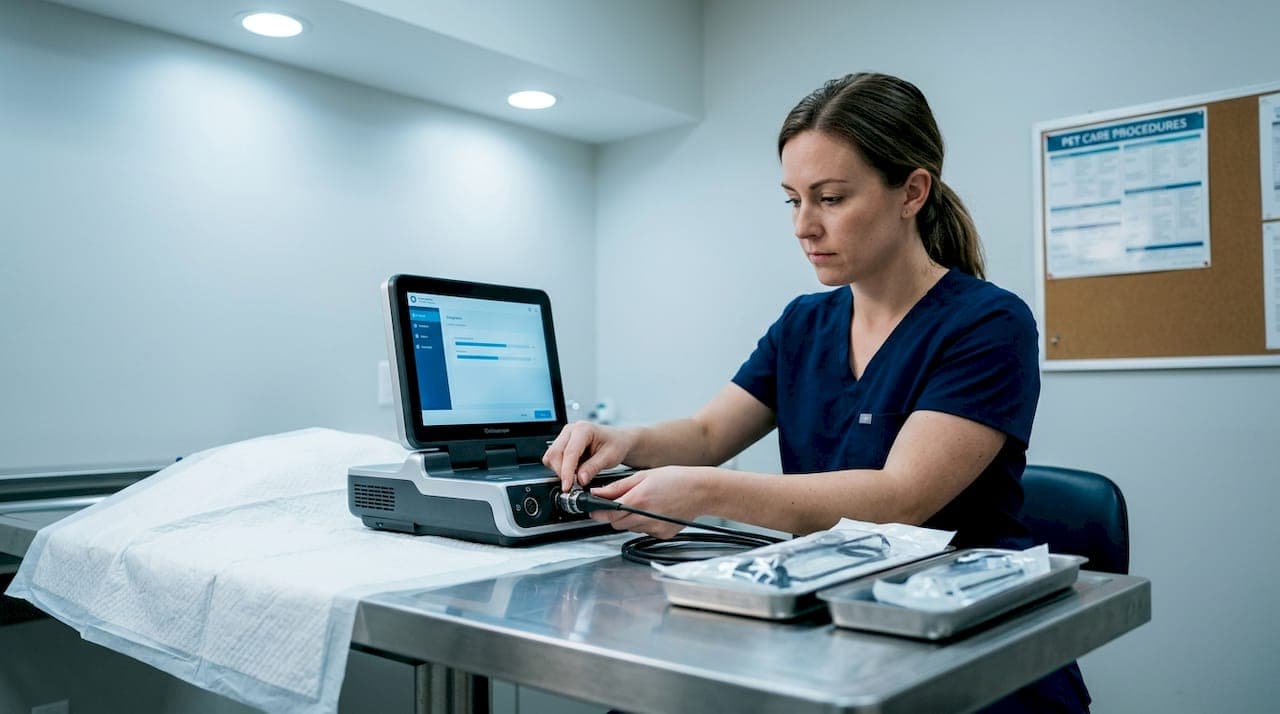
Portable endoscope technology trends 2026 are reshaping diagnostics and inspections far beyond what most professionals expect. The shift is not simply about making devices smaller. In 2026, portability means integrating AI-assisted interpretation, wireless data transmission, and all-in-one hardware into systems that work in a barn, a field inspection site, or a remote clinic with the same reliability as a fully equipped hospital suite. If you work in veterinary medicine or industrial inspection and you have not revisited your endoscope setup recently, the gap between what you own and what is now available may surprise you.
Table of Contents
- Key Takeaways
- Portable endoscope technology trends 2026: the all-in-one shift
- AI and machine learning in portable endoscope diagnostics
- Wireless and decentralized endoscopy beyond traditional settings
- Disposable vs. reusable portable endoscopes in 2026
- Selecting portable endoscope technology in 2026
- My take on where this technology is actually heading
- Explore 1800endoscope's portable systems for your practice
- FAQ
Key Takeaways
| Point | Details |
|---|---|
| All-in-one systems dominate | Integrated 4K UHD units combining camera, LED light, monitor, and recorder reduce setup time and training costs. |
| AI aids but does not replace | AI improves lesion detection and inspection accuracy, but external validation gaps mean human review remains critical. |
| Decentralized models are here | Wireless capsule systems now enable remote acquisition with cloud-based specialist review, expanding where endoscopy happens. |
| Disposables are growing fast | The disposable endoscope market is projected at 7.54% CAGR through 2031, driven by infection control and fast turnaround. |
| Procurement strategy matters | Future-proofing your device choice means evaluating AI compatibility, wireless capability, and vendor support, not just price. |
Portable endoscope technology trends 2026: the all-in-one shift
For years, setting up an endoscopy station meant assembling a multi-device stack: a separate camera head, a light source unit, a video processor, and a monitor. That approach worked, but it created real friction in field-based veterinary work and industrial inspections where portability is not a preference but a requirement.
The defining hardware trend of 2026 is the consolidation of all those components into a single transportable unit. Vendors now offer 4K UHD all-in-one systems that integrate the camera, LED light source, video processor, and a 27-inch medical-grade monitor into one cart or carry case. The numbers behind these systems are not modest. Top units deliver brightness levels at or above 1,200,000 lux with a color temperature of 6500K or higher, which means tissue differentiation and surface detail in low-contrast environments that older portable setups simply could not match.
For veterinary practitioners, this matters most in large animal work. Performing an airway inspection on an equine patient in a stall requires lighting that compensates for variable ambient conditions, a monitor you can position at eye level, and a recorder that captures footage for referral or second opinion. An equine airway videoscope paired with an integrated visualization system eliminates the need to carry three separate cases to the barn.
Practitioners should also understand that all-in-one designs come with a design trade-off. Integrated systems exchange modularity for simplicity, meaning you cannot swap out the monitor for a larger unit or upgrade the processor independently. That is not necessarily a problem, but it changes how you think about procurement. You are buying a complete ecosystem, not a set of interchangeable components.
Pro Tip: When evaluating all-in-one portable endoscope systems, ask vendors for the specific brightness rating in lux, not just "high brightness LED." Units below 500,000 lux will underperform in low-contrast tissue environments and dark industrial cavities.
The benefits in operator training are real and often underestimated. A modular system requires technicians to understand each component, its settings, and how failures in one unit affect others. A consolidated system reduces that cognitive load significantly, which translates to faster onboarding and fewer procedural errors in time-sensitive diagnostic scenarios.
AI and machine learning in portable endoscope diagnostics
AI is the most discussed feature in endoscope innovations 2026, and for good reason. The practical question is not whether AI belongs in diagnostic endoscopy. It clearly does. The real question is how much weight you should give AI-generated findings without independent clinical confirmation.
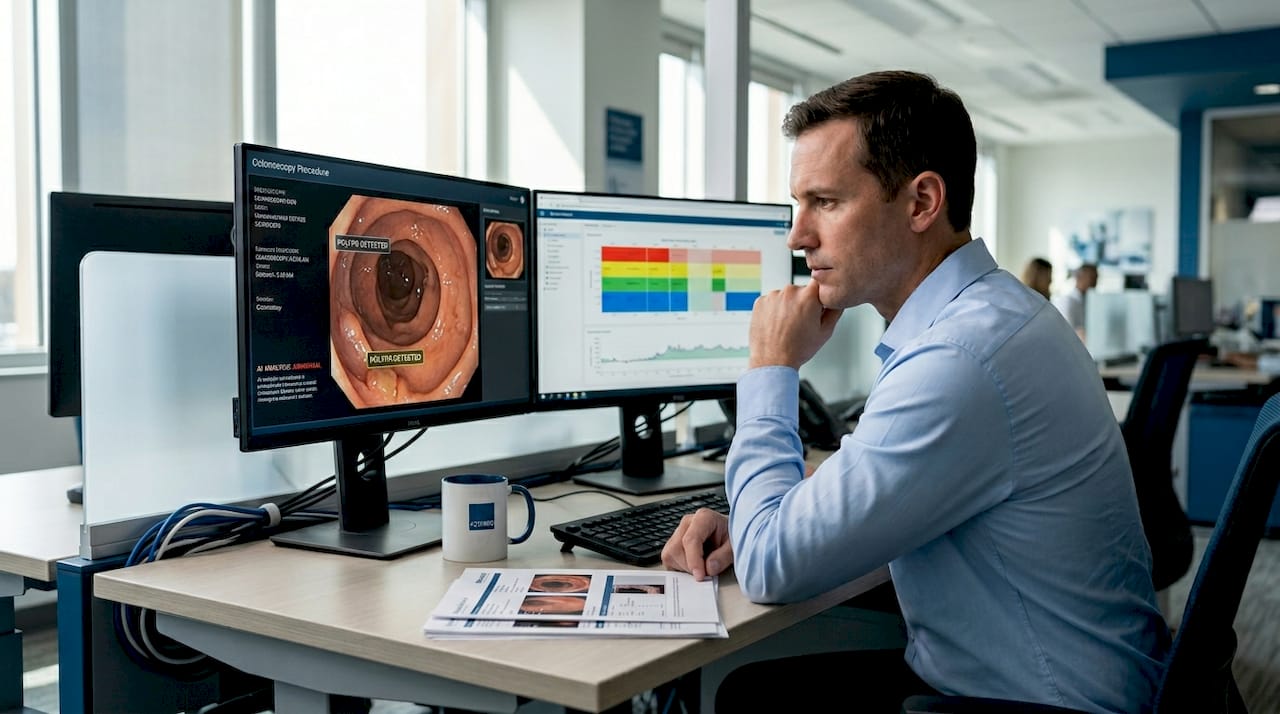
A 2026 meta-analysis covering 72 studies on AI in capsule endoscopy showed strong pooled diagnostic performance for bleeding detection and vascular lesions. Those results are genuinely encouraging. But the same analysis flagged significant barriers to adoption: small cohort sizes in many contributing studies, inconsistent evaluation methods across research teams, and a near-total absence of external validation in real clinical populations.
The AI tasks currently integrated into portable endoscope platforms break down into four categories:
- Detection: Identifying the presence of an anomaly, such as a lesion, corrosion site, or structural defect
- Classification: Categorizing what type of anomaly is present based on shape, texture, or pattern
- Segmentation: Outlining the precise boundary of the anomaly within the image frame
- Localization: Pinpointing the anatomical or spatial position of the finding within the inspection area
"AI-assisted capsule endoscopy interpretation is not yet a full replacement for clinical review. It requires prospective quality control measures, including threshold calibration and false positive monitoring, before full clinical integration." (Diagnostics, MDPI 2026)
For industrial professionals, AI-assisted borescope interpretation holds particular promise in pipeline inspection and turbine blade assessment, where pattern recognition across thousands of image frames would take a human technician hours. For veterinary practitioners, AI overlays on gastrointestinal or airway footage can flag areas worth closer review, reducing the chance that a subtle lesion gets missed during a fast-paced procedure.
AI effectiveness in endoscopy is heavily dependent on the quality and breadth of the training data behind the model. A system trained primarily on human GI images will not perform reliably on equine airway anatomy. Ask vendors to specify what populations and imaging contexts their AI model was trained on before you treat its outputs as diagnostically significant.
Wireless and decentralized endoscopy beyond traditional settings
One of the most significant portable medical imaging trends of 2026 is not about the device itself. It is about where the exam happens and who interprets it.
The AI-integrated capsule gastroscopy model introduced a genuinely new operating concept: decentralized acquisition with centralized interpretation. In human medicine, this means a patient can ingest a wireless capsule camera at home, have the footage transmitted to the cloud, and receive a specialist-reviewed report without visiting a facility. The procedural steps look like this:
- The subject receives the wireless capsule or attaches a remote imaging unit without requiring sedation or clinical setup.
- The device captures footage autonomously as it moves through the target anatomy.
- Data transmits via wireless connection to a cloud-based storage and processing platform.
- An AI pre-screening layer flags regions of interest before a specialist reviews the complete study.
- The clinician or technician delivers findings remotely, often within hours.
The mobile medical imaging market was valued at USD 10.5 billion in 2025 and is projected to reach USD 18.7 billion by 2034, with much of that growth driven by exactly this kind of decentralized, AI-enabled model.
For veterinary professionals working in large animal practice, the parallels are obvious. Field screenings for herd animals, remote diagnostic support for rural clinics, and post-procedure monitoring all become more practical when acquisition and interpretation can happen independently. Industrial inspection teams working on offshore assets or confined-space pipelines face the same logistical reality. Wireless endoscope advancements mean the expert does not need to be physically present at the inspection site.
The current limitations are real. Wireless transmission requires reliable connectivity, which is not guaranteed in remote field locations. Battery life, image compression artifacts, and regulatory questions around cloud-stored patient data all require careful evaluation before committing to a decentralized workflow.
Disposable vs. reusable portable endoscopes in 2026
The debate between single-use and reusable endoscopes has a clearer answer in 2026 than it did five years ago, at least in certain use cases.
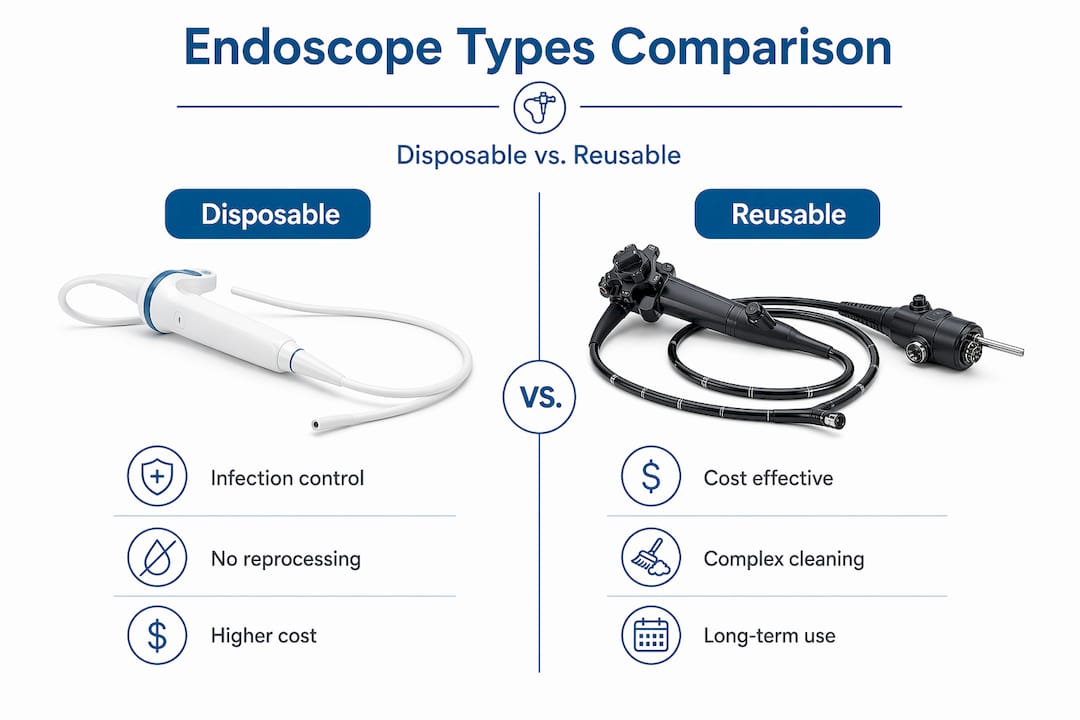
| Factor | Disposable endoscopes | Reusable endoscopes |
|---|---|---|
| Infection control | Eliminates cross-contamination risk entirely | Requires rigorous reprocessing between uses |
| Image quality | Approaching reusable quality with HD and 4K options | Consistently higher resolution in premium models |
| Per-procedure cost | Higher direct cost per use | Lower per-use cost after amortization |
| Availability | Ready to use immediately, no reprocessing delay | Subject to availability based on reprocessing schedule |
| Environmental impact | Higher waste generation | Lower material waste over device lifespan |
| Industrial suitability | Useful for contaminated or destructive environments | Preferred for high-frequency inspection programs |
The disposable endoscope market is projected to reach USD 5.37 billion by 2031, growing at a 7.54% CAGR from 2026. That growth is driven primarily by infection control pressures in human medicine, but the veterinary sector is seeing parallel demand. In a busy mixed-practice clinic handling multiple species, eliminating scope reprocessing between patients removes both contamination risk and scheduling bottlenecks.
For industrial professionals, disposable borescopes make sense in environments where the scope may be exposed to caustic materials, extreme temperatures, or irretrievable conditions like inspecting sealed cavities that cannot be reopened for equipment retrieval.
Selecting portable endoscope technology in 2026
Choosing the right system comes down to matching technology capability to your actual workflow, not buying the most advanced device available.
- Image quality requirements: If your work demands 4K documentation for referral, legal records, or detailed surface analysis, that specification should be non-negotiable. For routine screening, HD is often sufficient and reduces data storage costs.
- Portability format: True portability means battery-powered operation or a lightweight form factor suitable for field transport. Confirm weight, battery run time, and whether the system can operate independently of a wall outlet.
- AI and wireless integration: Not every workflow benefits from AI overlays or wireless transmission. Evaluate whether these features align with your diagnostic volume and whether your infrastructure supports them.
- Vendor support and certifications: In veterinary and industrial contexts, warranty terms, repair turnaround time, and parts availability often matter more than headline specifications. A device that fails during a critical inspection without a timely service path is a liability.
- Ecosystem compatibility: If you already own rigid or flexible scopes, confirm that any new system is compatible with your existing veterinary endoscopy accessories before purchasing.
Pro Tip: Request a live demonstration using your specific scope diameter and procedure type. Many vendors optimize demo units for ideal conditions. Your actual use case, whether that is an equine airway or a 4-inch industrial pipe, will reveal limitations that a spec sheet will not.
Future-proofing your technology choice means asking vendors directly about their software update policy, AI model versioning, and whether wireless protocols are field-upgradeable. A device purchased in 2026 should still perform competitively through at least 2029 with firmware support.
My take on where this technology is actually heading
I have watched portable endoscope technology evolve from chunky fiberscope carts to the current generation of AI-capable, wireless-ready systems. The all-in-one trend genuinely changes the calculus for field-based professionals. What I find consistently underappreciated is how much operational value comes from reduced setup complexity, not from the camera sensor upgrade itself.
On AI, my experience leads me toward caution. The diagnostic performance numbers from research are compelling, but those numbers come from controlled study environments. Real barn conditions, dusty industrial crawlspaces, and patients that do not cooperate introduce image quality variables that AI models trained on clean clinical data handle poorly. I think the professionals who will get the most from AI-assisted endoscopy in the near term are those who treat it as a second set of eyes, not a primary diagnostic authority.
The decentralized model is where I see the most underutilized potential for veterinary and industrial practitioners. The concept of separating acquisition from interpretation is a practical shift that aligns perfectly with how field diagnostics already work. You collect data on site, you get expert review off site. Wireless endoscope advancements make that loop faster and more reliable.
My advice is to combine your existing proven equipment with targeted additions from the 2026 generation, rather than replacing everything at once. The technology is maturing rapidly. A selective upgrade strategy now positions you well without locking you into a full ecosystem that may look dated in 36 months.
— Endoscope
Explore 1800endoscope's portable systems for your practice
1800endoscope carries a carefully selected range of portable endoscope systems built for the demands of veterinary and industrial professionals who cannot afford downtime or diagnostic compromise.
From the compact 6mm portable airway scope with direct monitor output and SD card recording to the equine 8mm USB field scope designed for barn-side airway inspections, the product line covers the practical scenarios where portability is not optional. The full catalog at 1800endoscope includes veterinary rigid and flexible systems, industrial NDT borescopes, light sources, and accessories with technical support from specialists who understand both markets. For AI-assisted veterinary diagnostics, the team at Lab4Paws provides complementary tools worth exploring alongside your endoscope upgrade.
FAQ
What defines a portable endoscope system in 2026?
In 2026, portability means more than device size. It includes wireless data transmission, battery-powered operation, and decentralized acquisition models where images are captured in the field and interpreted remotely by specialists.
How accurate is AI in portable endoscope diagnostics?
A meta-analysis of 72 studies showed strong AI performance for detecting bleeding and vascular lesions, but external validation gaps mean AI should support clinical review, not replace it.
Are disposable endoscopes worth the higher per-use cost?
For high-infection-risk environments or single-species procedures where reprocessing creates scheduling delays, disposable endoscopes offer clear advantages. The market growing at a projected 7.54% CAGR through 2031 confirms strong industry adoption.
What should veterinary professionals prioritize when selecting a portable scope?
Prioritize image resolution, battery-powered portability, and vendor service support. Confirm AI and wireless features align with your actual workflow before paying a premium for capabilities you will not use.
How do wireless capsule endoscope systems benefit industrial inspectors?
Wireless capsule models separate data acquisition from expert interpretation, meaning inspection footage captured in confined or remote locations can be reviewed by specialists off-site. This reduces the need for expert personnel at every physical inspection site.
Recommended
- Endoscope Endoscopy FAQ and Inspection Procedures, Endoscopy Museum!
- Medical Veterinary Endoscope Endoscopy Systems, Light Sources, Accessories, Industrial NDT Borescopes
- Medical Veterinary Endoscope Endoscopy Systems, Light Sources, Accessories, Industrial NDT Borescopes
- Medical Veterinary Endoscope Endoscopy Systems, Light Sources, Accessories, Industrial NDT Borescopes