
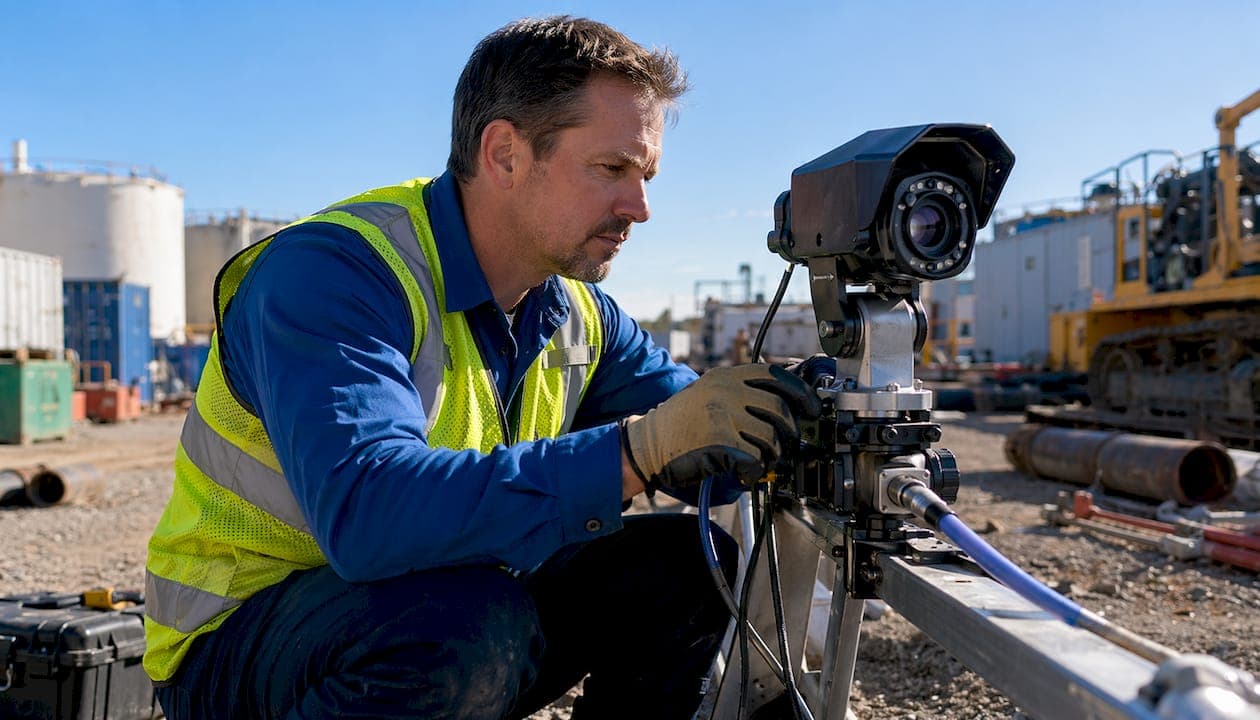
A pan-tilt inspection camera is defined as a motorized diagnostic device that gives operators remote control over the camera head, enabling 360° horizontal rotation and 180° vertical tilt for complete internal visualization of pipes and enclosed spaces. This capability is the defining difference between a thorough inspection and a guesswork-driven one. Fixed-head cameras show only what is directly in front of them. Pan-tilt systems, by contrast, let you examine lateral connections, wall defects, and joint conditions without repositioning the push rod. For professionals in industrial inspection and veterinary diagnostics, understanding what is a pan-tilt inspection camera means understanding a tool built for precision where standard cameras fall short.
What is a pan-tilt inspection camera and how is it defined?
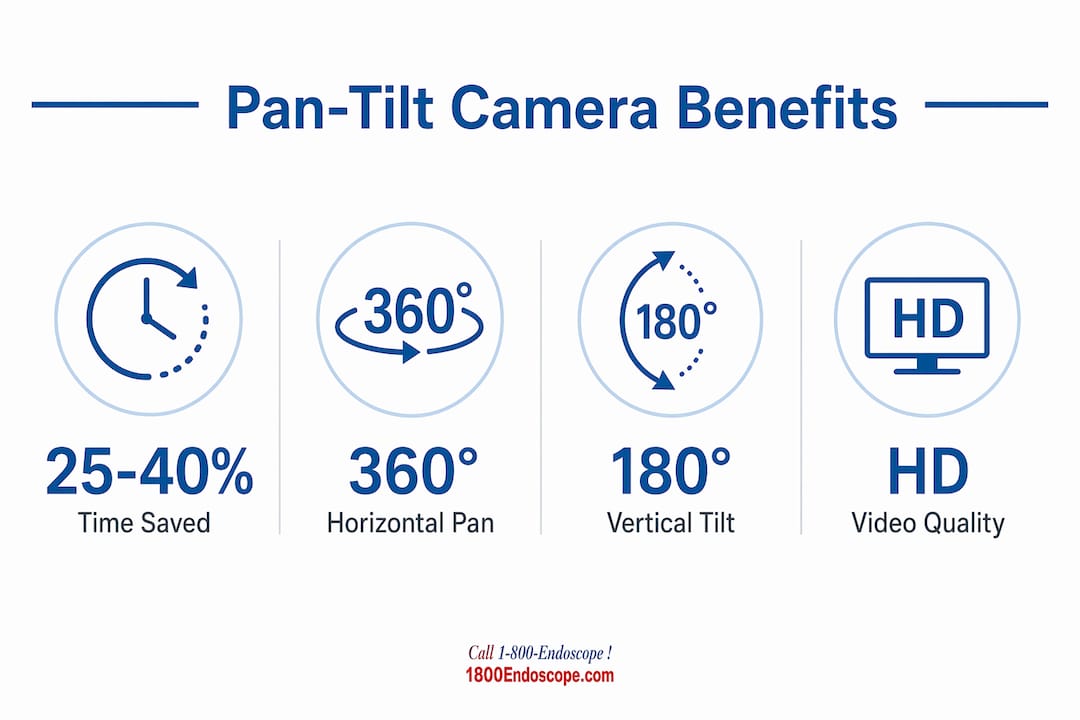
A pan-tilt inspection camera, also called a pan-and-tilt drain or sewer camera in pipeline inspection contexts, is a remote visual inspection (RVI) tool with a motorized articulating head. The camera head rotates 360° horizontally and tilts 180° vertically, providing full wall visibility inside large-diameter pipes. That range of motion is what separates this class of equipment from fixed-head or self-leveling cameras.
The term "pan-tilt" comes directly from broadcast and surveillance camera terminology, where pan means horizontal rotation and tilt means vertical movement. In inspection applications, the same mechanics apply but inside confined, often contaminated environments. Veterinary professionals use articulating endoscope heads on a similar principle when examining gastrointestinal or airway passages. The underlying technology is the same: motorized control of the camera axis for multi-angle viewing.
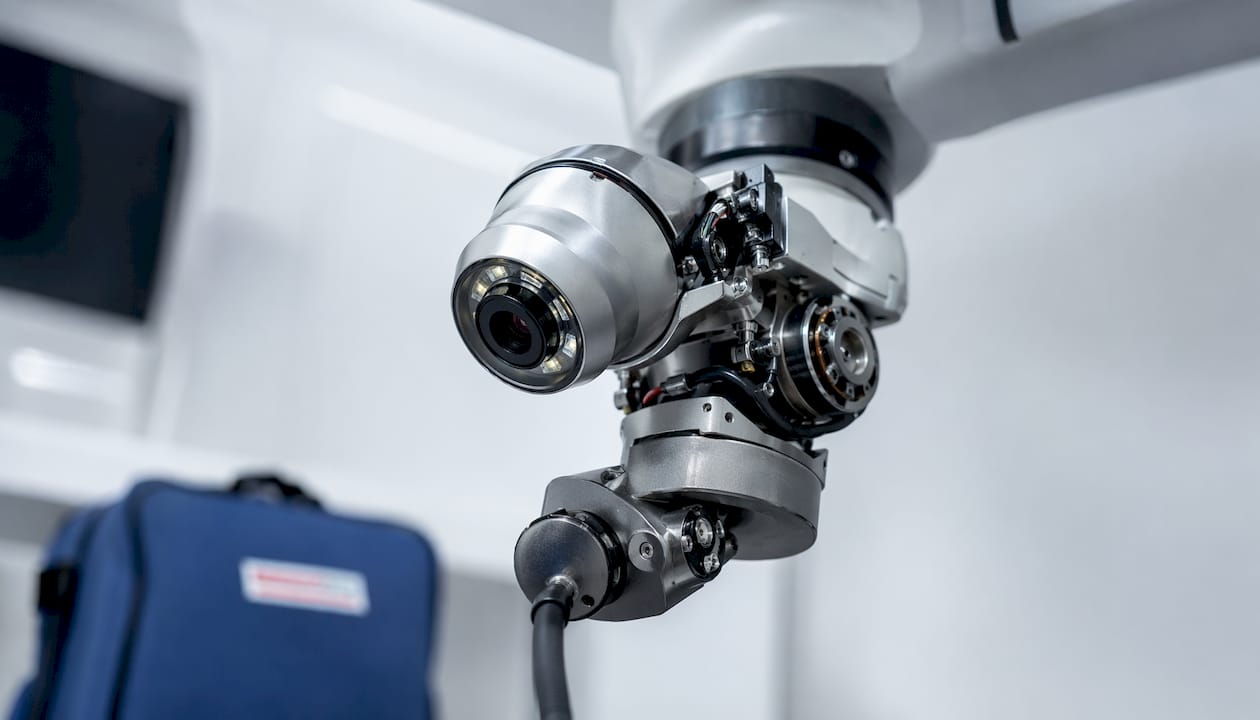
These systems are designed for pipes 6 inches or larger in diameter. That minimum size is not arbitrary. The motorized head requires physical space to rotate without binding against the pipe wall. Attempting to use a pan-tilt head in a smaller pipe risks mechanical damage and produces no useful inspection data.
What are the key features and specifications of pan-tilt inspection cameras?
Pan-tilt inspection cameras share a core set of technical features that define their performance in the field. Understanding these specifications helps professionals match the right tool to the right job.
- Motorized articulating head. The camera head rotates 360° on the pan axis and tilts up to 180° on the tilt axis. Both movements are controlled remotely via a joystick or touchscreen interface on the operator's surface unit.
- Integrated LED lighting. Most systems use multiple LEDs arranged around the lens. Individual LED intensity adjustment prevents image washout from reflection glare inside pipes, a problem that becomes acute during full 360° panning.
- High-definition video recording. Digital HD video recording supports compliance documentation and maintenance records. Systems designed for harsh environments operate reliably in moisture, heat, and high-pressure confined spaces.
- Push rod or crawler deployment. The camera head attaches to a push rod for manual advancement or to a self-propelled crawler for longer runs. Crawlers are common in large municipal sewer inspections; push rod systems suit shorter runs and veterinary applications.
- Waterproofing. Professional-grade heads carry IP68 ratings or equivalent, allowing full submersion during flooded pipe inspections.
- Control interface. Surface units range from handheld monitors with joystick controls to laptop-based software platforms that log GPS coordinates, timestamps, and defect codes alongside video.
Pro Tip: When selecting a pan-tilt system, verify that the LED intensity is adjustable per individual diode, not just as a group. Uniform brightness control is the most common cause of washed-out footage in reflective pipe environments.
The pipe diameter specification matters as much as any camera spec. Systems rated for 6-inch pipes will not perform correctly in 4-inch lines. Confirm the minimum diameter before deployment.
How does a pan-tilt inspection camera work in practice?
The operational sequence for a pan-tilt inspection camera follows a consistent pattern across both industrial and veterinary applications. Here is how a typical inspection runs:
- Deployment. The operator feeds the push rod or crawler into the pipe or body cavity. The camera head advances to the inspection zone under manual or motorized control.
- Orientation. Once positioned, the operator uses the joystick to pan the camera head horizontally to survey the full pipe wall circumference. A single rotation gives a complete 360° view without moving the rod.
- Targeted tilt. When a defect, lateral connection, or area of interest appears, the operator tilts the head to examine it from above, below, or at an angle. This eliminates the need to reposition the entire push rod assembly.
- Real-time video transmission. The camera transmits live video to the surface monitor via the push rod cable or, in wireless-capable systems, via RF signal. The operator views the feed in real time and records it simultaneously.
- Documentation. The operator logs defect codes, timestamps, and location data during the run. HD video documentation supports client reporting, regulatory compliance, and liability protection.
The biggest operational challenge is cable drag. Pan-tilt mechanical heads increase cable drag, especially through multiple 90° bends. The additional mass and friction of the articulating mechanism puts more stress on the push rod than a fixed-head camera would. Experienced operators use specialized cable guides and lubricants to reduce friction and prevent premature cable wear.
Pro Tip: In veterinary airway or gastrointestinal inspections, advance the scope slowly and pan before you push. Rushing the insertion without checking lateral anatomy is the fastest way to miss a lesion or cause tissue stress.
For veterinary professionals, remote visual inspection techniques using articulating camera heads follow the same logic as industrial pipe inspection. The operator controls the head angle to examine mucosal surfaces, identify foreign bodies, or assess structural abnormalities from multiple angles without repositioning the scope body.
What are the main benefits of pan-tilt inspection cameras?
The case for pan-tilt cameras over fixed-head alternatives comes down to four concrete advantages: speed, detection accuracy, safety, and documentation quality.
Inspection speed. Pan-tilt cameras reduce inspection time by 25–40% by enabling multi-angle inspections without repositioning the push rod. That time saving compounds across a full inspection schedule. A crew running 10 inspections per day recovers significant labor hours weekly.
Detection accuracy. Fixed cameras miss lateral connections and wall defects that are not directly in the camera's forward path. Pan-tilt heads let the operator examine every quadrant of the pipe wall at each position. This is particularly valuable for identifying root intrusion, joint offsets, and hairline cracks that run parallel to the pipe axis.
Safety improvements. Inspection cameras eliminate the need for invasive inspections, reducing worker exposure to confined space hazards and reducing the need for excavation or surgical intervention in veterinary cases. That safety benefit translates directly to lower liability and fewer regulatory compliance issues.
Documentation quality. Multi-angle HD video recordings build client confidence and satisfy regulatory requirements. In veterinary practice, video evidence of a diagnosed condition supports treatment decisions and protects the clinic in liability disputes. In industrial inspection, timestamped footage with defect codes meets NASSCO PACP reporting standards for sewer condition assessment.
For veterinary clinics, the benefits of HD video diagnostics extend beyond the inspection itself. Clients who can see the recorded footage understand the diagnosis better and accept treatment recommendations more readily.
Despite higher upfront costs, pan-tilt cameras reduce downtime and invasive procedures, improving overall inspection cost efficiency over time. The investment pays back through fewer repeat inspections and more accurate repair targeting.
When should you use a pan-tilt camera versus other types?
Choosing the right camera type depends on pipe diameter, inspection complexity, and budget. The table below summarizes the key tradeoffs.
| Scenario | Pan-tilt camera | Fixed-head camera |
|---|---|---|
| Pipe diameter 6 inches or larger | Recommended | Adequate for simple runs |
| Pipe diameter under 4 inches | Not advisable | Preferred |
| Complex pipe systems with lateral connections | Strongly recommended | Misses lateral detail |
| Veterinary airway or GI inspection | Articulating scope preferred | Limited to forward view |
| Budget-constrained single-direction runs | Overkill | Cost-effective |
| Compliance documentation required | Recommended | Acceptable for basic records |
Pan-tilt cameras are not advisable for pipes smaller than 4 inches in diameter. The mechanical head cannot rotate freely in tight spaces, and the risk of head damage or pipe wall contact is high. Fixed-head cameras are safer and more cost-effective for those applications.
The complexity-versus-simplicity tradeoff is real. Pan-tilt systems excel for detailed multi-angle analysis but are not universally superior to fixed cameras. A straightforward 3-inch drain inspection does not need a pan-tilt head. A 10-inch municipal sewer with multiple lateral connections absolutely does.
Veterinary professionals face an analogous decision. A flexible articulating videoscope suits complex airway or gastrointestinal exams. A rigid scope with a fixed view is faster and simpler for straightforward procedures. The right choice depends on the anatomy and the diagnostic question being asked. For clinics serving both small and large animals, having both types available covers the full range of diagnostic needs. Resources like Nikoleta Sereti Pet Shop illustrate how veterinary practices integrate advanced imaging tools into routine diagnostic workflows.
Key Takeaways
A pan-tilt inspection camera delivers complete internal visualization through motorized 360° pan and 180° tilt control, making it the most capable tool for complex pipe and veterinary diagnostic inspections.
| Point | Details |
|---|---|
| Core definition | Pan-tilt cameras rotate 360° horizontally and tilt 180° vertically for full internal views. |
| Minimum pipe size | Use only in pipes 6 inches or larger; avoid in pipes under 4 inches to prevent mechanical damage. |
| Inspection time savings | Multi-angle viewing reduces inspection time by 25–40% versus fixed-head repositioning. |
| Documentation standard | HD video with defect codes meets NASSCO PACP and veterinary compliance reporting requirements. |
| Cable drag management | Pan-tilt heads increase friction through bends; use cable guides and lubricants to prevent wear. |
What I've learned from watching professionals use pan-tilt systems in the field
The biggest misconception I see is that buying a pan-tilt camera automatically improves inspection quality. It does not. The camera gives you the capability. The operator's skill determines whether that capability gets used. Professionals who get the most from pan-tilt systems are the ones who slow down, pan methodically before advancing, and treat the camera head as a diagnostic instrument rather than a navigation tool.
Lighting control is the second most overlooked factor. New users tend to run all LEDs at full brightness and then wonder why their footage looks washed out in reflective PVC pipe. Dialing down individual LED intensity during 360° panning is a small adjustment that produces dramatically better footage. It is the kind of detail that separates a usable inspection report from one that gets questioned in a client meeting.
On the investment side, the cost-per-inspection math almost always favors pan-tilt systems for professionals running more than a handful of complex jobs per month. The reduction in repeat inspections and the improvement in repair targeting pay back the equipment cost faster than most buyers expect. The diagnostic value of inspection cameras in both veterinary and industrial contexts is well established. The question is not whether pan-tilt technology is worth it. The question is whether your team has the training to use it correctly.
— Endoscope
Professional pan-tilt and endoscopy systems from 1800endoscope
1800endoscope supplies portable inspection and endoscopy systems built for professionals who need reliable multi-angle visualization in industrial and veterinary settings. The catalog covers everything from compact airway scopes to full NDT borescope systems with HD recording and rugged lighting controls.
For veterinary clinics and industrial inspection teams ready to move beyond fixed-head limitations, the portable inspection endoscope offers direct-monitor SD card video recording in a field-ready format. The full borescope and endoscope catalog covers the complete range of pan-tilt-capable and articulating systems with expert support available for equipment selection. Every system ships with the documentation and specifications professionals need to match the right tool to the right application.
FAQ
What is a pan-tilt inspection camera used for?
A pan-tilt inspection camera is used to visually inspect the interior of pipes, ducts, and body cavities from multiple angles without repositioning the camera. Common applications include sewer and drain inspection, industrial NDT borescope work, and veterinary airway or gastrointestinal diagnostics.
What pipe diameter do pan-tilt cameras require?
Pan-tilt cameras are designed for pipes 6 inches or larger in diameter. They are not advisable for pipes under 4 inches, where fixed-head cameras perform better and carry less risk of mechanical damage.
How does a pan-tilt camera differ from a fixed-head camera?
A pan-tilt camera has a motorized head that rotates 360° horizontally and tilts 180° vertically, allowing multi-angle inspection from a single position. A fixed-head camera points only in one direction and requires the operator to reposition the push rod to change the viewing angle.
Why does cable drag matter with pan-tilt inspection cameras?
The heavier motorized head of a pan-tilt system increases friction through pipe bends, especially at 90° angles. Unmanaged cable drag accelerates push rod wear and can cause cable failures; operators mitigate this with cable guides and lubricants.
Can pan-tilt cameras be used in veterinary diagnostics?
Yes. Articulating camera heads on flexible videoscopes apply the same pan-and-tilt principle to veterinary airway, gastrointestinal, and cavity inspections. The motorized head allows the clinician to examine anatomy from multiple angles without repositioning the scope, improving diagnostic accuracy and reducing procedural time.