
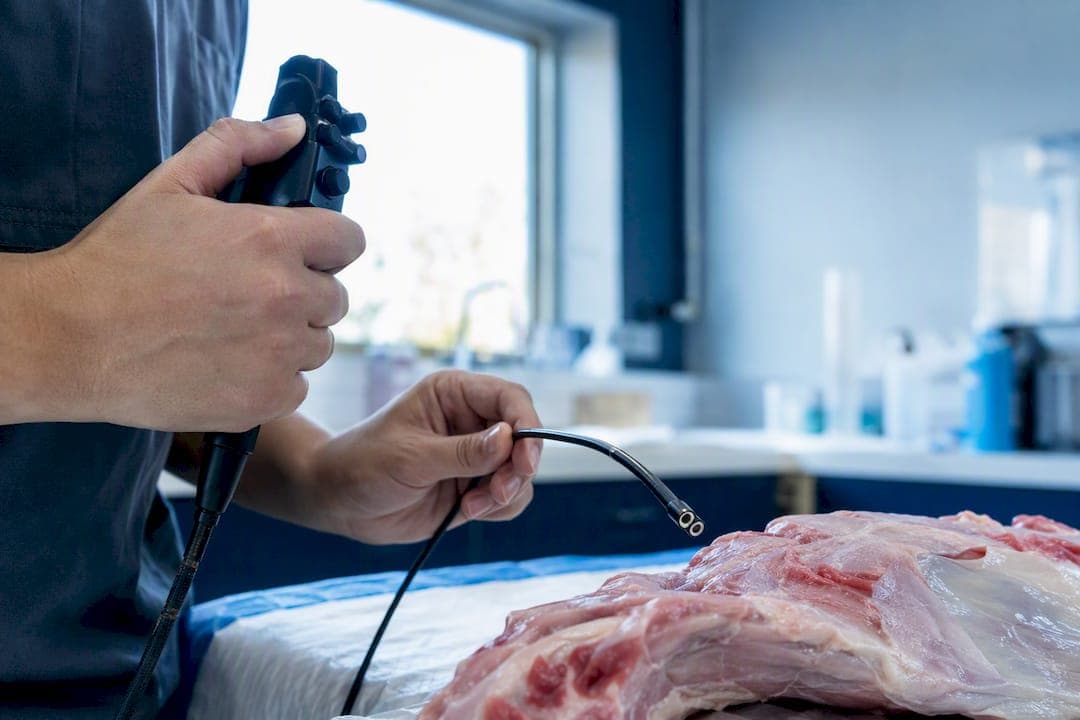
A dual-camera borescope cuts inspection time and catches defects a single-lens probe simply misses, because it gives you a forward view and a side view without pulling the probe and reinserting it. Combined lenses mean you scan a bore's line-of-sight surface and its lateral walls in one pass, which is the whole reason shops and NDT crews have shifted toward these units for engine bores, heat exchangers, and structural cavities.
The operational payoff shows up in three places:
- Fewer disassemblies, because you're not repositioning a single lens to chase a side-wall defect
- Faster documentation, since dual-view capture gives you both angles in one recorded pass
- Better first-time diagnosis, because blind spots that a forward-only lens would miss get exposed
Reality check: dual-lens designs measurably reduce blind spots and improve operating efficiency compared with single-lens probes in industrial inspection work. The one real exception: extremely narrow, rifled bores like gun barrels, where a single-lens probe with a right-angle mirror still outperforms a dual design because of focus distance limits.
Key Takeaways
Dual-camera borescopes cut inspection time and catch more defects than single-lens probes by combining a forward view with a side view in one pass, except in narrow rifled bores where a single-lens mirror probe still wins.
| Point | Details |
|---|---|
| Forward and side views together | Eliminates most probe repositioning, reducing wear and inspection time on multi-angle jobs. |
| Articulation matters as much as optics | Joystick-controlled 2-way articulation reduces operator fatigue and improves routing around bends. |
| Rifled bores are the exception | Single-lens probes with right-angle mirrors outperform dual designs when surfaces sit too close for side-lens focus. |
| Match specs to your port sizes first | Probe diameter and sheath material eliminate unsuitable options before you compare optics or resolution. |
| 1800endoscope catalog maps to checklist specs | Its borescope and videoscope product lines list probe diameter, recording format, and articulation per model for direct comparison. |
Table of Contents
- How Dual Camera Inspection Technology Actually Works
- What Dual Camera Borescopes Actually Save You
- Where Dual Camera Borescopes Earn Their Keep
- When a Single-Lens Probe Is Still the Better Tool
- How to Choose a Dual Camera Borescope for Your Shop
- Getting Consistent, Report-Ready Results in the Field
- Where the Product Data Backs This Up
- The Case for Matching the Tool to the Bore, Not the Trend
- A Dual-Camera Borescope Built for Real Shop Conditions
- Sources
How Dual Camera Inspection Technology Actually Works
A dual-lens probe puts two imaging sensors near the tip: one facing straight ahead, one angled to the side. Most units let you switch between them with a button on the handle, and higher-end models offer split-screen display so you're watching both feeds simultaneously rather than toggling back and forth. That switching mechanism, whether it's hardware-driven or software-controlled, is the core piece of dual-lens borescope features that separates these tools from older single-view designs.
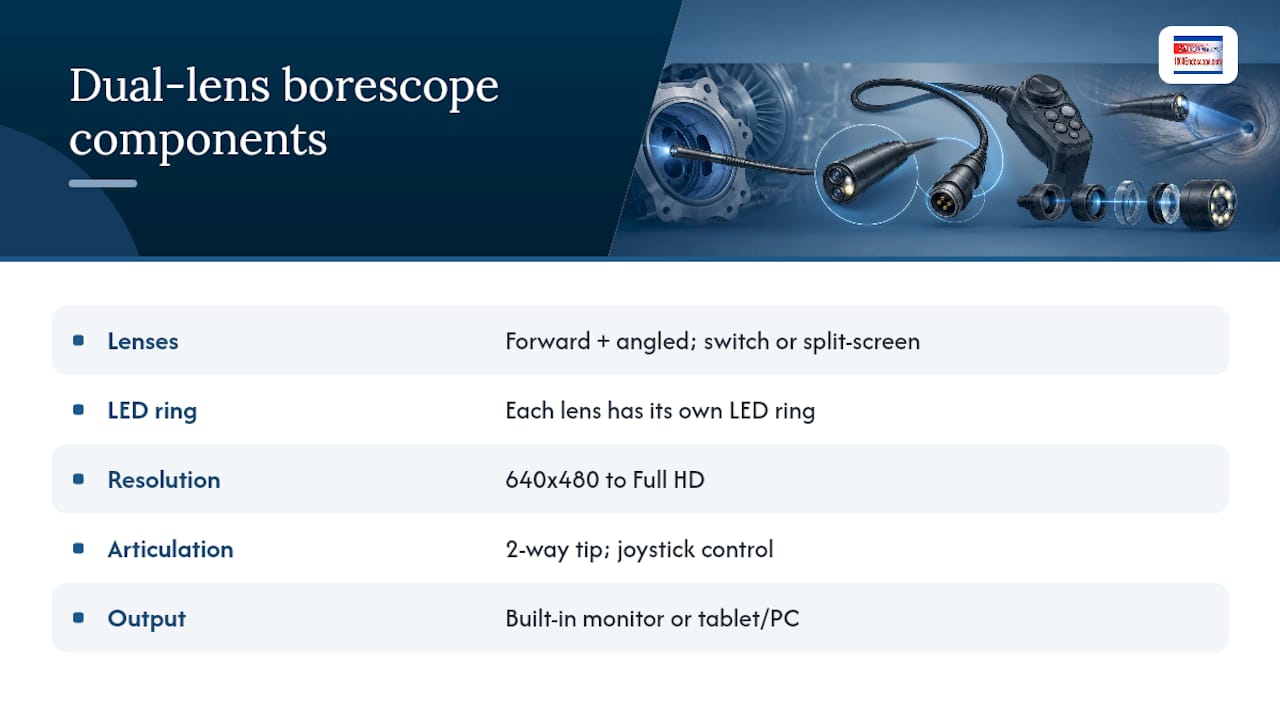
Each lens sits behind its own LED ring and CMOS sensor, and resolution varies a lot across the market, from basic 640x480 units to full HD sensors that hold detail on hairline cracks. Field of view and depth of field trade off against each other: a wider FOV shows more of the bore wall per frame, but narrower depth of field means you'll need to adjust probe distance to keep a defect sharp.
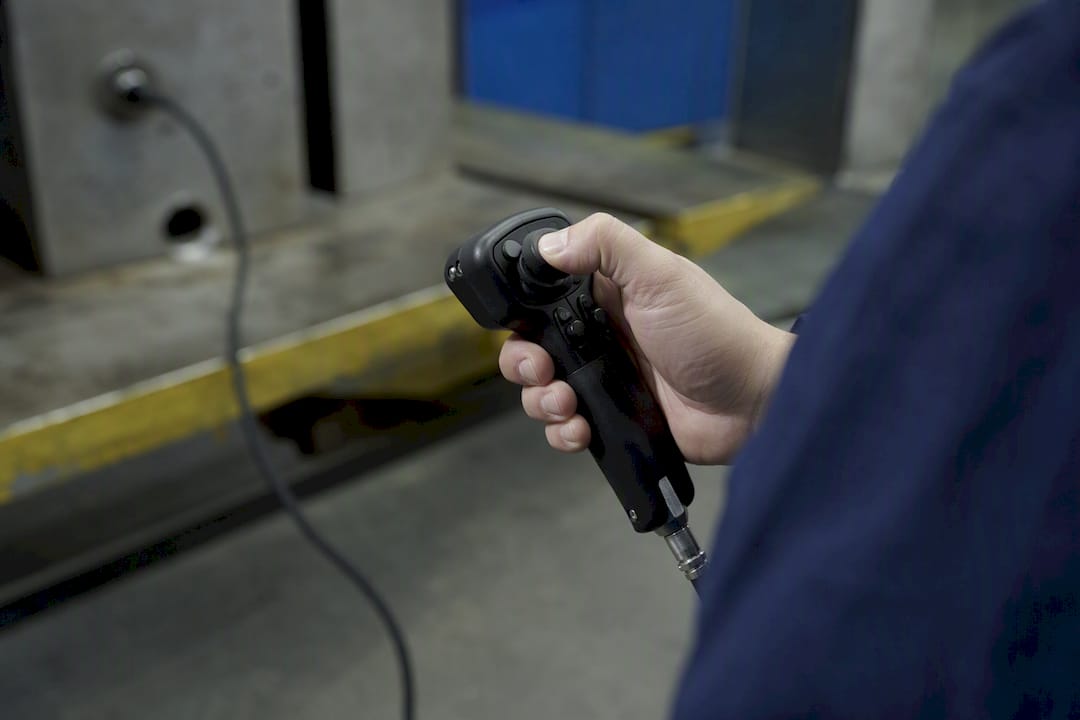
Articulation changes the game here. A 2-way articulating tip lets you steer the camera head around bends without twisting the whole cable, and joystick control on the handle makes that steering precise instead of guesswork. Output runs from a built-in handle monitor for quick field checks to tablet or PC streaming for full-resolution recording, saved as still images or video with timestamps baked in for your report.
What Dual Camera Borescopes Actually Save You
The core dual camera borescope benefits break down into five categories that matter to anyone running inspections for a living.
-
Speed. You inspect a cylinder bore's piston crown with the forward lens, then flip to the side lens to check for scoring on the cylinder wall, all without pulling the probe. That single-pass workflow is why a dual-lens probe on an engine inspection can save hours of disassembly compared to pulling heads or covers to get a visual angle a single-lens scope can't reach.
-
Detection accuracy. Side-wall defects, corrosion pitting, weld undercut, thread damage, are exactly what a forward-only lens is structurally blind to. Dual-lens designs close that gap, and some current models add 3D measuring capability so you're not just seeing a defect, you're sizing it in real time.
-
Documentation quality. Reports built on dual-angle stills and short video clips hold up better in warranty disputes and audits than a single grainy forward shot. When a client or regulator asks "did you actually check the side wall," you have the frame that proves it.
-
Probe and equipment longevity. Constantly twisting and re-inserting a probe to chase different angles wears the sheath and stresses the articulation cable. A dual-view design means fewer insertion cycles per job, which adds up over a probe's service life.
-
Workflow and first-time fix rates. Recorded dual-view footage can be reviewed remotely by a second engineer or sent to a manufacturer for a sign-off, which shortens the loop between "we found something" and "we know what to do about it."
Pro Tip: Capture your side-lens sweep as a continuous short video rather than individual stills; it's far easier to spot a defect's boundaries in motion than in three static frames that might miss the worst section entirely.
Where Dual Camera Borescopes Earn Their Keep
Different industries lean on dual-view capability for different reasons, but the pattern is consistent: whenever a technician would otherwise need to disassemble something just to see a side wall, a dual-lens probe removes that step.
- Automotive: Spark-plug-hole cylinder wall scans, transmission case interiors, and exhaust manifold cracking checks all benefit from switching views without pulling the probe.
- Aerospace: Turbine blade root inspections and combustor liner checks demand both a straight-ahead view of blade geometry and a side view of fastener seating, often in the same pass.
- Manufacturing and heavy equipment: Heat exchanger tube walls, bearing housings, and weld root inspections all have curved or lateral surfaces that a forward-only lens can't resolve well.
- Plumbing and HVAC: Drain line scans and duct interior checks use the side lens to catch buildup or damage along pipe walls while the forward lens tracks the camera's path forward.
- Building inspection: Wall cavity checks for moisture damage or pest activity rely on the same dual-angle logic, seeing what's ahead and what's along the sides of a joist bay.
- Veterinary and clinical use: In small-diameter rigid and flexible scope work, dual-view capability reduces how much a scope has to be repositioned inside a patient, which matters for procedure time and patient comfort, as outlined in this veterinary clinic resource.
When a Single-Lens Probe Is Still the Better Tool
Dual-lens designs aren't universally better, and the clearest counterexample is gun barrel rifling inspection. In a rifled bore, the side lens on a dual probe often can't get close enough to the surface to focus sharply, because the bore diameter doesn't leave room for the lens to sit at its ideal working distance. A single-lens probe paired with a right-angle mirror keeps that proximity intact and delivers a sharper image in that specific geometry.
Other edge cases where single-lens still wins:
- Ports under roughly 4mm, where most dual-sensor heads simply won't fit
- Jobs where budget rules out the higher cost of dual-optics hardware and its typically pricier repairs
- Highly specialized, repetitive inspections (like barrel work) where a fleet of purpose-built single-lens probes outperforms a general-purpose dual unit
Pro Tip: If your inspection scope includes both general mechanical work and narrow rifled-bore checks, budget for one dual-camera unit and one dedicated single-lens mirror probe rather than trying to make one tool do both jobs well.
How to Choose a Dual Camera Borescope for Your Shop
Work through these in order, since the first few eliminate options fast and the rest refine your shortlist.
- Probe diameter and length. Measure your smallest access port first; everything else is irrelevant if the probe doesn't fit. Confirm sheath material, stainless steel and tungsten-braided sheaths hold up far better in shop and industrial environments than basic plastic-coated cables.
- Field of view and depth of field, for both lenses. A wide FOV on the forward lens is worthless if the side lens's depth of field is too shallow for your typical working distance.
- Resolution and frame rate. HD sensors resolve hairline defects that lower-resolution units flatten into noise; check the real frame rate, not just the marketing resolution number.
- Articulation range and control ergonomics. Joystick controls reduce operator fatigue on long jobs, and 2-way articulation matters more than most buyers expect until they're routing a probe around a tight bend for the tenth time that day.
- Lighting adjustability and IP rating. Adjustable LED intensity prevents overexposure on reflective metal surfaces; an IP67 or higher rating plus chemical resistance protects the probe in fuel, oil, or wash-down environments.
- Recording and reporting features. Look for timestamped stills and video, and measurement tools if you need to quantify defect size for a report rather than just describe it.
- Total cost of ownership. Factor in replacement sheaths, warranty terms, and accessory availability, not just the sticker price on the handle unit.
Getting Consistent, Report-Ready Results in the Field
Stabilize the probe against the bore edge before you start sweeping, that single habit prevents most of the blurry side-lens footage inspectors complain about. Use the side camera to sweep the full circumference by rotating the camera head itself through articulation, not by twisting the whole cable, which is exactly the kind of technique covered in guides for maneuvering flexible inspection cameras.
Dial back LED intensity on reflective metal surfaces to avoid bloom that washes out fine surface detail. Capture short video clips for sweeps and stills for specific defects, both with timestamps on.
- Label each clip with the component and location before saving
- Note ambient conditions (temperature, fluid presence) in your inspection log
- Wipe and dry the probe sheath after every use, and store it coiled rather than kinked to protect the articulation cable
Pro Tip: Build a two-line capture checklist into your phone's notes app: "forward view labeled, side sweep labeled" before you pull the probe out. It takes ten seconds and eliminates the most common report gap: photos with no clear reference to where they were taken.
Where the Product Data Backs This Up
1800endoscope's borescope catalog maps directly onto the checklist above: probe diameters, recording formats, and articulation specs are listed per model rather than buried in generic marketing copy. Field guides like what a videoscope actually is and how inspection cameras serve veterinary and industrial diagnostics give buyers a way to check spec claims against real use cases before purchase, rather than relying on a single spec sheet number.
The Case for Matching the Tool to the Bore, Not the Trend
The conventional pitch for dual-camera borescopes treats them as a strict upgrade over single-lens probes, and most of the time that's a defensible position. Where that advice falls short is in treating "dual lens" as a checkbox rather than a geometry question. The physics of focus distance don't care how advanced your sensor is; a side lens crammed into a rifled bore still can't focus if the working distance isn't there.
What the research actually supports is a more precise rule: buy dual-lens for anything with real lateral surface area to inspect, cylinder bores, heat exchangers, duct runs, and keep a single-lens mirror probe on hand for narrow, highly proximate work. Prioritize probe diameter and articulation range before you get excited about resolution numbers, because a scope that doesn't fit your access port or can't route around a bend is useless regardless of sensor quality. The inspectors who get the most value out of dual-camera equipment are the ones who bought for their actual bore geometry, not for the spec sheet with the most impressive numbers.
— Endoscope
A Dual-Camera Borescope Built for Real Shop Conditions
1800endoscope's portable 6mm airway inspection system gives inspection professionals a direct-monitor, SD-card recording setup without the price tag of enterprise NDT platforms, which matters when you're equipping a second technician or a mobile service van rather than a single fixed inspection bay.
Where a lot of dual-lens units force you into proprietary software or cloud subscriptions just to pull your footage, this system records straight to SD card and outputs to a handle monitor in the field, no laptop required for a quick pass/fail check. That fits shops running multiple probes across multiple technicians who need footage they can hand off immediately, not footage locked behind an app login. Browse the full borescope and videoscope catalog to match probe diameter and articulation to your actual port sizes, or check the inspection procedures FAQ if you're still narrowing down which probe fits your specific bore geometry before you order.
Sources
- What is the difference between dual-lens probes and single-lens probes with mirrors? - Teslong help
- What is a 2-Way Articulating Borescope? Features, Benefits & Use Cases - Triplett
- Durable Dual Lens Borescope for Clear Mechanical Inspections - Technivorz
- What is a Dual-Lens Borescope? Features, Uses, and Benefits - BestWildlifeCameras
- Dual-View & 3D Measuring: The Advantages Of A Modern Borescope Camera - Zecommentaire