
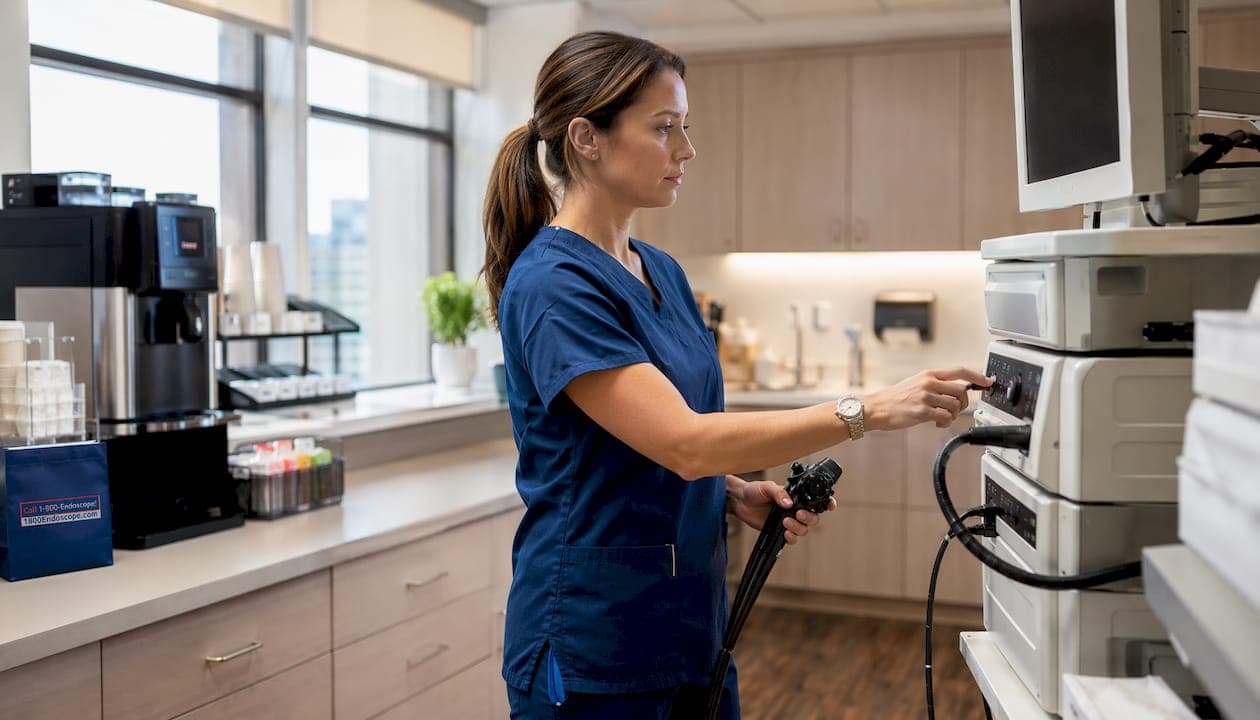
Upgrading your clinic's endoscope equipment is one of the clearest risk-management and efficiency decisions you can make. Modern systems improve diagnostic confidence, cut unplanned downtime, reduce clinician fatigue, and keep you on the right side of FDA device safety expectations. If your scopes are generating repeat repair calls, creating procedure backlogs, or running on discontinued firmware, those are not maintenance problems — they are upgrade signals. Start with three quick actions: run an equipment audit, log downtime over 30 days, and calculate your annualized total cost of ownership (TCO). The numbers usually make the case faster than any vendor pitch.
- Run a rapid audit: log repair frequency, mean time to repair, and procedure backlog per scope.
- Capture downtime data: even two weeks of records can quantify lost throughput in dollar terms.
- Estimate TCO: add repair labor, loaner fees, and procedure delays to the hardware cost.
Pro Tip: Measure per-procedure time and clinician-reported fatigue before and after a one-room pilot. A pilot over several weeks generates the most persuasive ROI evidence for procurement committees.
Table of Contents
- What do you actually gain from upgrading endoscope equipment?
- How do you know when your clinic needs to upgrade?
- Which features should veterinary clinics and industrial teams prioritize?
- How do you build an evidence-based upgrade plan?
- Maintenance, reprocessing, and cybersecurity after the upgrade
- How does 1800endoscope fit into your supplier selection?
- Key Takeaways
- The case for treating upgrades as workflow decisions, not hardware purchases
- Ready to spec your next endoscope system?
- Useful sources and further reading
What do you actually gain from upgrading endoscope equipment?
The payoff spans four dimensions: clinical accuracy, operational speed, financial performance, and staff safety.
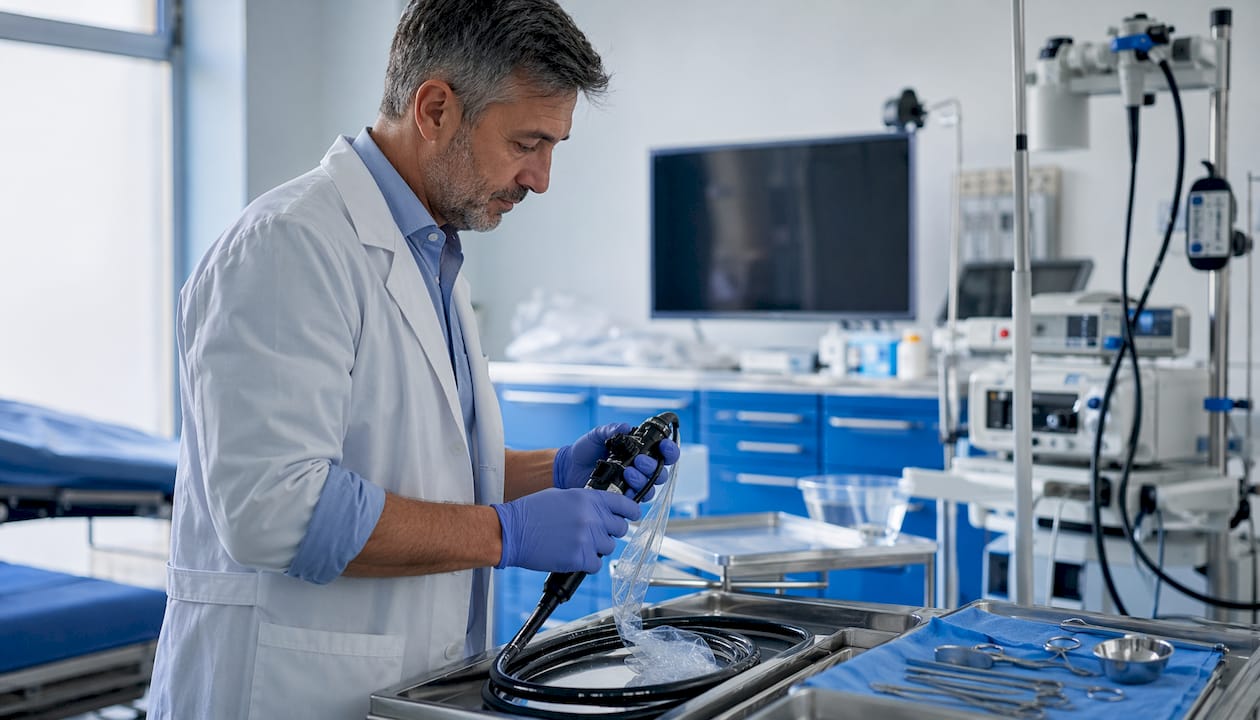
Clinical accuracy is the most immediate gain. Modern digital endoscopy systems deliver consistent HD color reproduction and sharper resolution, which directly affects lesion detection and the quality of documentation sent to referring colleagues. When image quality is reliable, diagnostic confidence improves and repeat procedures drop.
Operational speed follows from better capture and storage workflows. Fewer manual export steps, faster room turnover, and cleaner referral packages all add up across a full day's schedule. A scope that integrates with your existing image storage cuts the documentation time that quietly inflates every procedure slot.
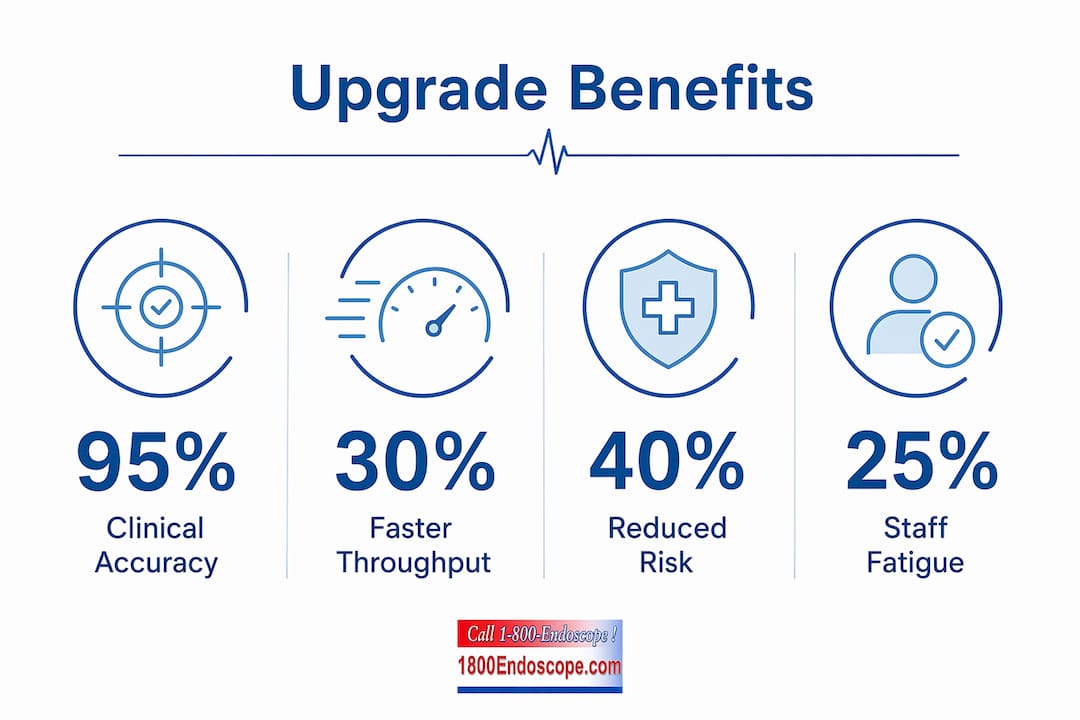
Financial performance is where skeptics get convinced. Outdated medical equipment increases unplanned repair costs, reduces productivity, and creates compliance gaps that carry their own financial exposure. Higher uptime and faster throughput recover that cost over time.
Staff safety is the argument that often gets underweighted. A 2025 Scientific Reports trial on motorized endoscopes reported up to a 90.9% reduction in finger load for certain controls when mechanical valves were replaced with electrical switches and motorized articulation. For clinicians running high-volume diagnostic days, that reduction in cumulative thumb and finger force translates directly into lower musculoskeletal risk over a career.
Statistic callout: The 2025 Scientific Reports ergonomic trial found a substantial reduction in finger load for specific controls when motorized articulation replaced conventional mechanical valves. — a measurable safety gain for high-volume endoscopy teams.
How do you know when your clinic needs to upgrade?
The clearest signals fall into four categories. Use this audit table as a starting template for your own equipment review.
Operational metrics
- Breakdown frequency per scope per quarter
- Mean time to repair (days out of service)
- Room turnover time versus target
- Procedure backlog and daily utilization rate
Clinical and quality signals
- Persistent image haze, color shift, or flickering after standard cleaning
- Increased repeat procedures or negative referral feedback on documentation quality
Support and lifecycle signals
- Vendor end-of-life notice, spare-parts scarcity, or discontinued firmware updates — lifecycle constraints are valid replacement triggers even when a device still functions
- Security patches no longer available from the manufacturer
Staff and safety signals
- Clinician reports of hand fatigue or repetitive-strain discomfort
- Near-miss safety events linked to device limitations
| Metric | Current Value | Target / Benchmark | Data Source |
|---|---|---|---|
| Repair frequency (per scope/quarter) | ≤1 unplanned repair | Service log | |
| Mean time to repair (days) | ≤2 business days | Work orders | |
| Room turnover time (minutes) | Per procedure protocol | Scheduling system | |
| Procedure backlog (cases/week) | — | Booking records | |
| Clinician fatigue score (1–5) | ≤2 | Staff survey | |
| Firmware / support status | Active vendor support | Vendor portal |
Which features should veterinary clinics and industrial teams prioritize?
The right configuration depends entirely on your use case. A flexible videoscope built for small-animal gastroscopy has almost nothing in common with a ruggedized industrial borescope for pipeline inspection. Here is how the priorities split.
Pro Tip: Favor systems that maintain backward-compatible cleaning workflows and offer software that integrates with your current image storage. Switching cleaning chemistry or export formats mid-workflow creates errors and retraining costs that rarely appear in the initial quote.
| Feature Category | Vet flexible scopes | Rigid vet systems | Industrial borescopes |
|---|---|---|---|
| Image resolution | HD or 4K, color-accurate | HD, wide field of view | HD with articulation |
| Probe diameter | 5–9mm for GI/airway | 3–5mm for ENT/ortho | 4–8mm, varies by application |
| Insertion length | 1–2m typical | 20–30cm | 1–10m+ |
| Sterilization compatibility | High-level disinfection or autoclave | Autoclave-compatible | Chemical wipe-down, IP-rated |
| Ease of cleaning | Validated multi-channel protocol | Single-channel, simpler | External surface only |
| Typical lifespan | 5–8 years with proper care | 8–12 years | 3–7 years (field wear) |
| Key accessories | Biopsy forceps, valves, pumps | Sheaths, light cables | Articulation cables, monitors |
| Common failure modes | Channel leaks, bending section wear | Optic rod damage | Cable kinking, connector corrosion |
For veterinary teams, probe diameter and stiffness matter most — a scope sized for a cat's GI tract will not work for equine airway inspection. Sterilization compatibility with your existing reprocessing protocol is the second filter; mismatches here create compliance gaps immediately. For industrial inspection teams, insertion length, IP rating, and detachable monitor options drive the decision. Portability for remote visual inspection in field environments adds another layer of durability requirements.
How do you build an evidence-based upgrade plan?
A structured five-step process turns an equipment complaint into a defensible procurement proposal.
- Rapid audit. Collect utilization rates, repair history, procedure times, and clinician feedback using the audit table above. Two to four weeks of data is usually enough.
- Define KPIs. Set measurable targets: uptime percentage, procedures per day, average procedure time, documentation time, and staff ergonomic scores. Without baseline numbers, ROI claims are guesswork.
- Estimate TCO. Add acquisition, installation, training, consumables, service contracts, and projected savings from reduced repairs. Upgrade planning guides consistently flag that clinics undercount training and integration costs — budget for both.
- Procurement checklist. Verify compatibility with existing monitors and storage, confirm warranty and service SLAs, check spare-parts commitments, and review cybersecurity and firmware update policy before signing.
- Training and change management. Set a competency timeline, update SOPs, and run a pilot evaluation before full rollout.
| Cost Line Item | Estimated Cost | Notes |
|---|---|---|
| Hardware (scopes + processor) | Per quote | Request itemized pricing |
| Installation and commissioning | Per vendor | Confirm on-site support |
| Staff training (initial + refresher) | Per vendor | Budget 2–3 sessions |
| Consumables (first year) | Per usage | Valves, biopsy forceps, cleaning tools |
| Service contract (annual) | Per vendor | Confirm response time SLA |
| Annual TCO | Sum of above | Compare against current repair spend |
A 12-week phased rollout works well: weeks 1–3 for audit and vendor selection, weeks 4–6 for pilot in one room, weeks 7–9 for staff training and SOP updates, weeks 10–12 for full deployment and KPI review.
Maintenance, reprocessing, and cybersecurity after the upgrade
Buying new equipment does not automatically reduce risk. The risk shifts to implementation if you skip these steps.
- Validated reprocessing: Update SOPs to match the new device's manufacturer instructions before the first clinical use. Run competency checks and document validation. Proper endoscope sterilization protocols are not optional — they are the compliance baseline.
- Preventive maintenance schedule: Set manufacturer-recommended intervals for inspection, leak testing, and channel checks. Keep critical spare parts on hand to avoid the same downtime problem you just solved.
- Cybersecurity controls: Connected medical devices (IoMT) require pre-deployment risk assessment, network segmentation, user access controls, and a verified firmware update process before you connect them to any clinical network. Asimily's guidance on device risk assessments is a practical starting point for this checklist.
- Integration with PACS/EHR: Confirm that new imaging systems export cleanly to your existing file storage or practice management software. Manual exports create transcription errors and slow documentation.
Newer equipment often includes manufacturer-provided reprocessing validation documentation and built-in security features, which reduces the compliance burden compared to aging systems running unsupported software.
Statistic callout: Asimily recommends network segmentation, user access controls, and verified firmware update processes as baseline controls before connecting any upgraded medical device to a clinical network — a step many clinics skip during rushed rollouts.
How does 1800endoscope fit into your supplier selection?
Supplier selection criteria should cover product fit, service SLA, spare-parts availability, training support, warranty terms, and secure firmware update policy. A vendor that cannot confirm spare-parts availability for your region is a liability, not a solution.
1800endoscope covers both veterinary and industrial use cases from a single catalog: portable HD videoscopes, rigid veterinary endoscopy systems, and industrial borescopes with accessories including biopsy forceps, valves, pumps, and cleaning tools. That breadth matters when a clinic runs both small-animal GI procedures and large-animal airway work, or when an inspection team needs both a flexible scope and a ruggedized borescope for the same contract.
- Evaluate the offer: Request a test unit, verify cleaning and sterilization compatibility with your current protocol, and confirm spare-parts and service response times for your location.
- Check product documentation: Review the technical specs for probe diameter, insertion length, IP rating, and recording format before committing.
- Use available resources: The 1800endoscope site includes product documentation and FAQ resources that support procurement specification work.
Pro Tip: Before finalizing any purchase, cross-reference the scope's sterilization compatibility against your current reprocessing chemistry. A mismatch discovered after delivery costs more to fix than it would have to verify upfront.
Key Takeaways
Upgrading endoscope equipment is a risk-management and efficiency investment that protects compliance, reduces unplanned downtime, and improves throughput — and a short audit plus pilot produces the measurable ROI evidence that procurement committees actually need.
| Point | Details |
|---|---|
| Ergonomic gains are measurable | The 2025 Scientific Reports trial found up to a 90.9% reduction in finger load with motorized controls. |
| Audit before you buy | Collect repair frequency, downtime, and procedure backlog data before approaching any vendor. |
| TCO beats sticker price | Include training, consumables, and service contracts — clinics consistently undercount these costs. |
| Features depend on use case | Vet flexible scopes, rigid vet systems, and industrial borescopes have distinct diameter, sterilization, and durability requirements. |
| 1800endoscope covers both markets | Portable HD videoscopes, rigid vet systems, and industrial borescopes are available from a single catalog at 1800endoscope. |
The case for treating upgrades as workflow decisions, not hardware purchases
The conventional wisdom on endoscope upgrades focuses almost entirely on image quality. Better resolution, sharper color, cleaner capture. Those gains are real, but they are also the easiest part of the decision. What clinics and inspection teams consistently underestimate is the workflow side: new HD imaging or networked capture can actually slow a team down if SOPs, staff competency, and storage integration are not updated at the same time.
The ergonomic data from the 2025 Scientific Reports trial is a good example of a benefit that gets buried in spec sheets. The trial found up to a 90.9% reduction in finger load, which is a measurable reduction in cumulative injury risk for clinicians who perform dozens of brief procedures every day. That kind of gain does not show up in a resolution comparison table, but it shows up in sick days, retention, and long-term productivity.
The same logic applies to cybersecurity. Most clinics treat firmware update policy as a procurement afterthought. Asimily's guidance on IoMT device risk assessment frames it correctly: network segmentation and verified update processes are baseline controls, not optional extras. An upgrade that introduces a networked device without those controls trades one risk for another.
The practical takeaway is to run the audit, run the pilot, and treat the training and integration work as non-negotiable line items in the budget. The hardware is the easy part.
Ready to spec your next endoscope system?
Clinics and inspection teams that have completed their audit and defined their KPIs need a supplier that can match product specs to real use-case requirements without a long procurement cycle. 1800endoscope offers a direct path: browse the portable HD videoscope for veterinary airway and field work, the full industrial borescope catalog for inspection applications, or the complete veterinary rigid endoscopy range for small-animal ENT and orthopedic procedures.
Every product listing includes technical specifications for probe diameter, insertion length, recording format, and compatible accessories. Contact 1800endoscope directly to request a demo unit, confirm sterilization compatibility for your protocol, or get a site-specific quote based on your procedure volume and equipment audit results.
Useful sources and further reading
Use these resources when building your internal upgrade proposal or presenting the case to clinic leadership and procurement committees.
- Motorized endoscope ergonomic trial, Scientific Reports (2025) — Quantified finger-load reductions from motorized articulation and electrical switches.
- Upgrading Medical Equipment: Benefits and Risks, Med One Group — Six risk categories from outdated equipment, including security and productivity gaps.
- Endoscopy Imaging Equipment Upgrades, Great Lakes Imaging — Audit-first upgrade methodology and imaging workflow guidance.
- Medical Equipment Upgrade Planning Guide, Medigear — TCO framework covering training, consumables, and lifecycle triggers.
- Upgrading or Replacing Medical Devices, Asimily — IoMT cybersecurity controls and pre-deployment risk assessment checklist.
- Is Endoscopic Imaging Technology Worth Upgrading? Amous Supplier — Practitioner-level analysis of retraining and integration risks.
- 1800endoscope product catalog and FAQ — Procedural resources and product documentation for procurement specification work.
- Step-by-step endoscope sterilization guide, 1800endoscope blog — Validated reprocessing SOPs for veterinary and industrial settings.