
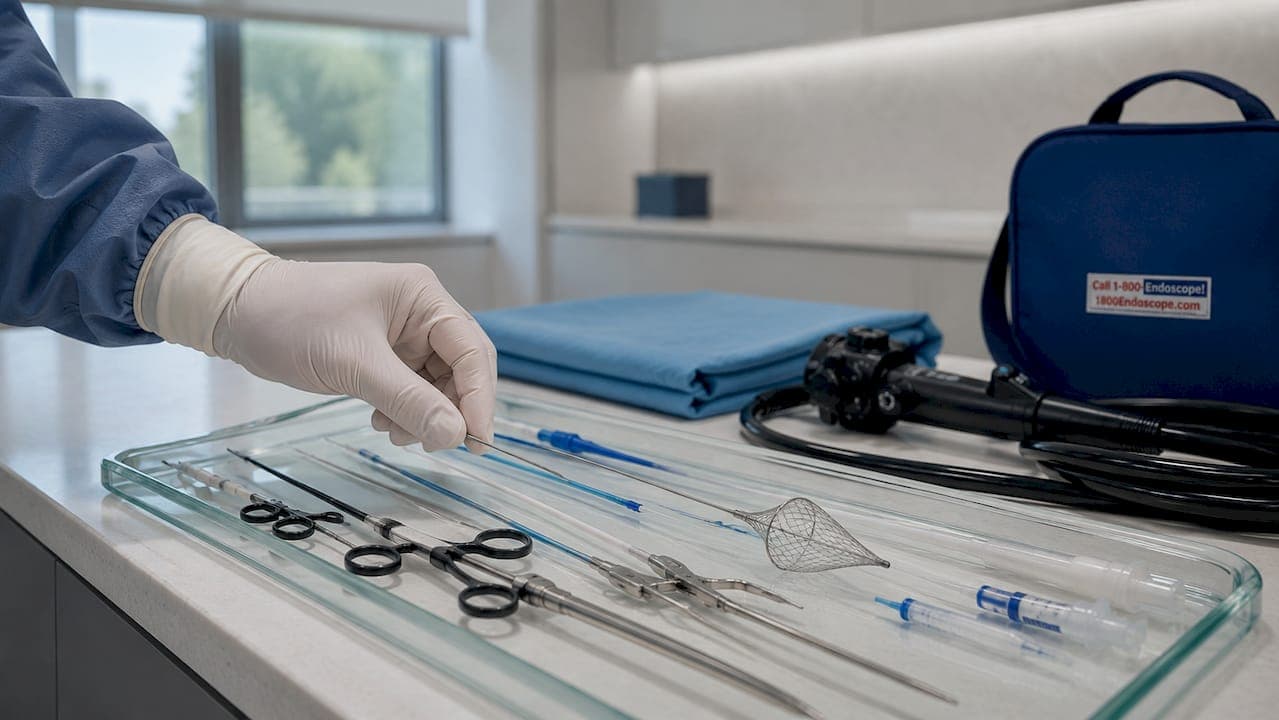
Accessory selection in endoscopy is a direct determinant of procedure success, affecting diagnostic accuracy, patient safety, and operational efficiency in equal measure. Veterinary and industrial professionals who treat accessories as secondary equipment consistently face avoidable complications, scope damage, and workflow delays. The right biopsy forceps, retrieval net, or irrigation valve is not a convenience. It is a clinical decision. Understanding why accessory selection matters in endoscopy means recognizing that the scope itself is only half the system. 1800endoscope builds its entire catalog around this principle, offering accessories matched to specific scope models and procedure types.
Why accessory selection matters in endoscopy: the core case
Accessory choices in endoscopy directly shape tissue handling, diagnostic yield, and therapeutic outcomes. Experts note that professionals frequently underestimate accessory importance, treating tools like biopsy forceps, graspers, and retrieval nets as interchangeable afterthoughts. That assumption leads to avoidable procedural inefficiencies and complications. The scope and its accessories function as a single integrated system, not as separate components.
The endoscopy equipment significance extends beyond the procedure room. Poor accessory choices increase scope repair costs, extend procedure time, and raise infection risk. Professionals who understand accessory compatibility before a case begins consistently achieve better outcomes than those who select tools reactively during a procedure. Getting this right starts with understanding how accessories interact with the scope at a mechanical level.
How does accessory compatibility affect procedure efficiency and outcomes?
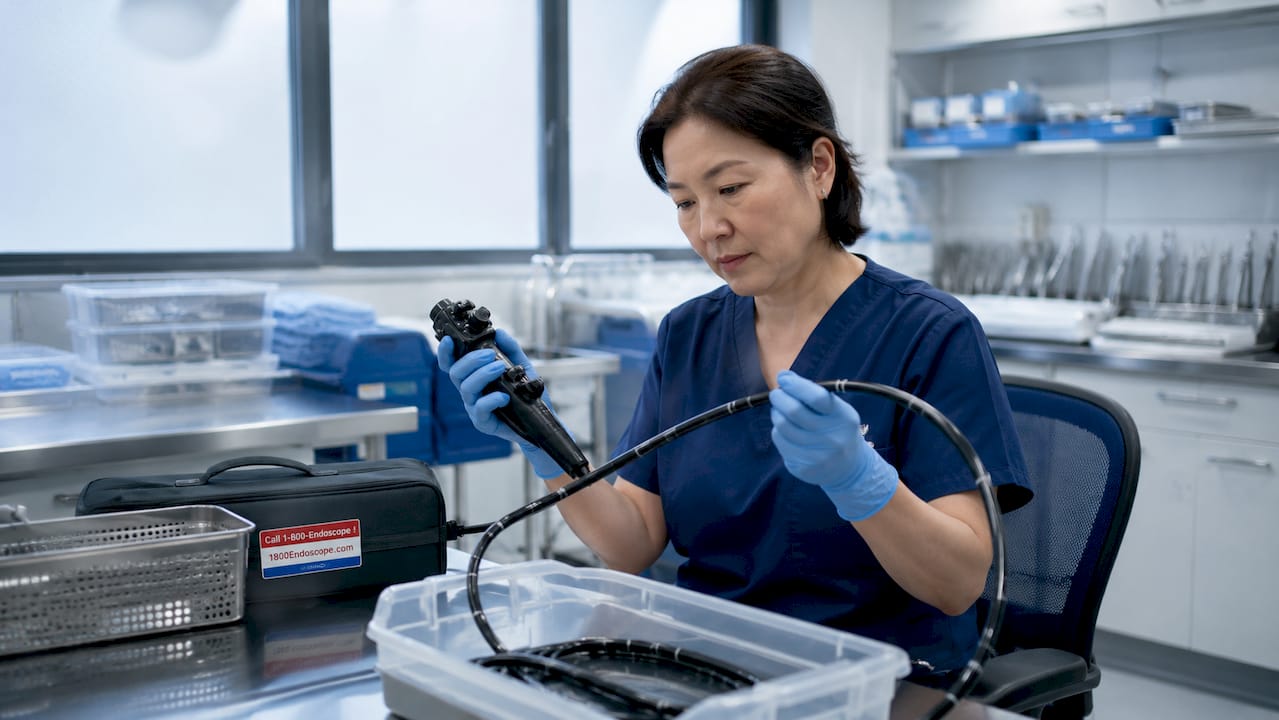
Accessory size relative to the working channel is the most consequential compatibility variable. Inserting an accessory that is too large for the endoscope channel reduces tip deflection angle, limiting the scope's ability to navigate anatomy and maintain visibility. Reduced deflection forces the operator to reposition repeatedly, adding time and increasing the risk of mucosal trauma. In veterinary endoscopy, where patients are smaller and anatomy is less forgiving, this matters even more.
Accessory incompatibility also causes direct physical damage to the internal channel lining. Poor accessory fit damages internal channels, creating micro-abrasions that foster biofilm formation and accelerate scope degradation. Scope repairs are expensive and take equipment out of service. Preventing channel damage through correct accessory sizing is far cheaper than repairing it.
Standardizing accessory sets by procedure type produces measurable gains. Optimized instrumentation reduces procedural complications by matching accessories to case type, reducing operating room delays and improving stone-free rates in complex ureteroscopy cases. The same logic applies to veterinary gastrointestinal procedures and industrial NDT borescope inspections, where having the right retrieval net or brush pre-loaded saves critical time.
Small accessory design differences carry outsized operational consequences. Selecting appropriate retrieval nets improves specimen integrity and reduces procedure time. A net that is too wide for the channel deploys poorly. One that is too narrow fails to capture the target tissue or foreign body cleanly. Neither outcome is acceptable in a clinical or industrial inspection setting.
Pro Tip: Before any procedure, verify the working channel diameter of your specific scope model and cross-reference it against the accessory's maximum insertion diameter. This single check prevents the majority of compatibility-related delays and scope damage.
| Compatibility factor | Impact when mismatched |
|---|---|
| Accessory diameter vs. channel size | Reduced tip deflection, deployment failure |
| Accessory stiffness vs. scope flexibility | Restricted navigation, mucosal trauma |
| Retrieval net width vs. target size | Poor specimen capture, repeat passes |
| Accessory length vs. scope working length | Insufficient reach, incomplete procedures |
What role does accessory selection play in infection control?
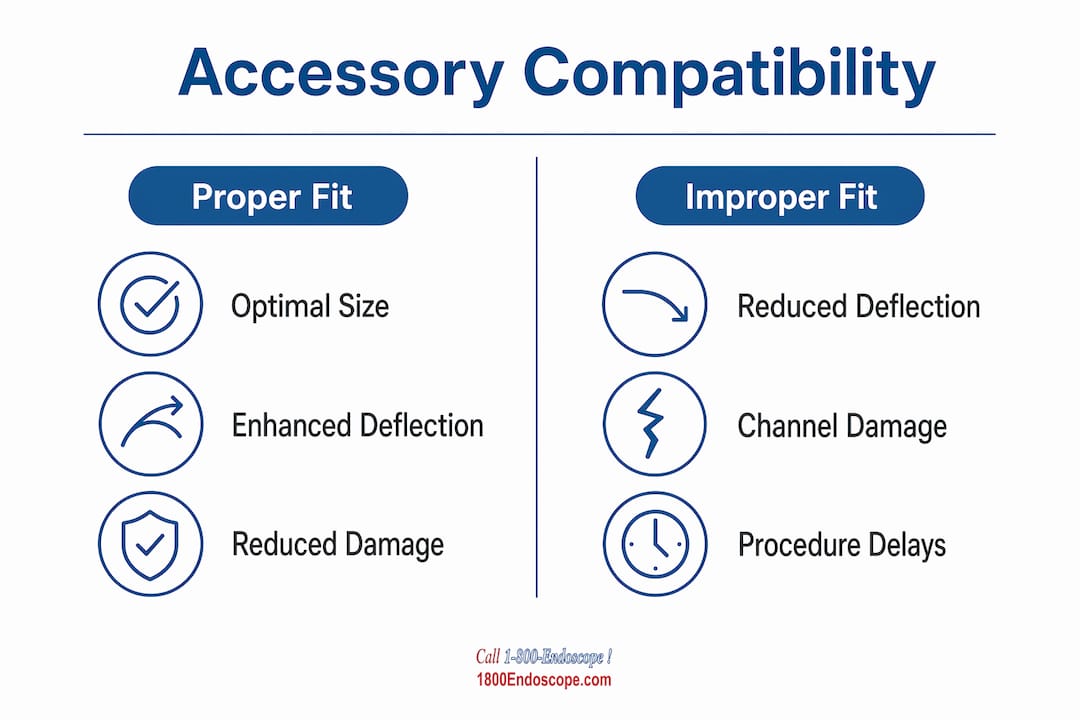
Infection control is where accessory choices carry the highest stakes. Improper reprocessing of accessories is a leading cause of healthcare-associated infections, and the shift toward sterile single-use accessories has become a core infection control strategy in modern gastroenterology and veterinary practice. Reusable accessories require meticulous cleaning, high-level disinfection, and sterilization cycles. Any gap in that process creates cross-contamination risk.
Biofilm is the specific threat that makes reprocessing so difficult. Standard reprocessing protocols cannot fully eliminate biofilm once it forms inside an accessory channel. Accessory incompatibility accelerates biofilm risk by creating micro-damage that gives biofilm a foothold. Single-use sterile accessories eliminate this risk entirely by removing the reprocessing step from the equation.
For veterinary and industrial professionals, the infection control calculus differs from hospital gastroenterology but the core principle holds. Veterinary clinics face the same cross-contamination risks between patients. Industrial borescope inspections in food processing or pharmaceutical manufacturing environments carry contamination risks that make sterile single-use accessories the safer default.
Key infection control considerations when selecting accessories:
- Single-use sterile accessories eliminate reprocessing errors and reduce procedure turnaround time between cases.
- Reusable accessories require documented cleaning protocols, validated sterilization cycles, and staff training to meet safety standards.
- Channel compatibility directly affects biofilm risk. Accessories that damage the channel lining create sites where pathogens persist.
- Regulatory compliance varies by setting. Veterinary clinics, food-grade industrial environments, and medical facilities each operate under different standards, but all require traceable sterilization records.
"Hospitals globally are prioritizing disposable sterile devices to comply with safety regulations and minimize cross-contamination." — Modern Gastroenterology's Shift Toward Single-Use Sterile Solutions
Veterinary accessory types and their clinical roles vary significantly by procedure, and matching the sterilization method to the accessory material is as important as matching size to the channel.
What are the trade-offs between single-use and reusable endoscopic accessories?
The purchase price of a reusable accessory is rarely its true cost. Reusable accessories require reprocessing expertise, adding hidden costs through technician labor, sterilization consumables, equipment maintenance, and liability exposure from reprocessing errors. When total cost of ownership is calculated across a full year of use, reusable accessories are sometimes more expensive than single-use alternatives. That finding surprises most professionals who default to reusables based on upfront price alone.
Performance consistency is the strongest argument for single-use accessories. Every single-use accessory arrives sterile, undamaged, and at full specification. Reusable accessories degrade with each cycle. Biopsy forceps cups dull. Retrieval net wires fatigue. Irrigation channels accumulate residue. The degradation is gradual and often invisible until it causes a procedural failure.
Pro Tip: Track accessory reuse cycles on reusable tools. Most manufacturers specify a maximum number of reprocessing cycles before performance degrades below clinical standards. Exceeding that number is a liability and a patient safety issue.
Environmental impact is a legitimate concern with single-use accessories. Disposable plastics from medical and veterinary procedures contribute to waste streams that facilities are increasingly required to manage. Some facilities address this by using single-use accessories only for high-risk procedures and reserving validated reusables for lower-risk applications. That hybrid approach balances infection control with sustainability goals.
The decision between single-use and reusable accessories is not universal. It depends on procedure volume, sterilization infrastructure, regulatory environment, and the specific risk profile of each case. Industrial borescope inspections in non-sterile environments may favor durable reusables. Veterinary gastrointestinal procedures in high-throughput clinics may favor single-use sterile tools for speed and safety.
How can professionals optimize accessory selection for specific applications?
Optimizing accessory choices starts with a clear assessment of the case mix. Veterinary and industrial professionals who catalog their most common procedure types can build standardized accessory sets for each category. This eliminates reactive, case-by-case selection and reduces the chance of grabbing the wrong tool under time pressure.
A structured selection process covers five key areas:
- Define the procedure goal. Biopsy, foreign body retrieval, irrigation, and visualization each require different accessory profiles. Mixing up tool types mid-procedure wastes time and risks scope damage.
- Confirm scope specifications. Check the working channel diameter, insertion tube length, and tip deflection range for the specific scope model in use. These numbers set hard limits on which accessories are compatible.
- Match accessory stiffness to scope flexibility. Rigid accessories in highly flexible scopes reduce maneuverability. Small animal endoscopy requires particularly careful attention to this balance because the anatomy demands maximum tip control.
- Evaluate sterilization requirements. Confirm that the accessory's material and construction are compatible with the sterilization method available at your facility.
- Integrate selection into training protocols. Accessory errors are most common when staff select tools without procedure-specific training. Each endoscope model requires model-specific competency verification for proper accessory use and reprocessing to avoid compliance failures.
Workflow integration is the step most professionals skip. Accessory selection should be part of the pre-procedure checklist, not an afterthought. Building a standardized tray setup for each procedure type reduces setup time, prevents compatibility errors, and makes training new staff far more consistent.
Key Takeaways
Accessory selection in endoscopy is a clinical and operational decision that directly determines procedure outcomes, scope longevity, and infection control effectiveness.
| Point | Details |
|---|---|
| Compatibility drives outcomes | Accessories sized correctly for the working channel preserve tip deflection and prevent scope damage. |
| Single-use reduces infection risk | Sterile single-use accessories eliminate reprocessing errors and reduce cross-contamination between cases. |
| True cost includes reprocessing | Reusable accessory costs include labor, sterilization, and liability, often exceeding single-use total cost. |
| Standardized sets cut delays | Pre-built accessory trays by procedure type reduce operating room delays and procedural complications. |
| Training must cover accessories | Competency verification for accessory use and reprocessing is required to meet safety and compliance standards. |
The part of endoscopy most professionals get wrong
After years of working with veterinary clinics and industrial inspection teams, the pattern I see most often is this: professionals invest heavily in the scope and almost nothing in thinking about the accessories. They buy a quality videoscope, then grab whatever biopsy forceps or retrieval net is on the shelf without checking channel compatibility or sterilization history.
The consequences are predictable. Scopes come back from procedures with channel damage. Procedures run long because the retrieval net fails to capture cleanly on the first pass. Infection control audits flag reprocessing gaps that nobody noticed because the accessory selection process was never formalized.
The uncomfortable truth is that accessories are where most procedural failures actually originate. The scope gets blamed because it is the expensive piece of equipment. But the root cause is almost always an accessory that was the wrong size, the wrong stiffness, or the wrong sterilization status for that specific case.
The fix is not complicated. Build a compatibility checklist. Standardize your accessory trays by procedure type. Verify reprocessing cycles on reusables. And treat every accessory decision with the same rigor you apply to scope selection. The professionals who do this consistently report fewer complications, lower repair costs, and faster procedure times. That is not a coincidence.
— Endoscope
1800endoscope's accessory catalog for veterinary and industrial professionals
Choosing the right accessories starts with having access to a catalog built around compatibility and procedure-specific performance.
1800endoscope stocks a full range of veterinary and industrial endoscopy accessories, from biopsy forceps and retrieval nets to irrigation valves, light sources, and cleaning tools. Every accessory is listed with scope compatibility specifications so professionals can verify fit before ordering. The veterinary rigid endoscopy catalog covers procedure-specific accessories for small and large animal applications. The borescope and industrial accessory catalog serves NDT inspection teams who need durable, compatible tools for confined-space work. Both catalogs include single-use and reusable options across a range of price points, giving clinics and inspection firms the flexibility to match their workflow and budget.
FAQ
Why does accessory selection matter more than most professionals realize?
Accessories directly affect tip deflection, tissue handling, and infection control. Experts consistently note that underestimating their importance leads to avoidable complications and procedural inefficiencies.
What happens when an accessory is too large for the endoscope channel?
An oversized accessory reduces the scope's tip deflection angle, limits navigation, and can physically damage the internal channel lining, increasing both repair costs and biofilm risk.
Are single-use accessories always the safer choice?
Single-use sterile accessories eliminate reprocessing errors and cross-contamination risk. They are the safer default for high-risk procedures, though the right choice depends on procedure volume, sterilization infrastructure, and regulatory requirements.
How do I know which accessories are compatible with my specific scope?
Check the scope manufacturer's working channel diameter and insertion tube specifications, then cross-reference against the accessory's maximum insertion diameter and working length. Accessory compatibility guides for specific scope models provide the most reliable reference.
Does accessory selection affect endoscope lifespan?
Yes. Incompatible accessories cause micro-abrasions in the working channel that accelerate scope degradation and create biofilm sites. Correct accessory sizing and stiffness matching are the most direct ways to extend scope service life.