
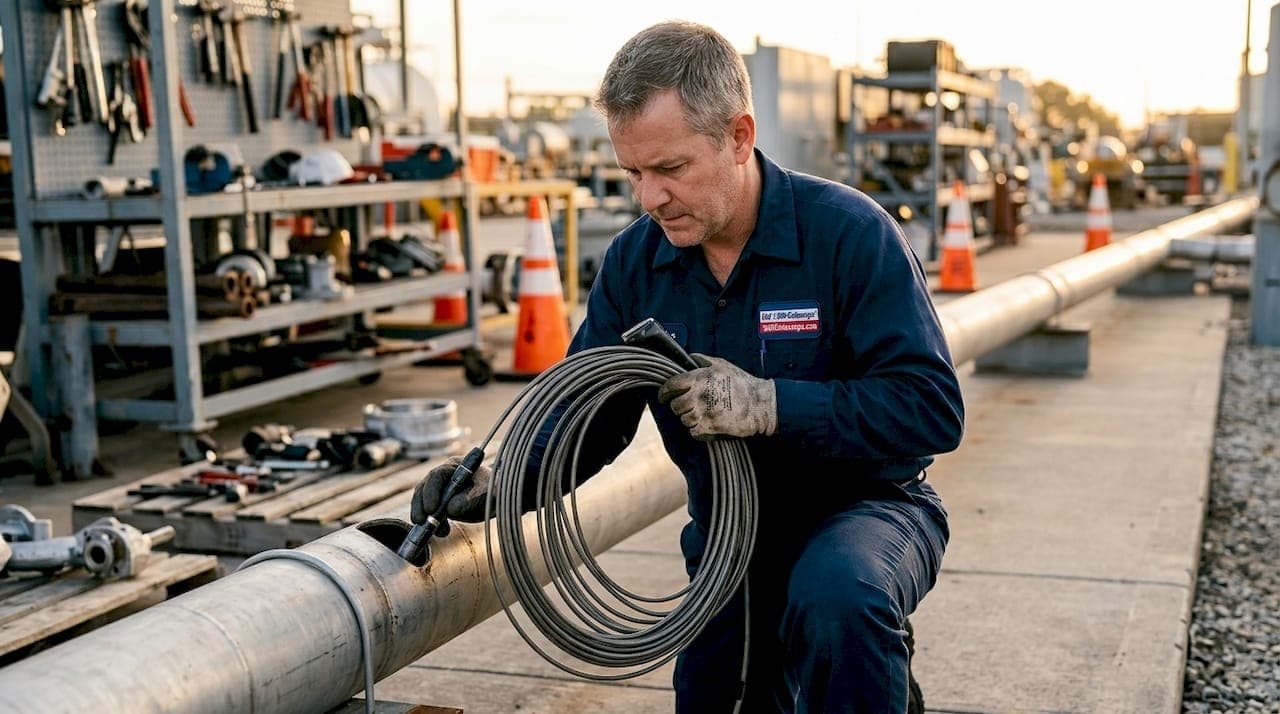
Pipe inspection endoscopy is defined as the use of waterproof camera systems inserted directly into pipes to deliver real-time visual diagnostics without excavation or pipe disruption. The industry standard term is video pipe inspection, though professionals also call it pipe endoscopy or endoscopic pipe inspection. The technique identifies cracks, corrosion, root intrusions, and blockages by transmitting live footage from inside the pipe to an above-ground monitor. Tools range from simple push rod cameras and borescopes to robotic crawlers capable of navigating hundreds of feet of pipeline. For industrial maintenance teams, this method replaces guesswork with documented, visual evidence that drives targeted repair decisions.
What is pipe inspection endoscopy and how does it work?
Pipe inspection endoscopy is a non-invasive technique using waterproof cameras to detect cracks, root intrusions, corrosion, and blockages inside pipes. The camera enters through an existing access point such as a cleanout, manhole, or drain opening. No trenching or pipe cutting is required.
Once inserted, the camera head travels through the pipe on a push rod or robotic crawler. HD cameras with integrated LED lighting illuminate the pipe interior and transmit live video to a surface monitor. The operator watches the feed in real time, controlling pan-tilt-zoom functions to examine specific areas of concern.
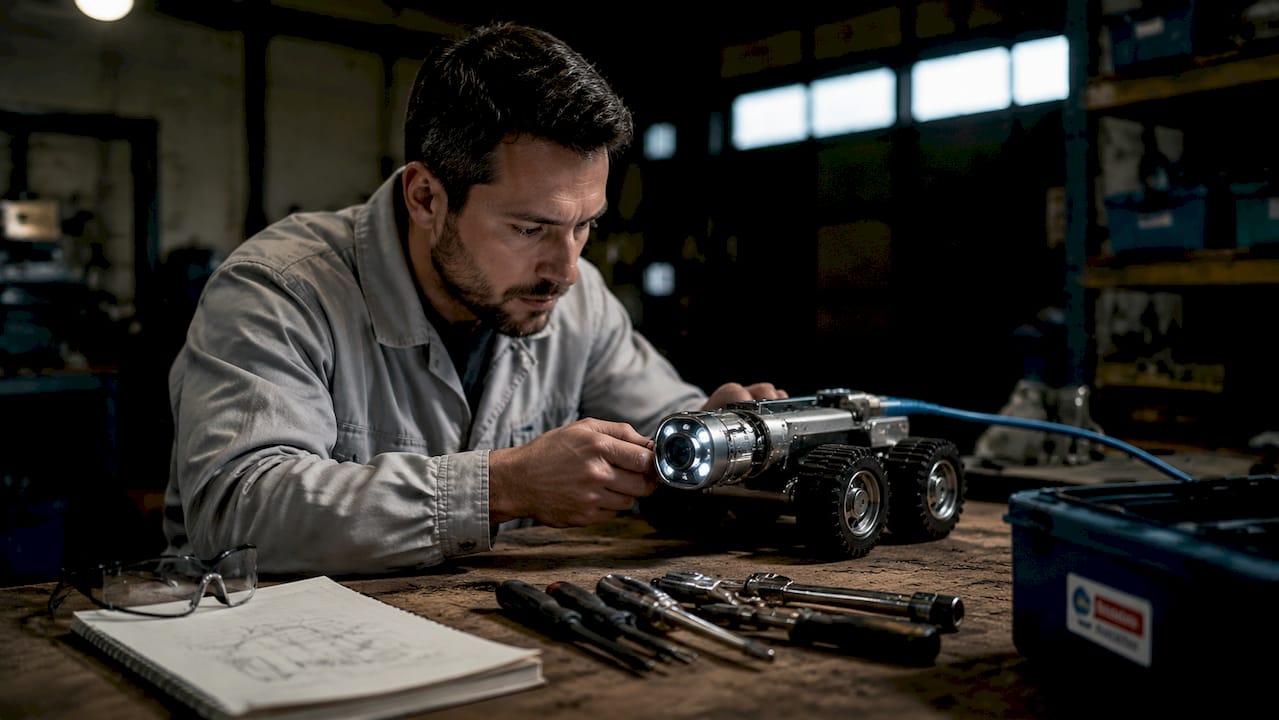
Distance tracking is built into most professional systems. This feature logs the exact footage position of every defect the operator flags. That data becomes the foundation for repair planning, letting crews dig or reline only where the problem actually exists.
Footage is recorded throughout the run. Recorded footage is saved for regulatory compliance, dispute resolution, and long-term maintenance planning. A single inspection run generates a permanent visual record of the pipe's condition at that point in time.
Pro Tip: Always verify that your recording system timestamps and distance-stamps footage automatically. Manual logging during a live inspection run introduces errors that undermine the accuracy of your defect reports.
The step-by-step pipe endoscopy procedure
- Access point identification. Locate the nearest cleanout, manhole, or drain opening that provides a clear entry path into the target pipe segment.
- Equipment setup. Connect the camera head to the push rod or crawler, attach the cable to the surface monitor unit, and confirm the LED lighting is functioning.
- Camera insertion. Feed the camera into the pipe slowly, monitoring the live feed for immediate obstructions or damage near the entry point.
- Active inspection. Advance the camera through the pipe while the operator controls pan-tilt-zoom to examine walls, joints, and any anomalies. The distance counter logs position continuously.
- Defect flagging. The operator marks each defect on the recording with a timestamp and distance reading for precise location mapping.
- Retrieval and reporting. The camera is withdrawn, footage is saved, and the operator compiles findings into a structured inspection report.
What equipment is used in pipe inspection endoscopy?
Video pipe inspection cameras vary from simple borescopes for short surveys to full pipe and sewer inspection cameras designed for long-distance, rugged inspections. Choosing the right tool depends on pipe diameter, run length, and the severity of conditions inside the pipe.
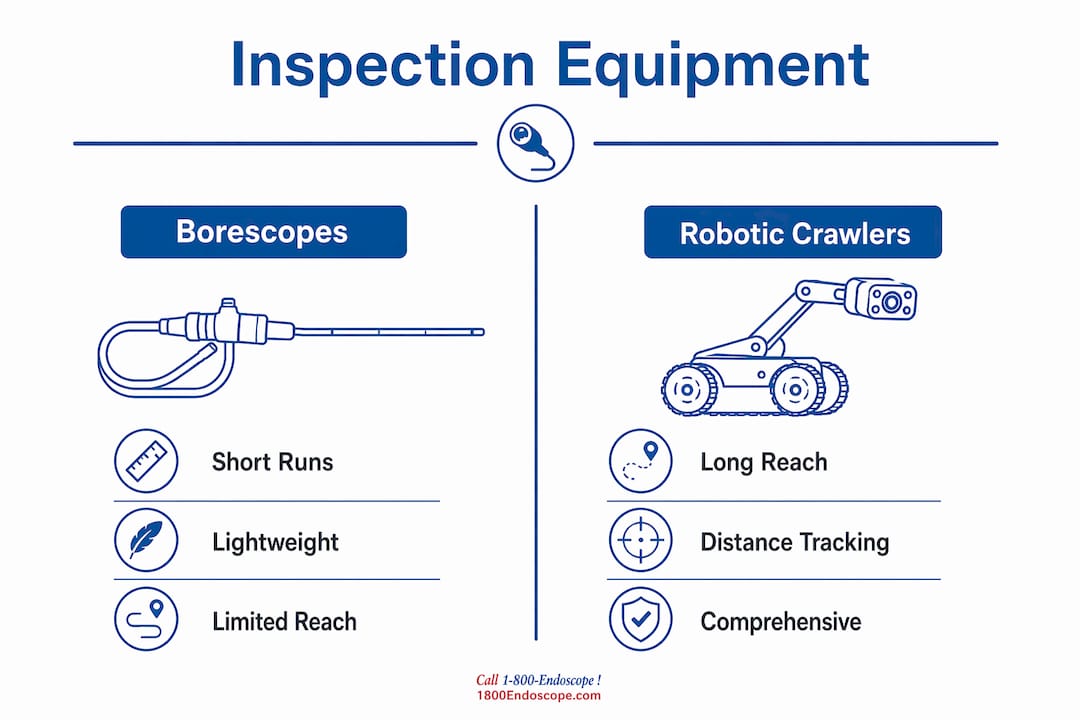
Equipment comparison: borescopes vs. push rod cameras vs. robotic crawlers
| Equipment type | Best use case | Typical run length | Key limitation |
|---|---|---|---|
| Borescope | Short, accessible pipe segments | Up to 10 feet | Limited reach and maneuverability |
| Push rod camera | Residential and light commercial drains | Up to 200 feet | Struggles with sharp bends and long runs |
| Robotic crawler | Municipal sewer and industrial pipelines | Up to 1,000 feet | Higher cost and setup time |
Robotic crawlers carry distance counters for exact defect positioning. That precision makes them the standard choice for municipal and large-scale industrial inspections. Push rod systems work well for most commercial drain and pipe surveys where the run is under 200 feet and bends are gradual.
Camera head size matters as much as reach. Smaller diameter heads, such as 6mm units, navigate tight residential pipes and small-bore industrial lines. Larger heads with pan-tilt-zoom capability suit main sewer lines and wide-bore industrial pipes where wall detail is critical.
Lighting technology directly affects image quality. Adjustable LED lighting is critical because pipe wall reflectivity can wash out images if intensity is not managed in real time. Systems with manual brightness control give operators the flexibility to adapt as pipe material changes along the run.
Pro Tip: Match camera head diameter to the smallest pipe segment in your inspection route, not the largest. A camera that fits the tightest section will navigate the full run without getting stuck.
What are the benefits of pipe inspection endoscopy for industrial maintenance?
The core benefit of video pipe inspection is that it replaces destructive diagnosis with visual evidence. No excavation means no collateral damage to surrounding infrastructure, no restoration costs, and no extended downtime for the facility.
"The value of pipe inspection endoscopy lies in preventative maintenance, enabling prioritized repairs and minimizing downtime." — Rapid View
Regular video endoscopy helps prioritize repairs early, minimizing downtime and extending pipeline lifecycle. A crack caught at 2mm costs a fraction of what a full pipe collapse costs in emergency response, excavation, and service interruption. Visual records also shift maintenance from reactive to scheduled, which is the difference between controlled budgets and emergency spending.
Key benefits for industrial maintenance teams include:
- Non-destructive access. Inspections use existing cleanouts and manholes. No cutting, no trenching.
- Real-time decision making. Video pipe inspection enables diagnosis without excavation and allows real-time decisions during the inspection run itself.
- Compliance documentation. Professional operators use PACP/LACP/MACP coding to convert visual findings into standardized, regulatory-compliant reports required by municipalities and commercial property managers.
- Post-cleaning verification. A camera run after hydro-jetting confirms the line is clear and documents the cleaned condition for client records.
- Construction impact checks. Inspections before and after nearby construction detect settlement, joint displacement, or debris intrusion caused by ground movement.
- Asset lifecycle extension. Scheduled inspections catch minor deterioration before it becomes structural failure, extending the usable life of aging pipe infrastructure.
What factors impact the pipe endoscopy procedure and results?
Operator skill is the single biggest variable in inspection quality. A technically capable camera system produces poor results if the operator rushes past defects, fails to adjust lighting, or misidentifies pipe material. Training and experience with specific pipe types directly affect diagnostic accuracy.
Physical pipe conditions create real operational challenges:
- Sharp bends. Push rod cameras lose steerability past 90-degree bends. Robotic crawlers with articulating heads handle these better.
- Active flow. Inspections in live sewer lines require flow control or off-peak scheduling to keep the camera lens clear.
- Long runs. Down-hole rollers protect camera cables from wear and reduce friction during insertion, making long runs more manageable without cable damage.
- Blocked segments. When push rod methods fail, a fish and rope technique pulls a crawler camera through segments that cannot be traversed by manual pushing alone.
- Reflective pipe walls. Smooth PVC and glazed clay pipes reflect LED light intensely. Operators must reduce brightness to maintain image clarity in these materials.
Inspection duration varies with pipe length, condition, and access complexity. A straightforward 100-foot commercial drain survey takes under an hour. A 1,000-foot municipal sewer run with multiple defect flags and PACP coding can take a full day. Scheduling realistic time windows prevents rushed inspections that miss critical defects.
How is pipe inspection endoscopy applied in real-world industrial settings?
Industry standard guidelines recommend municipalities and commercial properties conduct video pipe inspections annually or biennially to detect minor issues before they escalate. That frequency reflects the reality that pipe deterioration is gradual and largely invisible without a camera.
Real-world applications span a wide range of industrial and infrastructure contexts:
- Municipal sewer systems. Crawler-based inspections with PACP coding feed directly into asset management databases, prioritizing capital repair budgets across thousands of pipe segments.
- Industrial process piping. Chemical plants and manufacturing facilities use borescopes and push rod cameras to inspect process lines for corrosion, scale buildup, and joint integrity without shutting down production.
- Commercial property drainage. Property managers schedule annual inspections to document drain condition, satisfy insurance requirements, and catch root intrusion before it causes backups.
- Post-construction surveys. Contractors run cameras through new installations to verify joint alignment, confirm no debris was left inside, and document the as-built condition for handover records.
- Pre-purchase assessments. Industrial property buyers use pipe and drain inspection to identify hidden infrastructure defects before finalizing acquisition costs.
Integration with asset management systems is where the real operational value compounds. Standardized PACP reports feed into GIS-based infrastructure databases, allowing maintenance managers to track pipe condition trends over multiple inspection cycles and model remaining service life.
Key takeaways
Pipe inspection endoscopy is the most cost-effective method for diagnosing pipe defects without excavation, and its value compounds when inspections are scheduled regularly and results are coded to PACP standards.
| Point | Details |
|---|---|
| Core definition | Video pipe inspection uses waterproof cameras to diagnose pipe interiors without excavation or pipe cutting. |
| Equipment selection | Match camera type to pipe diameter and run length: borescopes for short runs, crawlers for 1,000-foot municipal lines. |
| LED lighting management | Adjust brightness in real time to prevent image washout in reflective PVC or glazed clay pipes. |
| Compliance documentation | Use PACP/LACP/MACP coding to convert footage into regulatory-compliant reports for municipalities and property managers. |
| Inspection frequency | Municipalities and commercial properties should inspect annually or biennially to catch deterioration before it becomes structural failure. |
The case for treating pipe inspection as infrastructure intelligence
After working with industrial inspection equipment for years, the pattern I see most often is this: facilities that inspect reactively spend three to five times more on repairs than those that inspect on a schedule. The math is not complicated. A camera run costs a fraction of emergency excavation. What surprises me is how many maintenance managers still treat video inspection as a last resort rather than a first diagnostic step.
The technology has also improved faster than most professionals realize. Modern push rod systems with HD sensors and video recording optimization produce footage that holds up in regulatory reviews and legal disputes. That documentation value alone justifies the inspection cost for any commercial or municipal operator.
My honest recommendation: stop treating pipe inspection endoscopy as a response to problems and start treating it as infrastructure intelligence. The footage you collect today becomes the baseline that tells you exactly how fast your pipes are deteriorating, which segments need priority attention, and where your capital budget will deliver the most impact. That is not a maintenance cost. That is an asset management tool.
— Endoscope
Industrial pipe inspection equipment from 1800endoscope
Professionals who need reliable pipe inspection tools without the overhead of full-service rental programs will find a direct solution at 1800endoscope.
1800endoscope carries a range of portable, field-ready inspection systems built for industrial environments. The portable 6mm inspection system delivers HD video with direct monitor output and SD card recording, making it practical for both routine drain surveys and detailed defect documentation. For teams that need a broader selection of camera diameters and cable lengths, the borescope and endoscope catalog covers options from compact push rod units to full inspection systems. Every system ships ready to work, with expert support available for professionals who need guidance on equipment selection.
FAQ
What is pipe inspection endoscopy?
Pipe inspection endoscopy is the use of waterproof camera systems inserted into pipes to provide real-time visual diagnostics of cracks, corrosion, blockages, and root intrusions without excavation. The industry standard term is video pipe inspection.
How far can a pipe inspection camera travel?
Robotic crawler systems can reach up to 1,000 feet in a single inspection run, with built-in distance counters that log the exact position of every defect flagged during the run.
What coding system is used for pipe inspection reports?
Professional operators use PACP, LACP, and MACP coding systems to convert visual inspection footage into standardized, regulatory-compliant reports required by municipalities and commercial property managers.
How often should industrial pipes be inspected?
Industry guidelines recommend annual or biennial video inspections for municipalities and commercial properties to detect minor deterioration before it escalates into structural failure or costly emergency repairs.
What is the difference between a borescope and a pipe inspection camera?
A borescope handles short, accessible pipe segments up to roughly 10 feet, while a dedicated pipe inspection camera on a push rod or crawler system is built for longer runs, rugged conditions, and standardized defect reporting.