
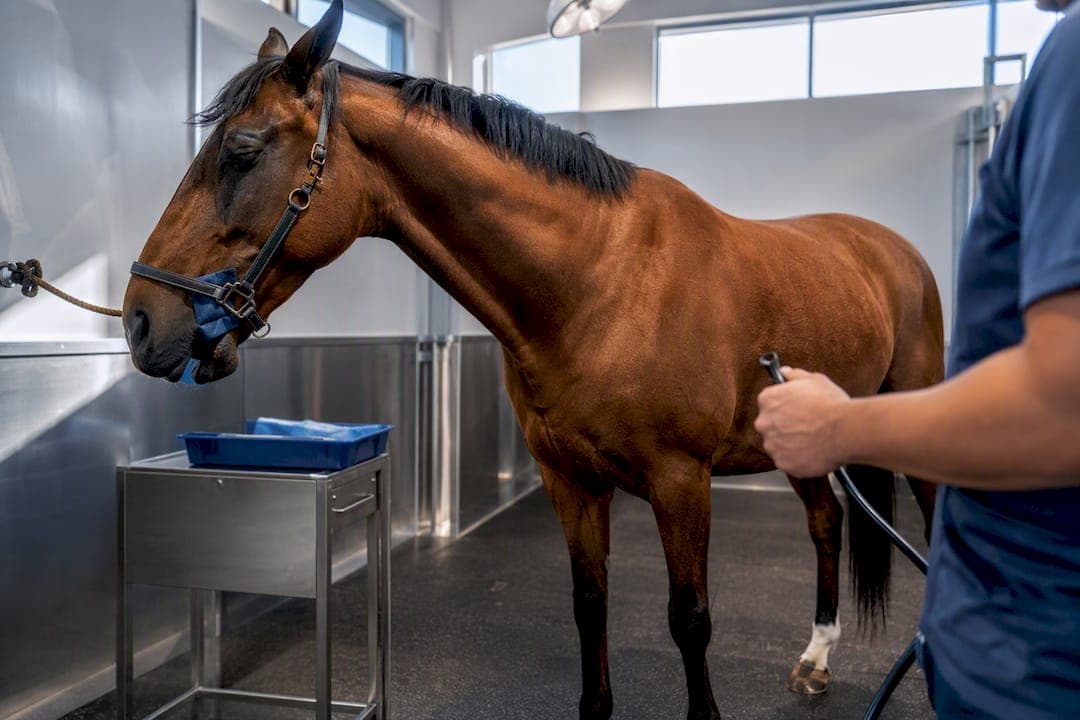
Expect procedure fees between $150 and $900, with most clinics landing near $350 to $400 per scope, and equipment purchase prices from about $3,000 for entry-level field scopes to $25,000 or more for full high-end video systems. The gap between those numbers comes down to a handful of drivers: clinic versus farm-call setting, sedation and add-ons, and how you amortize repairs and accessories over the system's life. The sections below break down each cost line so you can build a realistic per-case budget or a purchase justification.
TL;DR:
- Procedure fees for equine gastroscopy range from $150 to $900, with most clinics charging around $350 to $400 per procedure.
- Buying a mid-range system costs $10,000 to $18,000, while high-end setups can exceed $20,000, with refurbished units offering significant savings.
- Ongoing costs include sterilization supplies, repairs, software, and staff time, which should be factored into the total cost per case.
- Purchasing is justified if a clinic performs over 20 to 25 gastroscopies annually; otherwise, referring or contracting mobile services may be more cost-effective.
- Financing or leasing can spread costs over 3 to 5 years, making equipment acquisition feasible even for clinics with limited upfront capital.
Table of Contents
- What Does Equine Gastroscopy Actually Cost Per Procedure?
- How Much Does an Equine Gastroscope System Cost to Buy?
- What Hidden Costs Add to the Total Cost of Ownership?
- Should Your Clinic Buy, Refer, or Hire a Mobile Service?
- How Can Clinics Lower Per-Case Gastroscopy Costs?
- Can You Finance or Lease an Equine Gastroscope System?
- Does Pet Insurance Cover Equine Gastroscopy?
- Publisher Perspective: 1800endoscope's Clinic Buying Guidance
- Ready to Compare Equine Gastroscope Options?
- Sources
What Does Equine Gastroscopy Actually Cost Per Procedure?
Procedure fees scale with the type of endoscopy. Standing airway exams are usually less costly, gastroscopy costs more since it requires a longer scope and more preparation time, and dynamic (treadmill or overground) endoscopy typically costs the most because it needs specialized equipment and monitoring.
The AAEP VMG combined fee survey reports video endoscope gastroscopy fees ranging from $158 to $730, with an average near $377. That figure lines up closely with consumer-facing estimates, which put gastroscopy costs between $150 and $900 depending on setting and add-ons.
By the numbers: The AAEP survey average of $377 sits almost exactly in the middle of the broader $150 to $900 range clinics and owners report, which makes it a solid anchor for setting your own fee schedule.
A standard invoice usually bundles:
- The clinical exam and history review
- Sedation (typically detomidine or xylazine, sometimes with butorphanol)
- Scope time, including passage and gastric evaluation
- Image or video review and a written report
Common add-ons stack on top of that base: a farm-call or trailer fee for mobile visits, biopsy collection, gastric fluid culture, and any recheck scoping after treatment starts. A clinic haul-in with routine sedation and a handful of images might land at $325. A mobile farm call covering the same exam, plus a $75 to $150 travel fee, often pushes the total closer to $450 to $500.
How Much Does an Equine Gastroscope System Cost to Buy?
Purchase price depends almost entirely on scope length, image quality, and how complete the system is. A bare scope is only part of the equation. You also need a processor, light source, and monitor, and gastroscopy specifically calls for scopes measuring 3 meters or longer to reach the stomach, which pushes costs above shorter airway-only units.
Rough price bands clinics can plan around:
- Entry-level field or USB inspection scopes: roughly $2,000 to $5,000. These handle airway work well but often lack the length or image resolution needed for reliable gastric exams.
- Mid-range complete gastroscopy packages (long scope plus processor, light source, and monitor): typically $10,000 to $18,000 for a functional clinic setup.
- High-end or refurbished hospital-grade systems: $20,000 to $25,000 or more, with longer lead times for new units and variable availability for refurbished ones.
Refurbished systems from a reputable dealer can shave 30 to 40% off a comparable new package, though warranty terms and repair turnaround deserve extra scrutiny before you commit. Reviewing an equine endoscopy system's component breakdown before requesting quotes helps you compare apples to apples across vendors.
What Hidden Costs Add to the Total Cost of Ownership?
The purchase price is just the entry fee. Recurring and hidden costs shape whether a system actually pays for itself.
Budget for these ongoing line items:
- Sterilization and cleaning supplies (enzymatic solutions, brushes, drying cabinets)
- Biopsy forceps, valves, and other disposables that wear out with use
- Repairs, especially to the insertion tube and bending section, which take the most physical abuse
- Image capture software, storage, and any licensing fees
- Warranty extensions or service contracts
Repair costs for a damaged insertion tube or broken angulation wire can run into the thousands, and turnaround time matters as much as price. A scope in the shop for three weeks means canceled appointments unless you have a spare unit or a loaner arrangement with your vendor.
Pro Tip: Build repair costs into your per-case math from day one. A clinic doing 40 gastroscopies a year should assume at least one moderate repair annually, and pricing that into each procedure fee prevents an unpleasant surprise at tax time.
Staff time is the most overlooked cost. A rushed gastroscopy day with poor prep coordination burns more technician hours than a well-scheduled batch of five patients back to back.
Should Your Clinic Buy, Refer, or Hire a Mobile Service?
Run the math before committing capital. A basic utilization threshold: if a mid-range system costs $15,000 and you amortize it over five years plus $1,500 in annual maintenance, that is roughly $4,500 per year in fixed cost. At an average procedure fee of $377, you need about 12 gastroscopies a year just to break even on the equipment, before factoring in your time.
- Buy if your caseload exceeds 20 to 25 gastroscopies annually, you have staff trained in scope handling, and you want scheduling control.
- Refer to a specialty hospital or academic center if your caseload is sporadic and travel distance to a referral center is short. Academic centers often carry dynamic endoscopy capability you cannot justify buying.
- Contract a mobile gastroscopy service if you want to offer the procedure without capital outlay, but confirm travel fees and scheduling windows in advance.
When comparing quotes, ask each vendor about warranty length, average repair turnaround, farm-call radius and fees, and their sedation protocol defaults. A portable system built for field use may fit a mixed-practice clinic better than a bulky hospital unit that never leaves one exam room.
How Can Clinics Lower Per-Case Gastroscopy Costs?
Small workflow changes move the needle more than most clinics expect. Batch scheduling, sometimes called a gastroscope day, groups multiple patients into one setup and cleaning cycle, cutting per-case labor significantly. The same logic applies to farm calls: stacking two or three appointments on one route splits the travel fee across patients instead of charging it in full each time.
- Schedule gastroscopy cases in blocks rather than one-off appointments
- Consider refurbished units or modular upgrades instead of buying new every cycle
- Negotiate service contracts that bundle recheck scopes into the original package price
- Track utilization and repair frequency monthly to catch a buy versus outsource decision going stale
Pro Tip: Ask your scheduling software or receptionist workflow to flag clustering opportunities automatically. A tool like AlmaTalk's AI receptionist for veterinary clinics can help group farm calls by region when booking requests come in, which trims travel costs without extra staff overhead.
Can You Finance or Lease an Equine Gastroscope System?
Yes, and for many clinics it makes more sense than a lump-sum purchase. Equipment financing spreads a $15,000 to $25,000 system cost over 36 to 60 months, which keeps cash available for other capital needs like digital radiography or an ultrasound upgrade.
Leasing works two main ways in veterinary equipment: a lease-to-own structure where payments build toward eventual ownership, or a true operating lease where you return or upgrade the unit at term end. Operating leases suit clinics still testing gastroscopy caseload volume, since they avoid being locked into aging equipment if demand grows faster than expected, or shrinks.
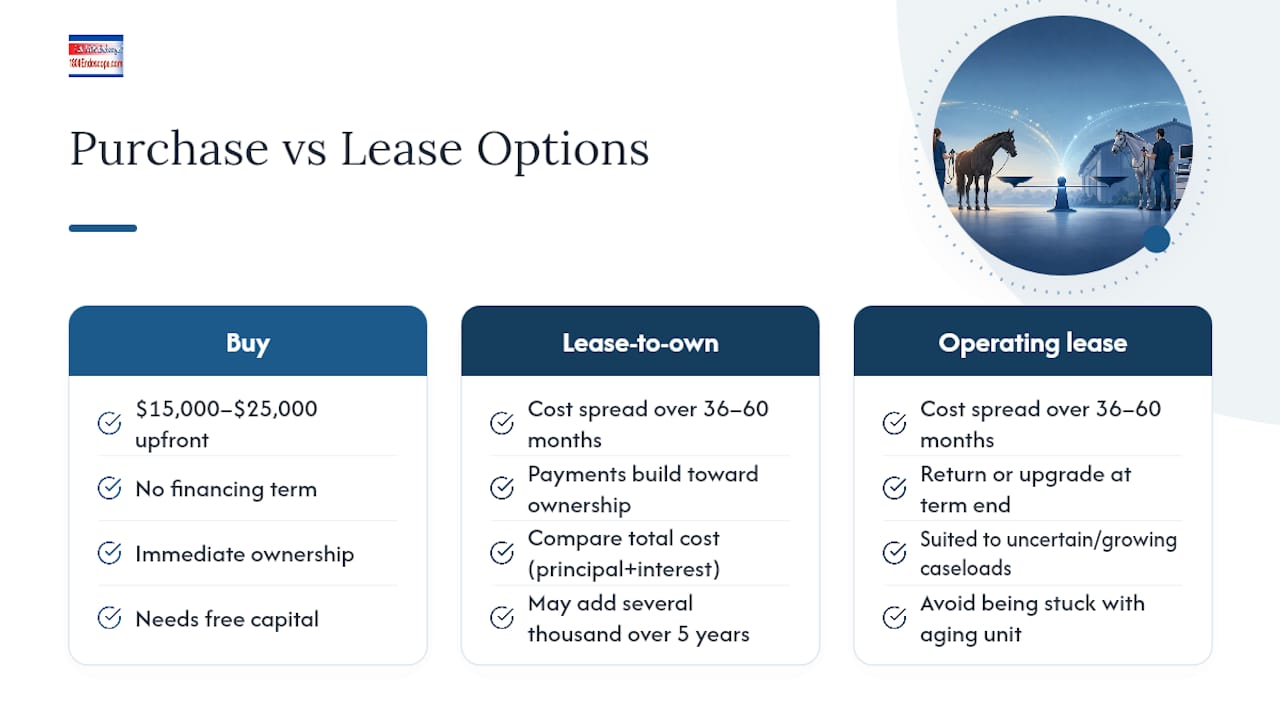
Several equipment finance companies and some veterinary equipment dealers offer structured payment plans directly, often with approval turnaround measured in days rather than weeks. Terms vary by lender and credit profile, so compare the total cost of financing (principal plus interest) against outright purchase before signing. A system financed at even a modest interest rate over five years can add several thousand dollars to the total cost, but for a clinic without $15,000 in free capital, that tradeoff often beats turning away gastroscopy cases entirely.
Ask any vendor whether they offer in-house financing or partner with a third-party lender, and whether early payoff carries a penalty. Some dealers roll a service contract into the lease payment, which simplifies budgeting even if it raises the monthly figure slightly.
Does Pet Insurance Cover Equine Gastroscopy?
Coverage depends entirely on the policy and why the scope is being performed. Major medical equine insurance policies that include colic or major medical riders often reimburse diagnostic gastroscopy when it is performed to investigate a covered condition, such as unexplained weight loss, poor performance, or suspected ulcers tied to an insured illness.
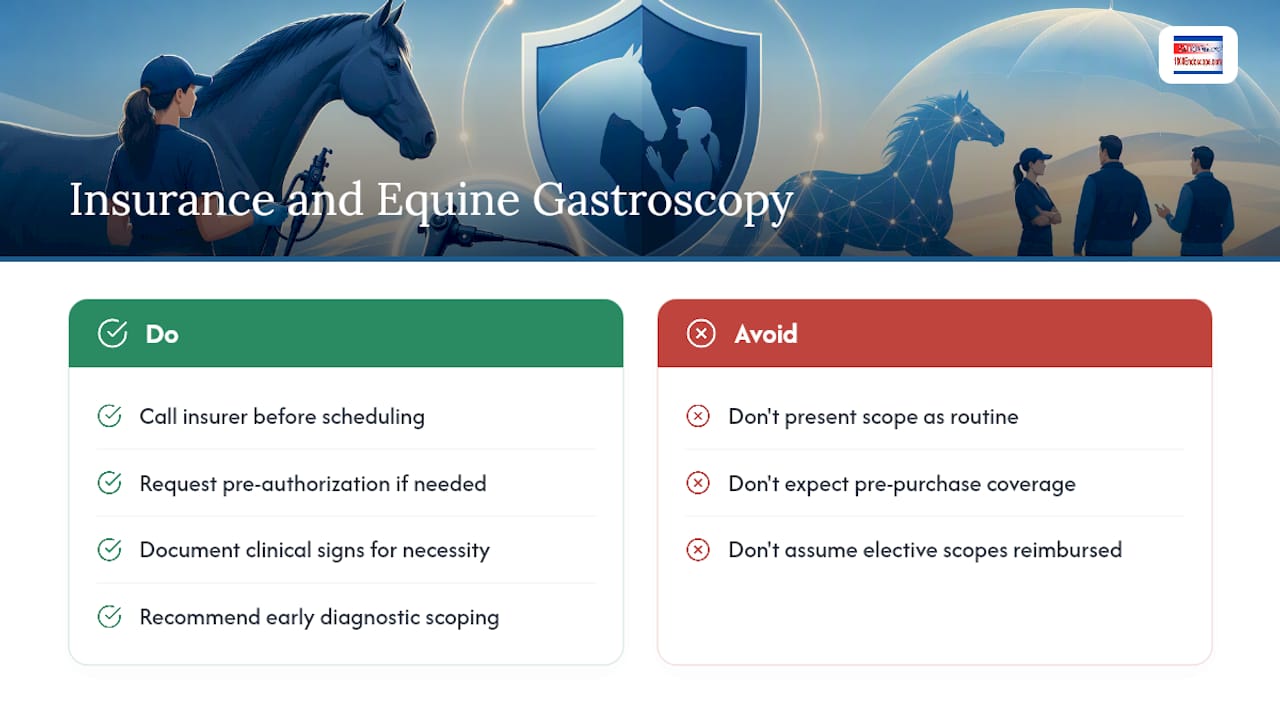
Routine or preventive scoping, including pre-purchase exams, is typically excluded from reimbursement regardless of policy type. Insurers generally treat diagnostic gastroscopy the way they treat other advanced imaging: reimbursable when it is medically necessary to diagnose a covered problem, and out-of-pocket when it is elective or screening-based.
Clients should call their insurer before scheduling if cost is a concern, since pre-authorization requirements and annual deductibles vary by carrier and can change what actually gets reimbursed. From a clinic's side, documenting clinical signs that justify the scope, rather than framing it as routine screening, improves the odds of a claim going through. This is also where the cost-effectiveness argument for early diagnosis matters: an insured client who scopes early and confirms a diagnosis often avoids months of empirical medication that insurance may not cover at all.
Publisher Perspective: 1800endoscope's Clinic Buying Guidance
1800endoscope specializes in veterinary endoscopes across every budget tier, from portable field scopes to full video gastroscopy systems, and our clinic buying guide maps directly to the entry, mid, and high-end bands covered here. Before comparing vendors, weigh warranty terms and spare-scope availability as heavily as sticker price. A cheaper system with a three-week repair turnaround costs you more in canceled appointments than a slightly pricier one with same-week service.
— Endoscope
Ready to Compare Equine Gastroscope Options?
If you are weighing a purchase against another farm call bill, start by looking at what you would actually own. 1800endoscope's portable endoscope systems give clinics a lower entry point than a full hospital-grade setup, without giving up SD card recording or direct monitor viewing for same-visit review.
Whether you are outfitting a mixed practice or adding gastroscopy to an existing surgical suite, the fastest path to a usable quote is knowing your caseload, your must-have features, and your budget ceiling before you call. Browse the full borescope and endoscope catalog to compare SKUs side by side, and ask about refurbished units and service-contract terms when you request pricing. If your practice already runs rigid endoscopy for other procedures, the veterinary rigid endoscopy catalog is worth a look too. Reach out with your annual gastroscopy case count and desired scope length, and you will get a quote that actually reflects how the equipment will be used, not a generic list price.
Sources
Figures in this guide draw from the AAEP VMG fee survey, consumer cost summaries from SpectrumCare, practical prep guidance from Virginia Tech's veterinary hospital, and SmartPak's procedure overview, cross-checked for consistency before publication.
- AAEP VMG combined fee survey (Decade One)
- Horse endoscopy cost overview (SpectrumCare)
- Virginia Tech VTH equine endoscopy overview
- McCleery Equine: ulcer evaluation and gastroscopy