
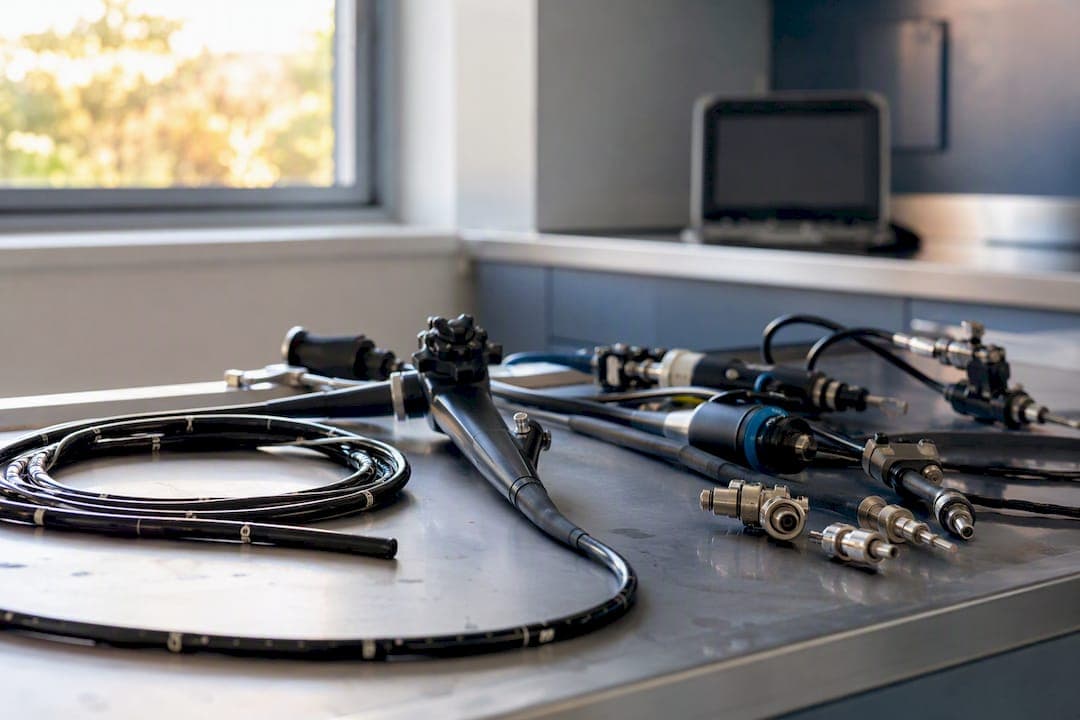
For most small animal and mixed-practice clinics, a lightweight USB or wireless flexible videoscope is the right first purchase in portable veterinary endoscopy. It gives you real diagnostic capability, at a fraction of the cost of a full mobile-ready tower, without demanding a dedicated processor or specialized IT setup. A compact portable all-in-one monitor system becomes the better call once your case volume justifies a dedicated recording and accessory setup, or when you need a working channel for biopsy and retrieval on a regular basis.
The tradeoff is straightforward: USB/wireless scopes win on price and simplicity, portable all-in-one systems win on functionality and durability, and mobile specialist services win when neither purchase makes financial sense yet.
Before you commit budget, take these steps:
- Request a live demo so you can hold the scope and check actual weight and cable management.
- Ask for insertion tube OD, working channel size, and available lengths in writing.
- Arrange a trial run with a mobile specialist if your case volume is still uncertain.
Key Takeaways
Portable veterinary endoscopy works best when the form factor matches actual case volume, not aspirational caseload projections.
| Point | Details |
|---|---|
| Start lightweight | A USB or wireless flexible scope suits most clinics starting their first in-house endoscopy program. |
| Match length to species | Scopes over 125 cm are often required for large-breed dogs and equine procedures. |
| Verify reprocessing first | Confirm disinfection compatibility and leak-test capability before purchase, not after. |
| Use the break-even test | Low case volume favors mobile specialists; consistent volume favors ownership. |
| Consider 1800endoscope's portable line | The PVSM6150 and PVSUSB6150 cover small-animal and equine field work with recording built in. |
Table of Contents
- Types of Portable Veterinary Endoscopy Equipment
- What to Check Before You Buy: A Feature Checklist
- When to Buy Equipment vs. Call a Mobile Specialist
- Sterilization and Maintenance You Can't Skip
- What Portable Endoscopy Actually Costs
- From Order to First Procedure: What the Timeline Looks Like
- Comparing Portable Systems Without the Vendor Hype
- Why 1800endoscope's Portable Line Earns a Place on the Shortlist
- Get a Portable Endoscopy System Built for Your Clinic's Caseload
- Sources
Types of Portable Veterinary Endoscopy Equipment
Rigid endoscopes remain the workhorse for otoscopy, arthroscopy, laparoscopy, and cystoscopy. Their fixed optics deliver sharper images than comparably priced flexible units, and they hold up better under repeated sterilization cycles because there's no bending shaft to fatigue.
Flexible videoscopes handle the procedures rigid scopes cannot: gastroscopy, bronchoscopy, and foreign-body retrieval from the esophagus or trachea. The flexible tip navigates curves in the GI tract and airway that a rigid shaft simply cannot follow.
Handheld and USB/wireless units are the newest category shaking up the space. Some portable wireless veterinary videoscopes weigh under a kilogram, steer with a 360-degree joystick, and stream directly to a smartphone or tablet over Wi-Fi. That combination of low weight and app-based viewing makes them a practical entry point for practices that haven't run in-house endoscopy before.
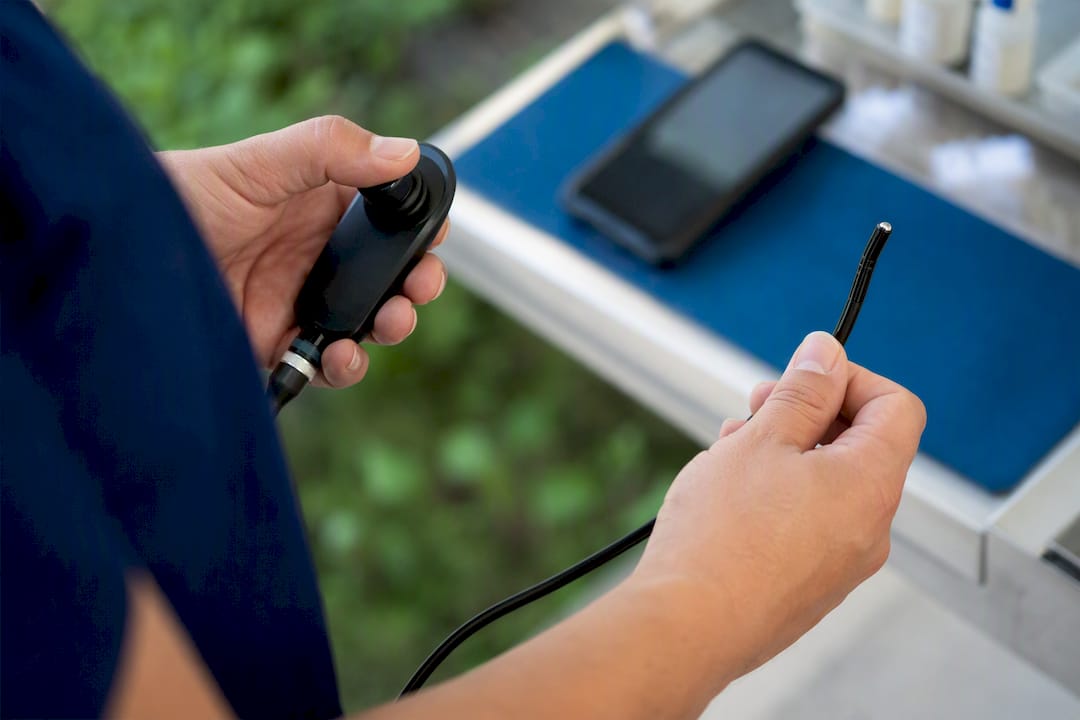
Portable all-in-one systems sit above that tier: built-in monitor, SD card recording, and often a wider working channel for instruments. You pay more and carry more, but you gain functionality a phone screen can't match.
Species matters here too. Scope length guidance generally runs from 55 cm up to 170 cm, and anything longer than 125 cm is often necessary for large-breed dogs and select equine procedures. Match the scope's outer diameter and working channel to your caseload, not the other way around.
What to Check Before You Buy: A Feature Checklist
Specs sheets look similar across brands until you actually use the equipment. Work through this list before signing a purchase order:
- Imaging quality. Confirm HD resolution, frame rate, and low-light performance, plus how footage is stored (SD card, USB, or wireless streaming).
- Mechanical specs. Check insertion tube OD, working channel diameter, and deflection angles. A joystick with limited range will frustrate you mid-procedure.
- Portability. Weigh the unit, check battery life under continuous use, and ask whether a protective transport case is included.
- Connectivity. Verify compatibility with iOS, Android, or Windows, and confirm the export format works with your existing recordkeeping software.
- Reprocessing compatibility. Ask what materials the shaft and tip are made from, which disinfection methods are validated, and whether the scope supports leak testing.
- Service and support. Find out where parts are stocked, how long the warranty runs, and typical repair turnaround if something breaks mid-week.
Pro Tip: Ask the vendor to demo the scope on an actual patient model or cadaver, not just on a benchtop. Real-world flex and image lag under motion tell you more than any spec sheet.
When to Buy Equipment vs. Call a Mobile Specialist
Different procedures call for different tools. Gastroscopy and colonoscopy generally need a longer flexible scope with a working channel for biopsy forceps. Bronchoscopy and rhinoscopy favor a thinner, highly maneuverable tip. Equine dental exams and airway inspection typically call for a longer field scope built for barn conditions. Esophageal foreign-body retrieval demands both length and a functional grasping instrument.
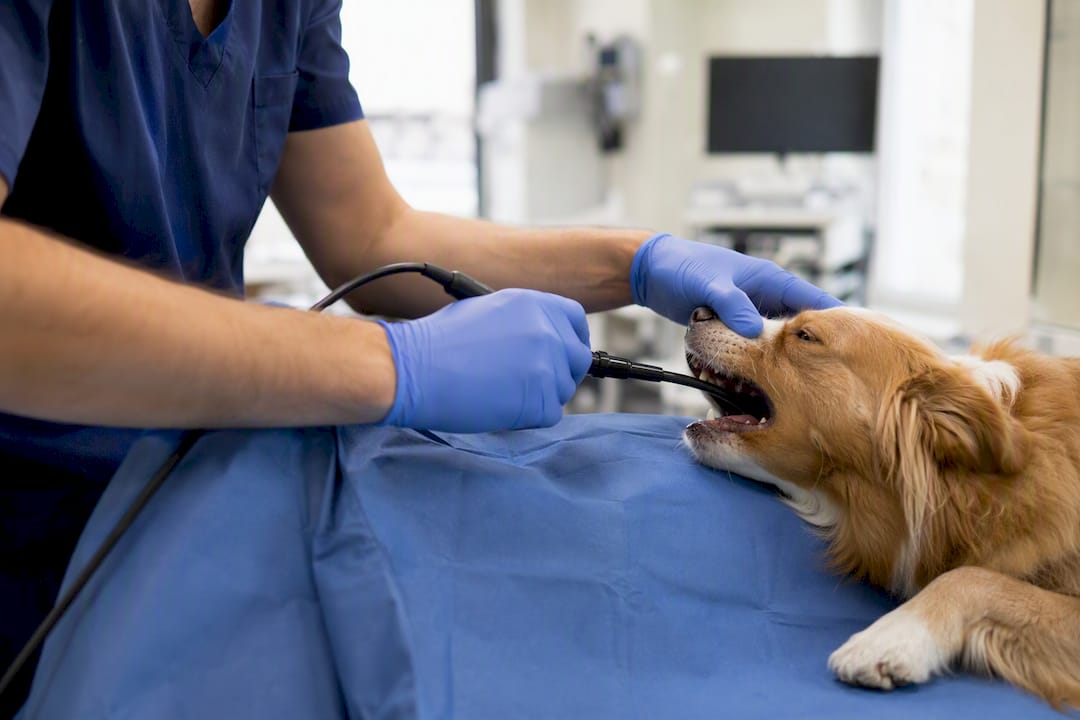
Buy when your case volume and staff training can justify the capital outlay. Partner with a mobile specialist when volume is too low to justify ownership, or when your team hasn't been trained on the procedure yet.
Mobile specialists typically bring their own equipment onsite, run the procedure in your existing exam room, and hand you a written report afterward. Mobile veterinary services have become common in metro areas specifically to reduce referrals to distant specialty hospitals, and mobile endoscopy providers report that onsite procedures reduce patient stress compared with sending an anxious animal to an unfamiliar facility. Expect anesthesia, staffing, and room setup to mirror a standard sedated procedure, just with a visiting specialist running the scope.
Sterilization and Maintenance You Can't Skip
Reprocessing is where portable endoscopy programs succeed or fail quietly over time. The core sequence: pre-clean immediately after use, leak-test the shaft, manually clean the channels, then apply high-level disinfection matched to the scope's material construction.
Build these habits into your protocol:
- Leak-test before every disinfection cycle, not just when damage is suspected.
- Watch for pinholes, cracked insulation, or sluggish deflection as early wear signs.
- Stock spare valves, biopsy forceps, and suction channel parts so a single damaged accessory doesn't sideline the whole unit.
- Document every reprocessing cycle and assign one trained staff member as the accountable owner.
1800endoscope's step-by-step sterilization guide walks through validated cleaning cycles in more detail if you're building a protocol from scratch.
What Portable Endoscopy Actually Costs
Entry-level handheld and USB scopes generally sit at the low end of the market. Mid-range portable all-in-one systems cost more but add recording, a built-in monitor, and a wider working channel. Full mobile-ready towers sit at the top of the range and suit high-volume referral practices.
Sticker price is never the full picture. Budget separately for:
- Sterilization equipment and validated disinfectant solutions
- Replacement accessories like forceps, valves, and suction tubing
- Service contracts and eventual repair costs
- Staff time for training on the new equipment
A simple break-even framework works here: if you're doing fewer than a handful of endoscopic cases a month, a mobile specialist visit usually costs less than owning and maintaining a scope. Once case volume climbs consistently, in-house ownership starts to pay for itself. Practitioner experience backs this up: demoing equipment and confirming reprocessing compatibility before purchase heads off maintenance headaches and downtime that a spec sheet alone never reveals.
From Order to First Procedure: What the Timeline Looks Like
Most portable systems ship within days once ordered, since they're stocked units rather than custom builds. Delivery for a USB or wireless scope typically lands faster than a full portable all-in-one system, which may involve additional accessories, a carrying case, and a monitor that ship together.
Setup itself is usually quick. A USB or wireless unit connects to an existing tablet or laptop and needs little more than app installation and a battery charge before first use. A portable all-in-one monitor system takes a bit longer, since you'll want to test the recording function, confirm SD card storage works as expected, and run a full reprocessing cycle before the scope ever touches a patient.
Build in time for staff familiarization before the first real case. Even a simple flexible scope has a learning curve around tip deflection and image orientation, and running a dry practice session on a training model or even a stuffed cavity saves you from fumbling during an actual procedure. Ask your vendor whether training materials or a walkthrough call comes with the purchase. Some do, some don't, and that gap can matter more than the price tag on the box.
Plan for a short overlap period where new equipment sits alongside any existing referral arrangement, so a scheduling gap never leaves you without a diagnostic option.
Comparing Portable Systems Without the Vendor Hype
Spec sheets from different manufacturers often look interchangeable until you line them up against your actual caseload. A 5.8mm OD wireless scope with a 360-degree joystick, like the models described in the SIOMedical product line, suits small-animal GI and airway work where a lightweight, phone-connected setup matters more than a wide working channel.
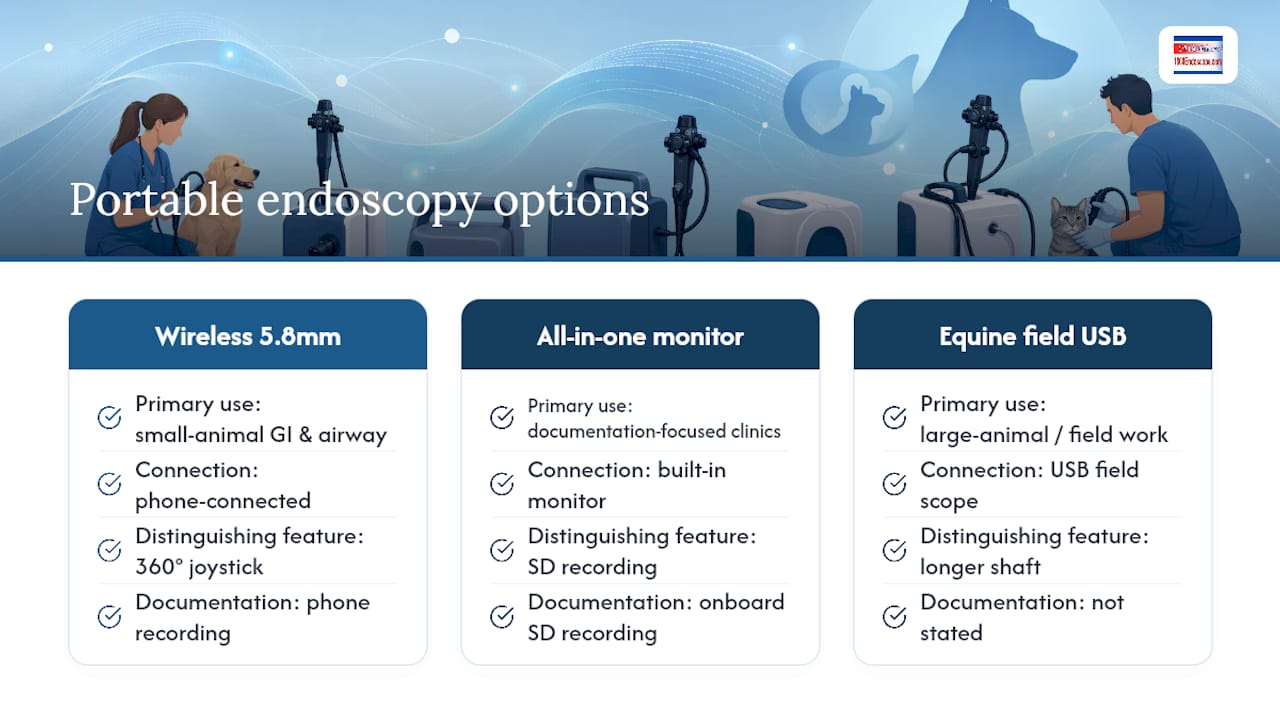
A compact all-in-one system with a built-in monitor and SD recording, by contrast, suits practices that need documentation for referring vets or insurance claims and don't want to depend on a tablet's battery life mid-procedure.
For large-animal and field work, an equine-focused USB field scope with a longer shaft outperforms a standard small-animal unit, simply because the reach and durability requirements differ. Judge any system against three questions: What's the actual working channel diameter? What length options does the manufacturer offer? And does the shaft material tolerate your clinic's chosen disinfection method? Vendors who answer those three questions clearly, without redirecting to marketing language, are usually the ones worth trusting with a demo request.
Why 1800endoscope's Portable Line Earns a Place on the Shortlist
The PVSM6150 checks most of the buying-checklist boxes clinics ask about most: a 6mm outer diameter, 150cm working length, built-in monitor, and SD card recording, all in a fully portable housing. That combination covers a lot of general small-animal GI and airway work without requiring a separate tower or workstation.
For large-animal and field settings, the PVSUSB6150 pairs an 8mm shaft with USB connectivity built for equine airway inspection, which matters when you're working in a barn aisle rather than a clinic suite.
Both units are worth putting through the same evaluation any portable scope deserves: request a demo, confirm the reprocessing method matches your sterilization protocol, and ask what training or technical support comes bundled with the purchase. A vendor who walks you through leak-testing and disinfection compatibility before you buy is telling you something about how they'll handle a support call after you own the equipment.
— Endoscope
Get a Portable Endoscopy System Built for Your Clinic's Caseload
1800endoscope sells the portable systems this article just walked through, directly, without routing you through a distributor markup or a multi-week quote process. If you've read this far because you're deciding between a lightweight field scope and a full monitor system, that decision gets easier once you're holding actual specs instead of a marketing brochure.
The PVSM6150 portable monitor system covers general small-animal GI and airway work at a lower price point than a full tower setup, while the PVSUSB6150 equine field scope is built for barn conditions and large-animal airway inspection. Clinics exploring accessories or additional scope families can also browse the borescope and endoscope catalog for compatible tools. Request specs, ask about reprocessing compatibility for your sterilization protocol, and get a written quote before your next procurement meeting.
Sources
For deeper reading: 1800endoscope's PVSM6150 product page, the PVSUSB6150 equine scope page, the sterilization guide, and mobile vet benefits for context on onsite service models.
- VetsGoNow — mobile veterinary services
- APEX Veterinary Internal Medicine — mobile services
- SIOMedical — Portable wireless veterinary endoscope
- Today's Veterinary Practice — Endoscopic equipment for the veterinary practitioner