
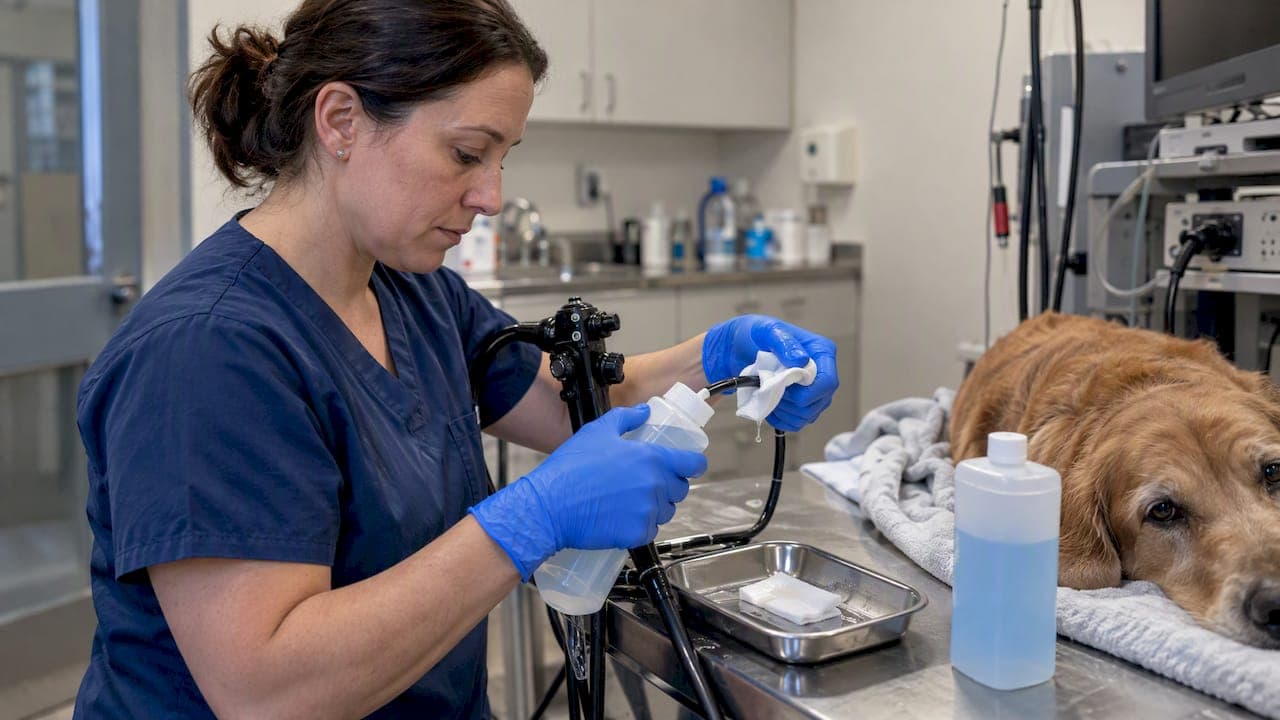
For endoscope fogging prevention, an evidence-backed approach combines a sterile saline or surfactant rinse when appropriate, scope warming when feasible, and thorough drying and storage. A randomized trial favored saline and soap over a commercial anti-fog device. Fogging is both a procedural and a device-level problem, shaped by CDC reprocessing guidance and FDA device classification.
TL;DR:
- In a randomized simulation, saline scored 7.9 and soap 7.8 on visual clarity at 60 seconds, versus 4.8 for the commercial device.
- Warm the scope for the interval specified by the warming device, and confirm that any sterile solution is compatible with the scope manufacturer’s guidance.
- After each use, clean and disinfect or sterilize the endoscope, dry it thoroughly, and store it vertically with ventilation or in a validated horizontal system.
- For a clouded lens, irrigate, suction residual liquid, wipe gently with a sterile microfiber cloth or trocar swab, then reapply defog solution.
- A large upper GI trial found that acetylcysteine combined with simethicone improved adequate mucosal visibility compared with water or either agent used alone.
Table of Contents
- What should you set up before the first insertion?
- What do trials say about defogging techniques?
- How should you warm the scope and apply solutions?
- What is the fastest way to clear a fogged lens mid-case?
- What do anti-fog kits and warmers actually contain?
- How do reprocessing and storage reduce future fogging?
- What should you do when fogging keeps coming back?
- What does reliable fog control look like in practice?
- How can we help you keep lenses clear?
- FAQ
- Sources
What should you set up before the first insertion?
Fog prevention starts on the back table, not after the lens clouds. Run through this list before the case:
- Confirm the scope completed reprocessing and drying, with no residual moisture in channels.
- Warm the scope for the interval its warming device's instructions for use (IFU) specify.
- Prepare sterile anti-fog solution or warm saline, plus a spare applicator.
- Place trocar swabs and microfiber cloths within reach of the operator.
- Check irrigation and suction lines before they are needed.
- Assign one person to lens maintenance and keep a spare scope or an external defog station ready.
For upper GI work, your protocol may call for N-acetylcysteine with simethicone to improve mucosal visibility, which we cover below.
Pro Tip: Stage the defog supplies in the order you will use them (irrigation, wipe, solution), so a clouded lens costs seconds, not a scope exchange.
What do trials say about defogging techniques?
Head-to-head evidence comes from simulation trials. In one randomized controlled trial, rinses scored on a visual clarity scale at 60 seconds (VC60):
Saline scored 7.9 ±0.7 and soap 7.8 ±0.8, versus 4.8 ±2.2 for a commercial FRED anti-fog device and 2.4 ±0.72 for control. Simple rinses beat the commercial device and roughly tripled the control score.
A second simulation trial compared glove warming, the FRED device, chlorhexidine soap and warm saline. Soap and saline again led, with similar results on 5 mm and 10 mm scopes.
Other findings worth knowing:
- Cleared anti-fog solutions are Class II devices, mostly water with a small share of surfactant.
- Clinical experience, as summarized in the literature, suggests topical surfactants often outperform simple warming.
- Preclinical work on a transparent antifouling coating showed markedly shorter lens-clearing times in animal bronchoscopy models. It is promising, but not yet a clinic routine.
How should you warm the scope and apply solutions?
Warming works when you give it the time the manufacturer specifies. Check the warming-device IFU for its specified warm-up interval and plan room turnover accordingly. Follow the warming-device IFU and scope manufacturer's instructions when timing warming and insertion.
For topical application:
- Apply sterile surfactant solution or a saline rinse with the sterile applicator or foam pad supplied, following the product IFU.
- Cover the full lens face with a thin film, then insert promptly.
- Confirm compatibility with your scope maker's guidance before trying a new product.
In GI cases, a mucolytic plus antifoaming agent addresses debris and bubbles that look like fog. A large double-blind trial found N-acetylcysteine plus simethicone improved adequate mucosal visibility in upper GI endoscopy compared with water or either agent alone, in line with earlier evidence.
What is the fastest way to clear a fogged lens mid-case?
Work the same sequence every time so the team does not improvise:
- Irrigate the lens to flush fluid and film.
- Suction away residual liquid.
- Wipe with a microfiber cloth or trocar swab, using light pressure.
- Reapply anti-fog solution to the lens.
- Warm the scope if the lens clouds again.
Manual clearing by irrigation, rubbing and suction is inefficient, which is why the goal is fewer interruptions, not faster wiping. Keep swabs sterile and never scrub a dry lens, since abrasion causes permanent haze. The lens-maintenance role matters here: one person owns clearing so the operator keeps eyes on the field.
Pro Tip: Keep animal patients calm before scoping. Cooperative-care training can lower stress, which helps with the secretions and mucus that foul lenses.
What do anti-fog kits and warmers actually contain?
Some kits include a sterile solution and an applicator pad. A 510(k) summary describes these as clear, water-soluble sterile solutions packaged with an applicator pad to prevent condensation on endoscopic and laparoscopic lenses. Follow the warming device's instructions for use.
- Prefer sterile, single-use packaging where the label calls for it.
- Check scope manufacturer compatibility notes before first use.
- Follow the product IFU exactly, including contact time.
FDA regulates these solutions as Class II devices under 21 CFR 876.1500, typically more than 95% water with under 5% surfactant, per the FDA product classification entry. Use products specified by the scope and solution manufacturers for clinical use.
How do reprocessing and storage reduce future fogging?

Moisture trapped in channels or lens housings turns to vapor when the scope heats, then recondenses on the lens. Drying is therefore a fog-prevention step, not just an infection-control step. Endoscopes must be cleaned and high-level disinfected or sterilized after each use per IFU, as CDC guidance on GI scopes states.
The CDC-aligned flow:
- Clean and high-level disinfect or sterilize endoscopes after each use, following the manufacturer's instructions for use. Dry thoroughly before storage.
- Storage hung vertically in a ventilated cabinet, or in a validated horizontal system, as the CDC equipment guidance describes.
Log each scope, inspect visually, and send scopes with recurring internal fogging for manufacturer repair. For detail, see our guides on sterilization in veterinary endoscopy, step-by-step sterilization and storing endoscopic equipment.
What should you do when fogging keeps coming back?
Follow this rescue sequence:
- Remove the scope from the patient.
- Wipe the exterior and lens with a sterile cloth.
- Irrigate and suction the channels.
- Reapply anti-fog solution or rewarm the scope for its full interval.
- Retest in situ before committing to the next step.
If fogging recurs after correct technique, suspect internal moisture or damage. Stop using that scope and send it for manufacturer evaluation. When a retest fails during a case, switch to the spare scope rather than prolonging the procedure. For prep routines that cut surprises, see our pre-inspection best practices.
What does reliable fog control look like in practice?
Our view is that the reliable default is unglamorous: saline or surfactant, thorough drying, and a team that has rehearsed the sequence. The trials back that, while many glossy products and home remedies lack support in the evidence you can check. Make the checklist a standing pre-case item, train every assistant on the clearing roles, and keep a replacement scope available so a bad lens never forces a compromise. Before adopting any new consumable, read the scope IFU and consult your infection control lead.
— Endoscope
How can we help you keep lenses clear?
Clear views depend on the right scope, accessories and a dependable repair path. We stock and support:
- Rigid scopes, arthroscopes and otoscopes for rigid-scope teams
- Flexible biopsy forceps and endoscopic accessories
- New Portascope® and medical endoscopes
- Endoscope repair for scopes with recurrent internal fogging
Our team helps you match accessories to your scopes. Browse our medical endoscopes and accessories, or request repair through our endoscope repair page to get a fogging scope evaluated.
FAQ
Does Dawn dish soap prevent fogging?
Soap-based surfactants may help prevent fogging. In the simulation trial, chlorhexidine soap scored higher than glove warming. For patient use, stick to a sterile, IFU-approved product, not household detergent.
Does anti-fog coating actually work?
Cleared surfactant solutions work when applied per IFU, though in one randomized trial a commercial device scored below plain saline. Experimental liquid-infused lens coatings reduced fouling in animal studies, but their performance in clinical use is not established.
Does rubbing alcohol work as anti-fog?
We would not use rubbing alcohol on lenses. Anti-fog solutions are mostly water and may contain small amounts of alcohol, according to the FDA product information.
What can I put on a lens to keep it from fogging?
Use a sterile surfactant anti-fog solution or warm saline, applied with the supplied applicator, and warm the scope for its full interval. Follow your scope maker's compatibility notes.
Sources
- Pmc
- Accessdata
- A Randomized Controlled Trial Comparing Laparoscopic Lens Defogging Techniques through Simulation Model
- Disinfection of Healthcare Equipment | Infection Control | CDC