
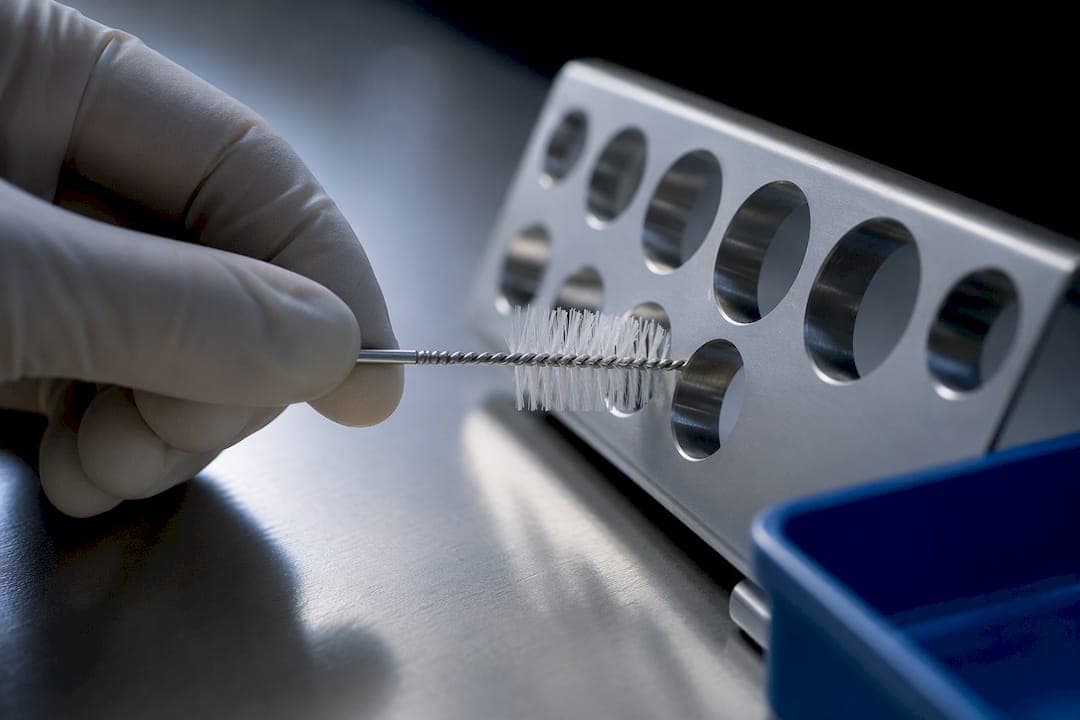
Match brush bristle diameter to the channel inner diameter so bristles fully contact the lumen wall without binding or forcing, and confirm the brush length exceeds the working channel so it emerges from the distal tip. Reach for single-use brushes whenever possible, since guidelines from AAMI and the Criteria for the Use, Processing, and Disposal of Flexible Endoscope Cleaning Brushes point to reused brushes as a common failure point. Always confirm the exact spec against the endoscope manufacturer's IFU before you brush.
TL;DR:
- Selecting brushes that match the inner diameter of each scope's specific channel prevents debris from being missed or the lining from being damaged during cleaning.
- Always verify channel diameter and brush length using manufacturer instructions or a caliper before purchase, and test-fit the brush in the scope to ensure proper contact.
- Reusable brushes require thorough inspection for damage, organic buildup, or deformation before reuse, since cross-contamination risks increase with unnoticed wear.
- Most facilities should default to single-use brushes for infection control, reserving reusables for low-volume, narrow channels with strict inspection protocols.
- Using precise, scope-specific sizing tools and referencing standards such as CDC and AAMI guidelines improves cleaning efficacy and compliance.
Table of Contents
- Quick Size Guide: Diameter Bands and Length Rules for Common Channels
- How to Measure Channel Diameter and Verify Brush Fit
- Single-Use vs. Reusable Brushes: What the Evidence Says
- Practical Selection Checklist and Short SOP
- Publisher Expertise: Scope-Specific Sizing Resources
- Balancing Safety, Cost, and Workflow in Reprocessing
- Practical Supplies and Sizing Support From 1800endoscope
- Guidance Worth Keeping on Hand
- Sources
- FAQ
Quick Size Guide: Diameter Bands and Length Rules for Common Channels
Endoscope working channels generally fall into a few recognizable diameter bands, and the correct endoscope maintenance tools follow those bands closely rather than a one-size-fits-most guess. A brush that's undersized skates past debris without touching the wall. One that's oversized either won't pass the channel or scrapes hard enough to fray the lining over repeated use.
As a working reference for optimal brush size for endoscopes selection:
- Small-bore channels (around 1.2 to 2.0 mm), typical of pediatric or small-animal flexible scopes, need slim, flexible-shaft brushes sized to that narrowband. Anything wider simply won't advance.
- Mid-range channels (roughly 2.0 to 2.8 mm), common on many veterinary gastroscopes and bronchoscopes, take a moderately sized bristle head that maintains full-circumference contact without dragging.
- Larger suction/biopsy channels (2.8 mm and up), found on colonoscopes and larger-bore duodenoscopes, need a wider bristle diameter and often a stiffer shaft to clear thicker organic debris.
Length matters as much as diameter. A brush has to run the full length of the working channel and visibly exit the distal end. If it stops short, you're often pushing debris deeper into the lumen instead of pulling it out, since a brush that can't clear the far end just relocates the problem. Tapered lumens and multi-lumen scopes complicate this further. A single scope might need two or three different brush dimensions for cleaning tools for endoscopes to reach every channel, elevator wire, and auxiliary port properly.
How to Measure Channel Diameter and Verify Brush Fit
Guessing at dimensions is how mismatched brushes end up in service trays. Start with the paperwork, then confirm by hand.
- Pull the manufacturer's IFU or service manual first. Channel inner diameter, recommended brush type, and bristle material are usually spelled out there, and AAMI- and FDA-referenced guidance explicitly directs facilities to match brushes to those listed specifications.
- Cross-check with a channel gauge or caliper when the IFU is vague or missing, which happens more often than most departments expect on older or lower-volume scope models.
- Test-fit before committing to a batch purchase. Submerge the distal end, advance the brush in short, deliberate strokes, and feel for consistent resistance. Bristles should drag lightly against the wall, not stall or bind.
- Watch for binding versus contact. Binding feels like sudden resistance or a brush that won't advance smoothly; true contact feels like steady, even friction the whole way through.
- Document the confirmed brush dimensions against the scope model and channel type in your reprocessing log so the next tech doesn't have to repeat the whole verification process.
Pro Tip: Keep a running spec sheet taped inside the reprocessing cabinet listing each scope model next to its verified brush length and diameter. It saves five minutes of hunting through IFUs every single cycle, and it catches the tech who grabs the wrong size out of habit.
Sterile processing departments that skip this verification step are exactly the facilities the inspection data on brush practices flags for inconsistent sizing and undocumented substitutions.
Single-Use vs. Reusable Brushes: What the Evidence Says
Guidance bodies increasingly favor disposable brushes over reusable ones, and the reasoning holds up under scrutiny. Facility inspections cited in the criteria review on flexible endoscope cleaning brushes found inconsistent disposal practices and brushes reused well past the point of safe bristle integrity. That's a cross-contamination risk sitting in plain sight.
Statistic callout: Facility audits behind that same criteria review found reusable brushes commonly kept in service without documented disposal criteria, a gap that single-use brushes eliminate by design.
If your department still reuses brushes, inspect every single one before each use against these criteria:
- No bent, splayed, or missing bristle tufts.
- No visible discoloration, matting, or trapped organic debris in the bristle bed.
- No deformation of the shaft or handle that would change how the brush seats in the channel.
- Confirmed high-level disinfection or sterilization completed per that brush's specific IFU, not a generic department default.
Any one of those findings means immediate disposal or retirement, no exceptions carved out for a "close enough" brush. Peer-reviewed comparisons of brush designs also show that pull-through and wiper-style brushes can outperform simple push/pull brushes on residual soil removal, so design deserves the same attention as size when you're stocking either disposable or reusable inventory.
Practical Selection Checklist and Short SOP
Turn all of this into a repeatable routine your whole team can follow without relearning it each shift.
- Identify the scope model and every channel that needs brushing, including auxiliary and elevator wire channels.
- Verify channel inner diameter and recommended brush type against the current IFU.
- Select a brush matching both diameter and length to that specific channel, not a generic house brush.
- Test-fit it underwater with short strokes before full processing begins.
- Brush using consistent, even strokes until no visible debris returns on the bristles.
- Inspect the brush immediately after use for bristle damage or deformation.
- Dispose or record: discard single-use brushes on the spot, or log reusable brush condition and reprocessing status.
Stop and replace the brush immediately if you feel binding, notice bent bristles mid-task, or see debris that isn't clearing after repeated passes. Your SPD log should capture scope model, channel type, brush dimensions used, and the tech's initials at minimum, giving you a paper trail if a scope ever fails a post-cleaning verification.
Publisher Expertise: Scope-Specific Sizing Resources
Suppliers work daily with veterinary, medical, and industrial scope inventories, with channel dimensions varying widely across those ranges. A small-animal gastroscope and an equine airway scope don't share a brush spec, and treating them as interchangeable is how mismatches happen.
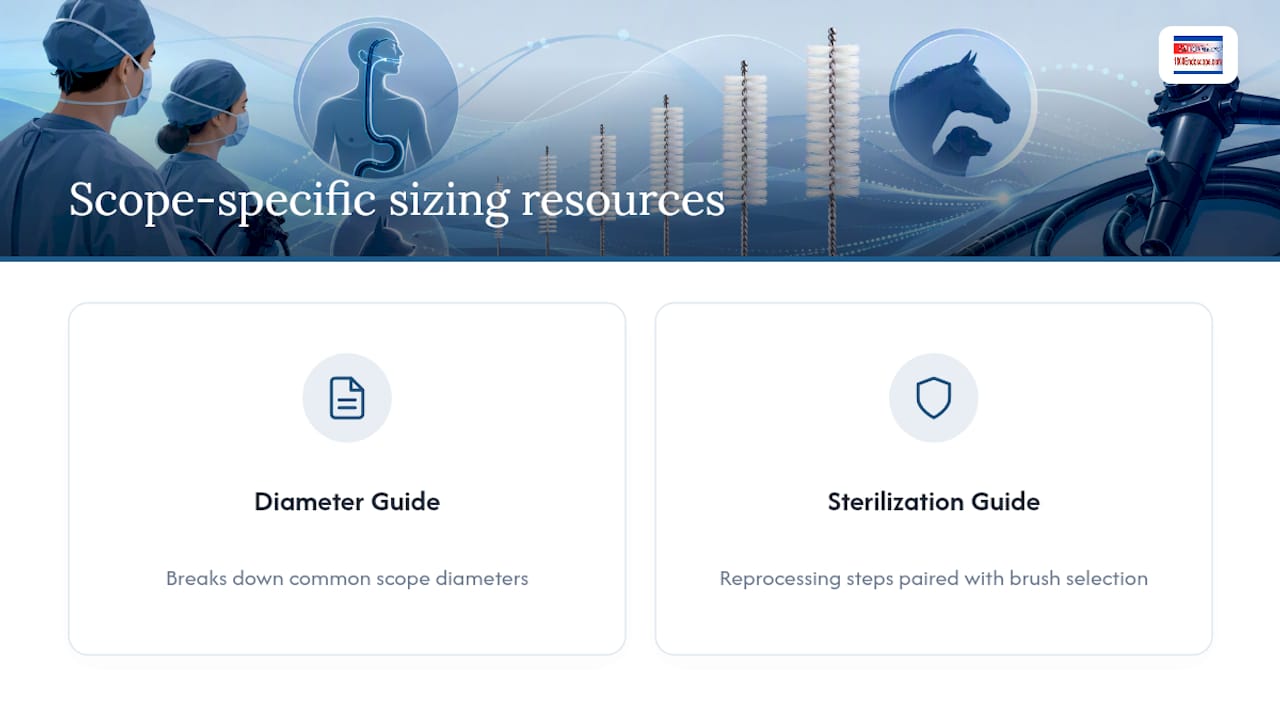
For readers who need exact channel numbers before ordering, the Endoscope Diameter Guide breaks down common veterinary and medical scope diameters. The sterilization guide for veterinary endoscopy covers reprocessing steps that pair directly with correct brush selection.
Balancing Safety, Cost, and Workflow in Reprocessing
The safest policy is also the simplest one: default to single-use brushes wherever channel access and infection risk make reuse questionable, and reserve reusable brushes for narrow, low-volume cases with airtight inspection habits. Complicated brush-tracking systems fail under shift pressure. Labeled disposal bins and a wall-mounted channel gauge do more for compliance than any policy binder, because they remove the guesswork exactly when a tech is moving fast.
— Endoscope
Practical Supplies and Sizing Support From 1800endoscope
Getting the endoscope cleaning kit essentials right starts with knowing your exact channel specs, and that's where a lot of departments get stuck ordering blind. Some vendors carry endoscopic accessories including cleaning tools, channel gauges, and scope-compatible supplies built for both veterinary and medical reprocessing lines.
Browse the medical endoscopes and accessories page for compatible cleaning tools and biopsy accessories, or check the full product catalog if you're sourcing supplies for a mixed veterinary and industrial inventory. If you're unsure which brush dimensions fit a specific scope model, contact technical support with your scope model and channel specs on hand for assistance confirming the right fit before ordering.
Guidance Worth Keeping on Hand
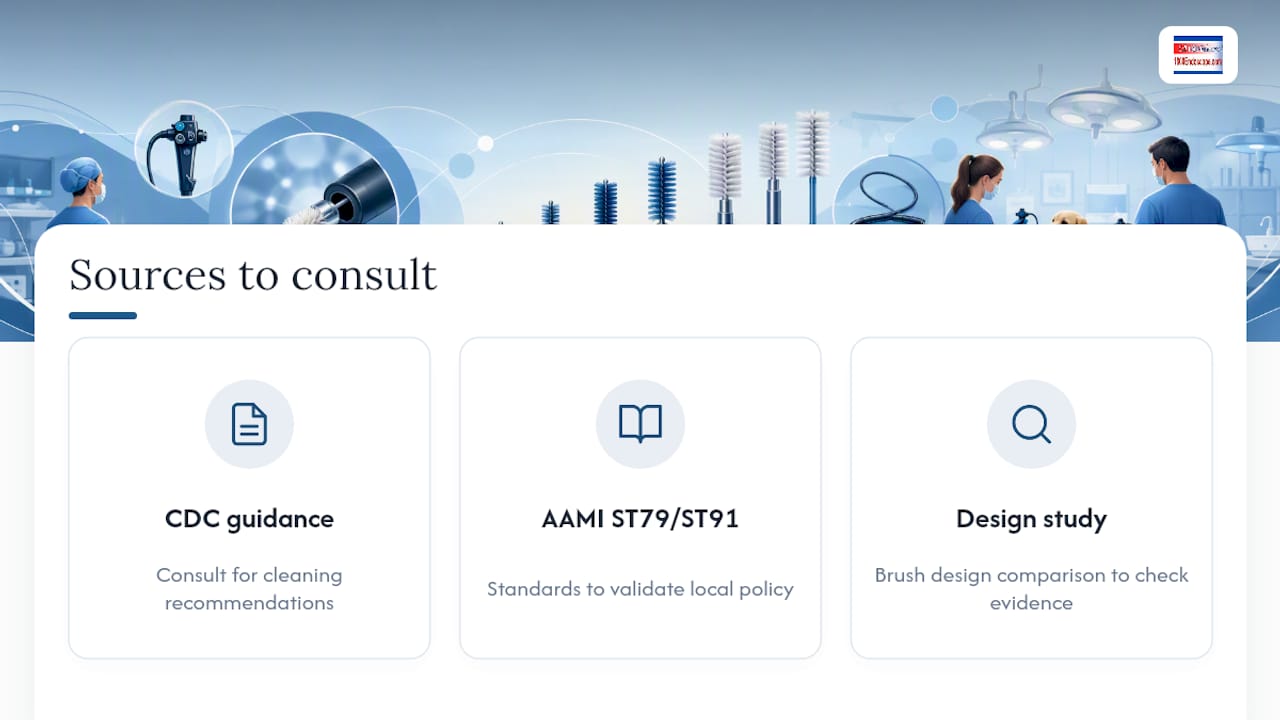
Consult CDC cleaning guidance, AAMI ST79/ST91 standards, and the brush design comparison study to validate local policy against current evidence.
Sources
- Criteria for the Use, Processing, and Disposal of Flexible Endoscope Cleaning Brushes
- In vitro comparison of 3 different brushes for manual cleaning of endoscopes
- Healthmark — Brush selection white paper (AAMI references)
- CDC — Cleaning for health care personnel
FAQ
What Size Brush Should I Use for an Endoscope Channel?
Choose a brush with bristle diameter equal to or slightly larger than the channel inner diameter listed in the scope's IFU, confirmed by a test-fit that shows even contact without binding.
What Are the CDC Guidelines for Reprocessing Endoscopes?
CDC guidance calls for flushing and brushing all accessible channels with appropriately sized brushes, and treating cleaning items as either disposable or fully reprocessed between uses.
Should I Use Single-Use or Reusable Cleaning Brushes?
Single-use brushes are the safer default. Facility audits behind the criteria review on brush disposal found reusable brushes commonly kept in service without clear disposal triggers, raising cross-contamination risk.
What Is the Typical Diameter Range for Endoscope Channels?
Working channels typically range from around 1.2 mm on small-bore pediatric or small-animal scopes up to 2.8 mm or more on larger colonoscopes and duodenoscopes, though exact figures vary by scope model and manufacturer IFU.
How Do I Know If a Brush Is Too Short for a Channel?
If the brush doesn't visibly emerge from the distal tip after a full pass, it's too short. A brush that stops short can push debris deeper into the channel instead of clearing it.
Where Can I Find Scope-Specific Channel Dimensions?
Manufacturer IFUs are the primary source, and resources like 1800endoscope's Endoscope Diameter Guide list common channel diameters across veterinary and medical scope models.