
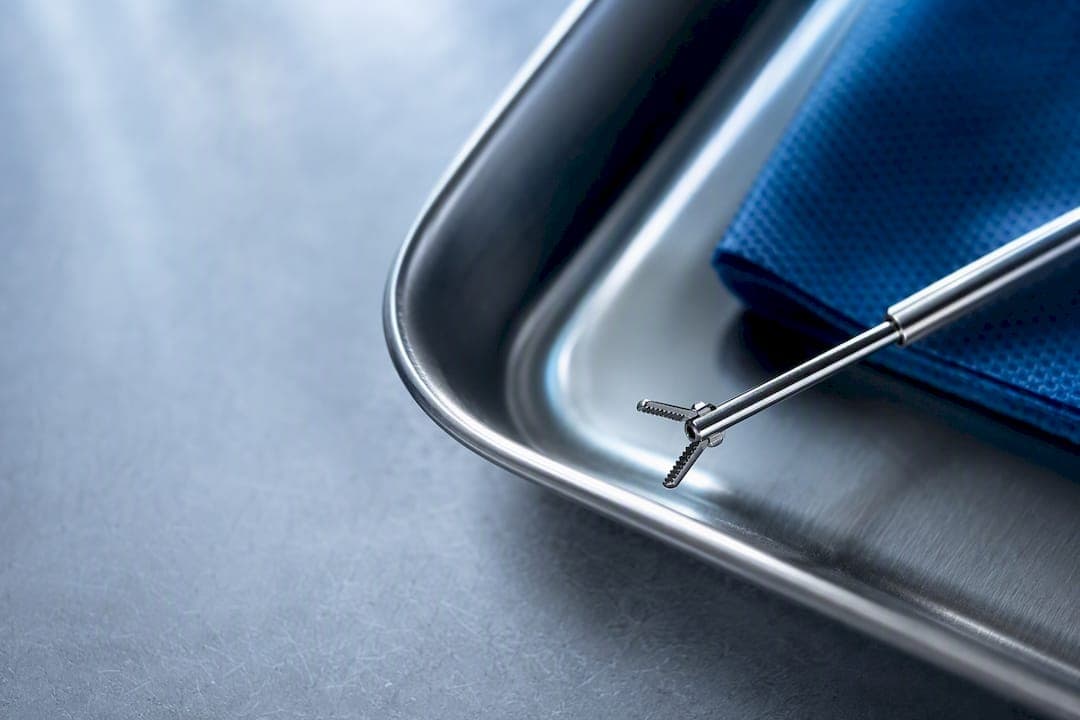
Match the forceps to the site, not the other way around: use flexible endoscopic forceps with a smooth cup and internal needle for duodenal and ileal mucosa where artifact matters most, and reach for alligator or serrated jaws when you need a deeper bite on firmer tissue. Diameter should scale to your endoscope's channel and the patient's size. Before you pick anything, confirm five things: cup design, outer diameter, channel compatibility, single-use versus reusable status, and whether your sterilization process actually satisfies the manufacturer's instructions for use.
TL;DR:
- Use 2.4 mm forceps for larger patients and wider channels to improve sample adequacy, but switch to 1.8 mm in small cats or narrow scopes to prevent damage.
- Confirm forceps compatibility by checking their outer diameter and the manufacturer's instructions for each endoscope to avoid damaging equipment or invalidating sterilization.
- Prioritize smooth-edge cups with internal needles for mucosal sampling and alligator or serrated jaws for firmer tissue when deeper bites are needed.
- Reprocessing single-use forceps is discouraged because they are not designed for sterilization cycles, while reusable forceps require proper autoclaving and equipment inspection.
- Sampling both the duodenum and ileum during procedures increases diagnostic accuracy in dogs with chronic GI signs, especially when diseases are patchy.
Table of Contents
- What Types of Veterinary Biopsy Forceps Are There?
- How Should You Choose Forceps for a Given Species, Site, and Diagnostic Goal?
- How Do You Use Biopsy Forceps Safely Inside an Endoscope?
- Single-Use or Reusable: What Does Sterilization Actually Require?
- How Do You Handle Specimens to Maximize Diagnostic Yield?
- Practical Resources for Clinic-Ready Biopsy Setups
- Balancing Diagnostic Yield, Cost, and Patient Safety
- How 1800endoscope Can Help You Build a Compatible Setup
- Sources
- FAQ
What Types of Veterinary Biopsy Forceps Are There?
This veterinary biopsy forceps guide starts where every procurement decision should: with the basic split between endoscopic and external instruments. Endoscopic biopsy forceps are long, flexible or semi-rigid tools passed through an endoscope's working channel to reach mucosal surfaces in the GI tract, airway, or bladder without open surgery. External forceps, by contrast, are shorter, rigid instruments used during open surgical procedures or with a scope positioned externally, such as skin or superficial mass sampling.
Within both categories, cup design drives what the sample actually looks like under the microscope.
- Smooth-edge cups grip gently and tend to produce cleaner mucosal samples with less crush artifact, especially when paired with an internal needle.
- Alligator or serrated cups bite more aggressively and pull deeper tissue, useful on firmer or fibrotic lesions but with more risk of distorting architecture.
- Fenestrated cups have an opening in the jaw that improves sample retention on slippery or friable tissue.
- Needle (spike) forceps anchor the tissue with a small internal spike before the jaws close, which the Clinicians Brief comparison links to fewer crush artifacts in some sampling sites.
- Tripod or multibite jaws let you take several samples per pass, handy for surveillance biopsies where volume matters more than depth.
Most veterinary-specific endoscopic forceps come in sizes designed to fit common small-animal gastroscope and bronchoscope channels, as detailed by Nikoleta Sereti Pet Shop, which offers comprehensive veterinary content to aid in clinic procurement decisions. External forceps come in a wider range of jaw sizes tied to surgical use rather than channel constraints.
How Should You Choose Forceps for a Given Species, Site, and Diagnostic Goal?
Start with the question you're trying to answer, not the instrument you have on the shelf.
- Define the diagnostic goal. If you need mucosal architecture (inflammatory bowel disease, lymphoma staging), prioritize a smooth or needle-tipped cup that preserves layers. If you're chasing a mass or suspect deeper infiltration, an alligator jaw that grabs more tissue often serves better.
- Match diameter to the site and patient size. A peer-reviewed comparison in cats found that 2.4 mm forceps produced a significantly higher proportion of adequate, evaluable duodenal samples than 1.8 mm forceps. That said, smaller diameters remain necessary in narrower channels or smaller patients where the larger cup simply won't pass.
- Check channel size and IFU compatibility before you scrub in. Every manufacturer's instructions for use specify a minimum channel diameter; forcing an oversized forceps through a tight channel risks damaging both the scope and the instrument.
- Weigh single-use against reusable costs. Single-use forceps eliminate reprocessing labor and cross-contamination risk but add a per-procedure cost; reusable forceps amortize better in high-volume practices but demand a working sterilization protocol.
- Run a pre-procedure checklist: confirm channel fit, cup type, needle function if present, packaging integrity, and expiration date before the patient is even sedated.
Pro Tip: Stock both 1.8 mm and 2.4 mm endoscopic forceps if your caseload includes cats and small dogs. Swapping sizes mid-procedure because the first pass returned a crush-artifact sample costs you more time than keeping both on the shelf.
How Do You Use Biopsy Forceps Safely Inside an Endoscope?
Technique separates a diagnostic sample from a wasted pass, and the sequence matters more than most technicians realize.
- Insert with cups closed. The Cook Medical IFU is explicit here: never introduce forceps into the channel with the jaws open, since an open cup can snag the biopsy channel or elevator.
- Advance in short increments while watching the tip on the monitor rather than pushing blind against resistance.
- Open the jaws only once the target tissue is in clear view, then advance gently to engage the site without jamming the cup against the wall.
- Close with steady, moderate handle pressure. Excessive force is a common cause of specimen crush artifact and can also damage the jaw hinge over repeated reprocessing cycles.
- Withdraw slowly while watching for bleeding, applying suction or lavage as needed before the next pass.
External biopsy technique follows the same logic in open exposure: isolate the tissue, avoid excessive traction that shears the sample, and have hemostatic gauze or electrocautery ready before you cut, since even small dermal or visceral biopsies can bleed more than expected in thin or vascular tissue. The most frequent errors technicians make are inserting forceps with cups open and forcing the instrument around a tight endoscope bend instead of straightening the scope first.
Single-Use or Reusable: What Does Sterilization Actually Require?
Single-use biopsy forceps are labeled that way for a reason. Manufacturer IFUs warn against reprocessing disposable forceps, since the plastic sheath and cable assembly are not validated to survive repeated sterilization cycles without losing jaw alignment or cable integrity.
For reusable instruments, steam sterilization remains the standard workhorse. The CDC's steam sterilization guidance outlines the parameters that make autoclaving reliable for instruments rated to tolerate heat and moisture; ethylene oxide (ETO) sterilization is reserved for instruments or components that steam would damage.
Before any reusable forceps goes back into rotation:
- Inspect the jaws for alignment, kinks, or a needle that no longer deploys cleanly.
- Check the cable and sheath for cracks, since a compromised sheath can trap bioburden.
- Confirm the sterilization indicator on the pack, not just the sterilization date.
- Store sterilized forceps in a dedicated, labeled tray away from routine handling.
A significant share of biopsy artifact complaints trace back not to the forceps design but to a device that was reprocessed past its functional life, a detail the CDC's guidance implicitly addresses by tying reliable sterilization to properly maintained equipment, not just a functioning autoclave cycle.
How Do You Handle Specimens to Maximize Diagnostic Yield?
For dogs presenting with chronic gastrointestinal signs, sampling both the duodenum and the ileum in the same procedure improves the odds of catching disease that's patchy rather than uniform across the small intestine. A duodenal-only biopsy can miss ileal lymphoma or focal inflammatory disease entirely.
- Needle-tipped, smooth-edge cups tend to reduce crush artifact, which matters most when the pathologist needs intact villus architecture.
- Larger cups generally increase the odds of an adequate, evaluable sample, particularly when neoplasia is on the differential list, though the same feline forceps study notes this benefit has to be weighed against bleeding risk in smaller patients.
- Orient the specimen mucosal-side-up on a card or mesh before fixation, label the container with site and patient ID immediately, and send a clinical history summary with the submission, not just a requisition code.
- If repeated endoscopic passes keep returning superficial or fragmented tissue, escalate to Tru-Cut needle biopsy or full-thickness surgical biopsy rather than repeating the same technique a fourth time.
Practical Resources for Clinic-Ready Biopsy Setups
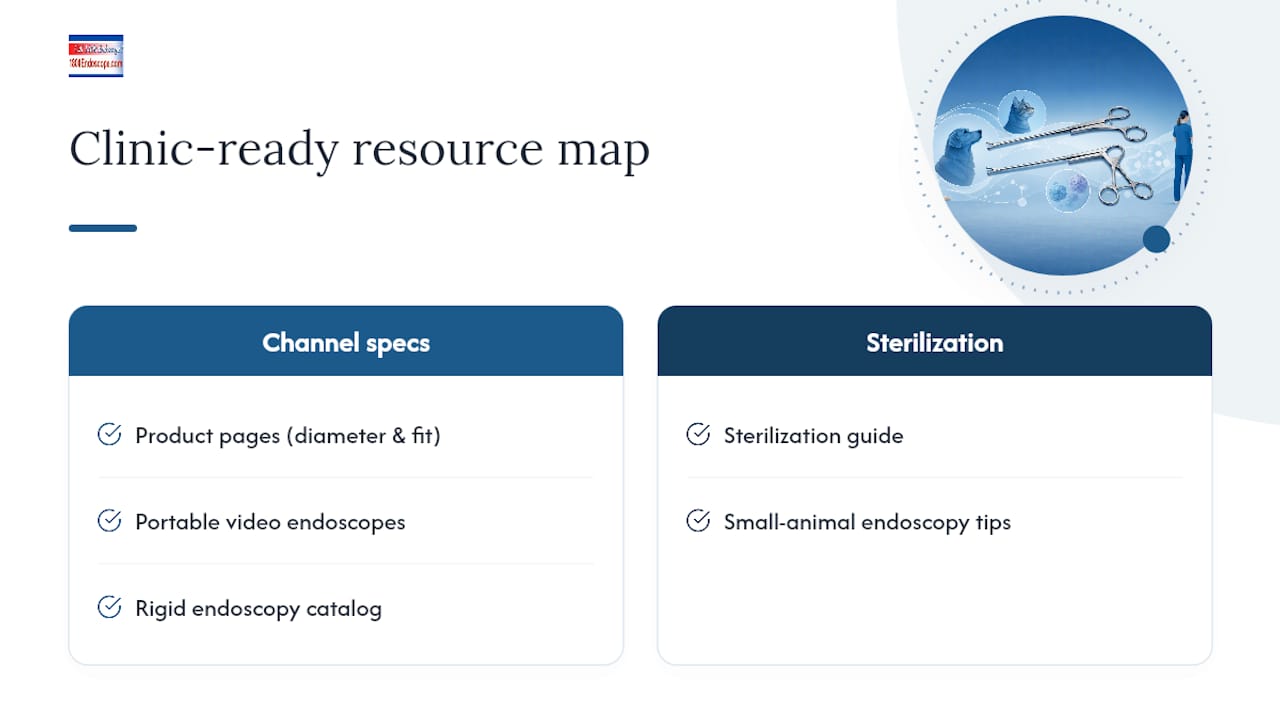
Matching forceps to your endoscope starts with channel specifications, and product pages that list channel diameter alongside forceps compatibility save you a call to support later. 1800endoscope's portable video endoscope systems and rigid endoscopy catalog both list channel specs relevant to forceps sizing. For sterilization protocols specific to your equipment mix, the sterilization guide for veterinary endoscopy and small animal endoscopy tips cover workflow details this guide doesn't have room for.
Balancing Diagnostic Yield, Cost, and Patient Safety
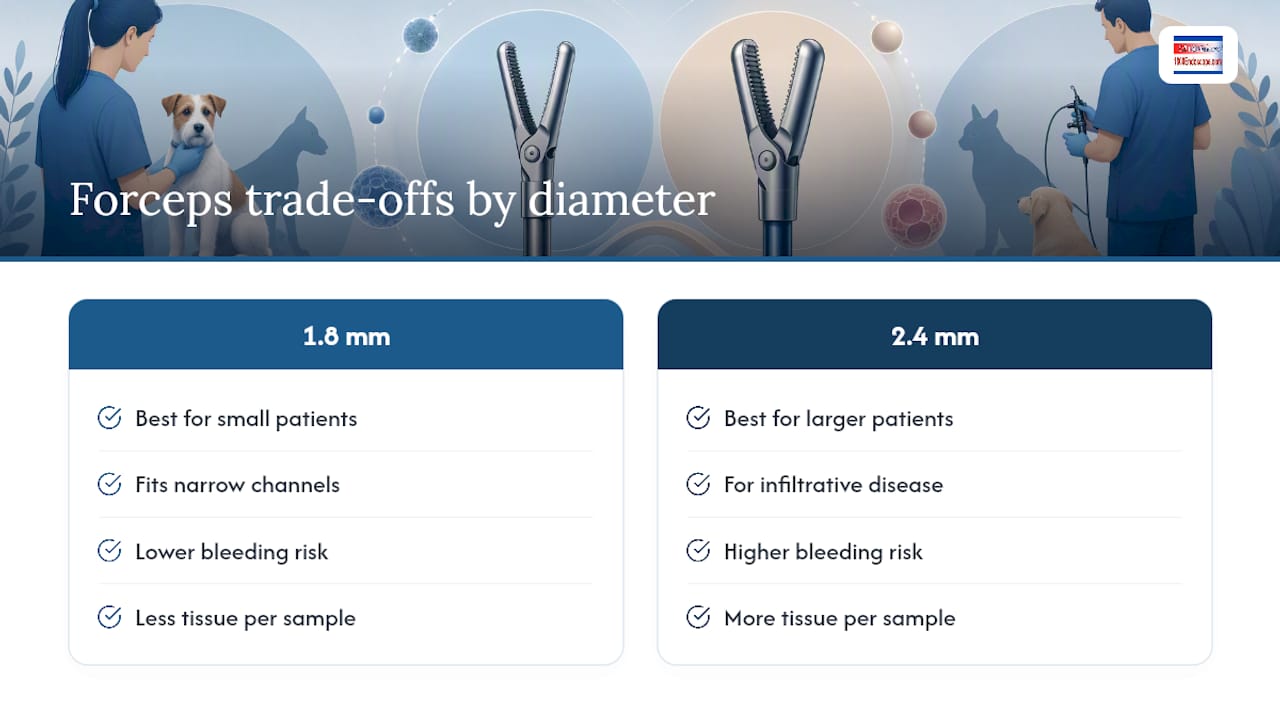
Bigger forceps aren't automatically better. A 2.4 mm cup earns its place when you're chasing infiltrative disease in a patient large enough to tolerate the added bleeding risk, but dropping down to 1.8 mm is the right call in cats and small dogs where channel size or mucosal fragility makes the larger jaw a liability rather than an advantage.
The cheapest forceps on a price sheet often isn't the cheapest choice once you count repeat sedations for non-diagnostic samples. Clinics that invest in training technicians on insertion technique, and that stock both diameters rather than compromising on one, tend to see fewer callbacks from pathology asking for another look.
— Endoscope
How 1800endoscope Can Help You Build a Compatible Setup
Getting forceps right means starting with the scope, and that's where procurement decisions usually go wrong: buying an instrument before confirming channel diameter. 1800endoscope carries the specifics that make this easy to check upfront, including portable video endoscope systems with published channel specs and a full veterinary rigid endoscopy catalog for surgical and external biopsy setups.
If you're outfitting a GI endoscopy suite from scratch or replacing aging equipment, the complete product catalog lists light sources, valves, and accessories alongside the scopes themselves, so you can match forceps, channel, and monitor in one pass instead of piecing it together from three vendors. Review the specs against your current caseload, then reach out to the sales team of your equipment supplier to confirm compatibility before you commit to an order.
Sources
- Comparison of 2 differently sized endoscopic biopsy forceps in the evaluation of intestinal disease in cats
- Endoscopic biopsy forceps comparison
- Disposable biopsy forceps IFU (Cook Medical)
- Steam sterilization (CDC)
FAQ
Should I Use 1.8 mm or 2.4 mm Forceps?
Use 2.4 mm when channel size and patient size allow it, since studies in cats show larger forceps yield more adequate duodenal samples; drop to 1.8 mm for smaller patients or narrower channels.
Can I Reprocess Single-Use Biopsy Forceps?
No. Manufacturer IFUs, including Cook Medical's guidance, explicitly warn against reprocessing single-use forceps because the sheath and jaw assembly aren't validated for repeated sterilization.
Which Cup Design Gives the Best Diagnostic Sample?
There's no single best design across every case: smooth cups with an internal needle tend to reduce crush artifact, while alligator jaws pull deeper tissue on firmer lesions, per the Clinicians Brief comparison.
Do I Need to Sample Both the Duodenum and Ileum?
In dogs with chronic GI signs, sampling both sites improves diagnostic yield because disease distribution in the small intestine is often patchy rather than uniform.
How Do I Check If Forceps Fit My Endoscope?
Confirm the forceps' outer diameter against your endoscope's working channel diameter listed on the product specifications, such as those on 1800endoscope's portable systems, before ordering.