
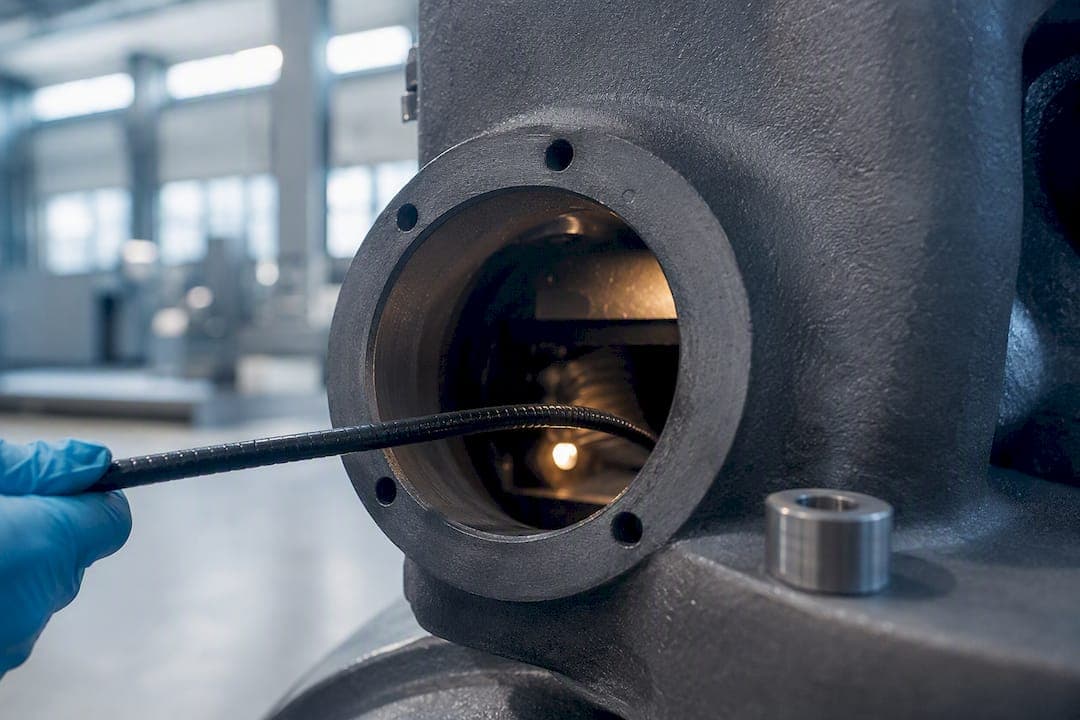
Measure the actual access geometry first. Diameters generally run from 2mm to over 9mm, and working lengths from 1 meter for compact engine work up to 30 meters or more for pipeline and boiler runs. Get the geometry right, and everything else, resolution, articulation, handling, falls into place behind it.
TL;DR:
- Choosing the correct diameter involves selecting a probe roughly 0.5mm smaller than the smallest aperture to ensure proper articulation and prevent damage.
- Accurate length measurement requires tracing the actual routed path and adding a safety margin of 20 to 40 percent, depending on the number of bends and vertical drops.
- Longer probes improve access but significantly reduce control and image quality, making multiple shorter probes more effective for varied inspection tasks.
- Widely used lengths range from 1 to 3 meters for engine and HVAC inspections, up to 10 meters for deep piping, and over 10 meters for pipeline and sewer work.
- Prioritizing geometry and application needs before sensor resolution or frame rate ensures better inspection outcomes and prevents unnecessary equipment overreach.
Table of Contents
- Diameter and Length Mapping for Common Industrial Jobs
- Probe Diameter: Why Smaller Isn't Always Better
- Measuring Insertion Path and Setting Your Safety Margin
- How Length Affects Handling and Control
- Your On-Site Selection Checklist
- Where to Find the Right Hardware and Support
- Why the Application-First Approach Beats Chasing Specs
- Get the Right Borescope for Your Application
- Sources
- FAQ
Diameter and Length Mapping for Common Industrial Jobs
Most inspection failures trace back to one mistake: guessing at diameter instead of measuring the aperture. The table below reflects how diameter tiers pair with typical tasks and the length range those jobs usually demand.
- 2 to 3.5mm: turbine cooling holes, fuel injectors, small castings. Working length is usually short, often suitable for inspections near the access point.
- 4 to 6mm: the range that covers most general industrial work, spark plug ports, HVAC ductwork, gearboxes. Lengths vary according to component depth.
- 6 to 8mm: larger ports, engine bays, structural cavities where a brighter image and sturdier probe matter more than squeezing through a tiny opening. Length needs often climb into the 3 to 10 meter band.
- 9mm and up: wide-bore piping, tanks, and vessels where image quality and durability outweigh access constraints. These jobs frequently pair with long-reach lengths past 10 meters.
The 4 to 6mm range functions as a practical sweet spot for many technicians because it balances access, image brightness, and mechanical durability better than either extreme.
Pro Tip: If your facility runs a mix of small-bore engine work and long pipeline runs, don't buy one "do everything" probe. Multi-length toolsets, a short rigid scope plus a medium videoscope, cost less over time than one long unit that's overkill for tight jobs and undersized for deep ones.
Probe Diameter: Why Smaller Isn't Always Better
Diameter is the specification that decides whether your borescope enters the port at all, but it also governs image brightness, sensor resolution, and how much abuse the probe can take before it fails. A 2mm probe threads into a fuel injector nozzle a 6mm probe never will. It also carries a smaller sensor and fewer illumination sources, so the image tends to look dimmer and grainier than what a 6mm unit produces in the same lighting.
The clearance rule that keeps technicians out of trouble: pick a probe diameter roughly 0.5mm smaller than the aperture itself. That margin gives the articulating tip room to bend without dragging or hanging up on the port edges, and it accounts for the natural buildup of grease, carbon, or debris around industrial access points.
- Spark plug wells: typically call for a 4 to 5mm probe to clear the threads and still articulate past the electrode.
- Turbine cooling ports: often need the 2 to 3.5mm tier, since access holes are drilled tight and image quality is a secondary concern next to fit.
- HVAC ducts and larger structural cavities: support 6mm or larger probes, where brightness and durability matter more than squeezing through.
Diameter under 4mm reaches very tight spaces but trades away sensor size and light output, so reserve the smallest probes for jobs that genuinely require them.
Measuring Insertion Path and Setting Your Safety Margin
Working length gets specified wrong more often than diameter does, mostly because technicians measure straight-line distance instead of the actual routed path. A duct that looks 4 meters away on a floor plan can easily need a 6-meter probe once you account for the bends, elbows, and vertical drops between the access port and the target.
Here's the process that avoids that gap:
- Trace the real path. Use a pull tape, fish tape, or even a length of rope routed through the same bends and elevation changes the probe will travel. Straight-line distance from a blueprint almost always underestimates the true path.
- Add the safety margin. Practitioners commonly add 20–40% to that measured path to cover slack, operator handling room, and the extra length lost to each bend the cable has to negotiate.
- Use the lower end (20%) for straighter runs with minimal turns, and the higher end (40%) when the path includes multiple bends, vertical sections, or tight radius turns that eat up cable length fast.
Length bands map cleanly to job categories once you've done that math. Short probes in the 1 to 3 meter range handle engine components and most building or HVAC inspections. Medium lengths of 3 to 7 meters cover heat exchangers and the bulk of general industrial tasks. Long probes at 7 to 10 meters reach deep piping runs and boiler interiors, and specialist systems extend from 10 up to 30 meters or beyond for pipeline and sewer work. Drain line inspections typically fall in the 5 to 10-meter range, while long industrial piping justifies the longest specialist units and their reel-management hardware.
How Length Affects Handling and Control
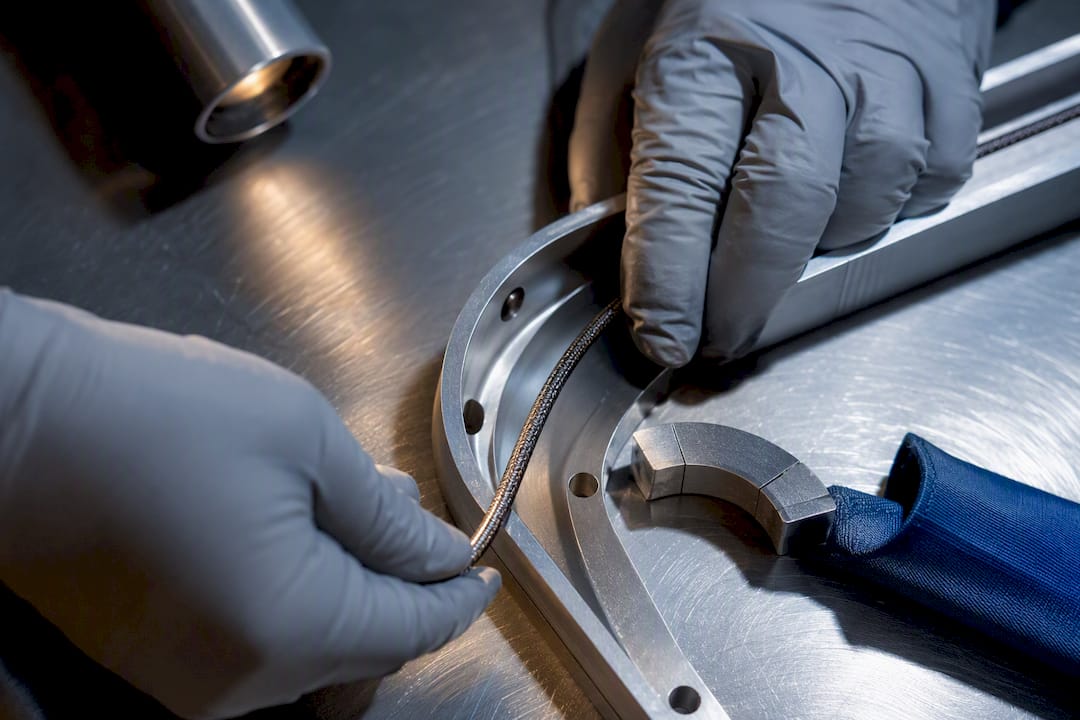
Every meter you add to a probe costs you something in control. Push a 10 meter probe through a bend and you'll feel it immediately: more force is required to advance the tip, and articulation responsiveness drops noticeably compared to a 2-meter probe doing the same maneuver. Thin-diameter probes suffer more from this effect than thicker ones, since a slender cable has less column strength to transmit push force down its length.
That mechanical reality should shape which scope you grab for which job.
- Rigid borescopes win on straight-line paths, delivering sharper optics with none of the flex or lag a long flexible cable introduces.
- Flexible videoscopes are the right call when the path bends, but keep the length as close to your measured requirement as possible rather than defaulting to the longest unit in the case.
- Warning signs you've overspecified length: the tip feels sluggish to respond, you're pushing noticeably harder than expected for the distance, or the image dims well before you reach the target.
Pro Tip: If a job sits right at the edge between two length bands, size down. A slightly-too-short probe is obvious immediately. A slightly-too-long one just makes every inspection that day harder to control without you knowing why.
Your On-Site Selection Checklist
Skip the guesswork and run through this sequence before you order or grab a probe from the case:
- Measure the smallest aperture the probe must pass through, and note any recessed access ports that restrict the entry angle.
- Trace the full routed path to the target, counting bends, vertical runs, and elevation changes, not just straight-line distance.
- Select diameter by choosing the smallest probe that clears the aperture with roughly 0.5mm of articulation clearance to spare.
- Set working length as the measured path plus a 20–40% buffer, leaning toward the higher end for winding routes.
- Verify environmental and functional specs, including temperature rating, resolution needs, and articulation range for the target component.
- Confirm logistics, reel management, storage case size, and cable weight, especially for anything past 10 meters.
- Decide on ownership versus rental for long-range specialist units used only occasionally.
| Job type | Typical diameter | Typical length | Key consideration |
|---|---|---|---|
| Turbine cooling holes | 2 to 3.5mm | 1 to 3m | Access over image quality |
| Spark plug wells | 4 to 5mm | 1 to 3m | Articulation past electrode |
| HVAC ductwork | 4 to 6mm | 1 to 7m | Balanced access and brightness |
| Heat exchangers | 6 to 8mm | 3 to 7m | Image brightness for large cavities |
| Deep piping/boilers | 6mm+ | 7 to 10m | Push force and reel management |
| Pipeline/sewer runs | 9mm+ | 10 to 30m+ | Motorized feed, logistics-first |
Where to Find the Right Hardware and Support
Matching a spec sheet to a real job is only half the work. You still need equipment built to the diameter and length bands your inspections actually require, and support that understands the difference between a spark plug well and a boiler run. 1800endoscope stocks small-diameter videoscopes, industrial borescopes across the full diameter range, rigid scopes for straight-line work, and the light sources and accessories that go with them.
Portable 6mm systems make up a meaningful part of that catalog, sized for the general industrial inspections that fall into the sweet-spot diameter range covered earlier. For readers deciding between rigid and flexible options, the endoscope diameter guide walks through clearance math in more detail. Technicians working across veterinary and industrial applications can also compare probe types in the videoscope applications guide.
- Small-diameter videoscopes for tight-access industrial work
- Rigid borescopes for straight-line, high-clarity inspection
- Portable 6mm systems for general-purpose field use
- Light sources and articulation accessories sold as a matched system
Why the Application-First Approach Beats Chasing Specs
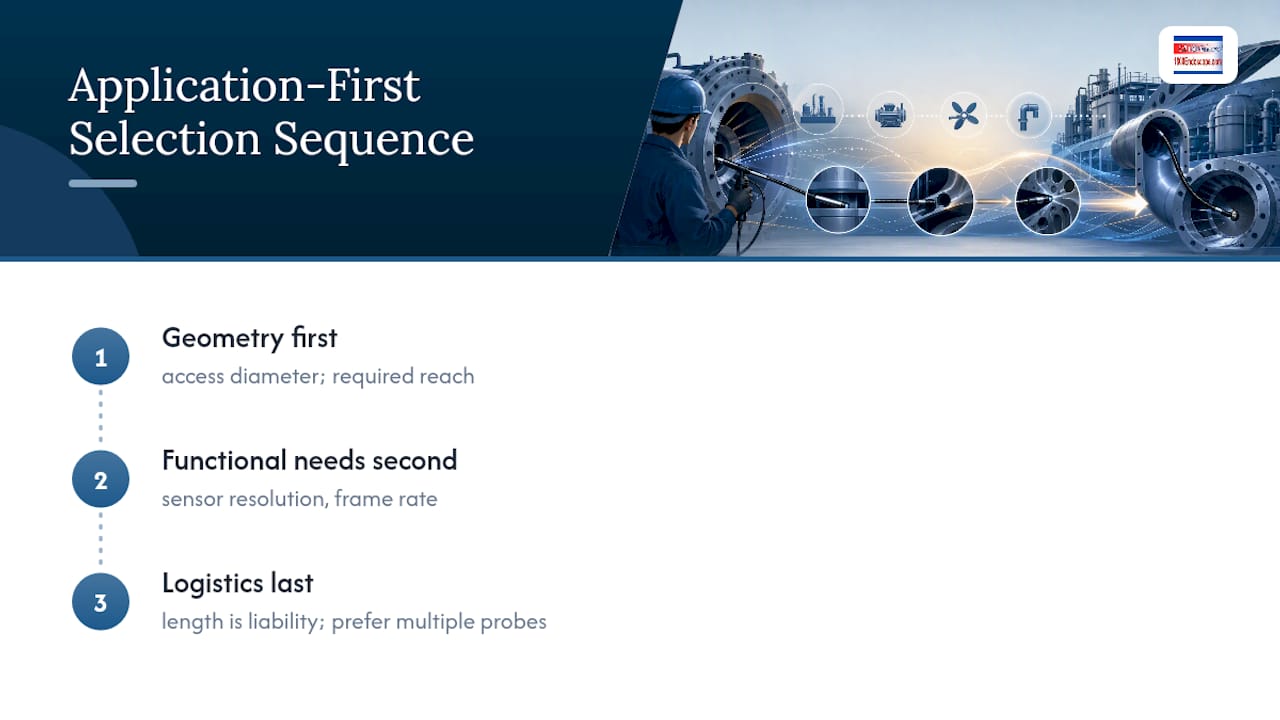
Most buying guides lead with sensor resolution or frame rate, and that's backwards. Resolution means nothing if the probe never reaches the target, and reach means nothing if the diameter can't clear the port. The operative sequence that actually works is geometry first, functional needs second, logistics last, not the other way around.
The industry's blind spot is length inflation. Technicians routinely buy the longest probe available "to be safe," not realizing that every added meter degrades tip responsiveness and demands more push force. A 15-meter probe used on a 4 meter job isn't a safety margin. It's a handicap you carry into every inspection from that point forward.
What the research actually supports is unglamorous but effective: measure first, undersize diameter deliberately, and treat length as a liability to minimize rather than a feature to maximize. Once you cross into long-reach territory, the problem shifts from optics to mechanics, and no amount of sensor quality fixes a cable that won't feed cleanly around a bend. Facilities running varied work are almost always better served by two or three probes at different lengths than one long unit stretched to cover everything.
— Endoscope
Get the Right Borescope for Your Application
Once you've measured your access port and routed path, the next step is matching that number to actual hardware, not a spec sheet estimate. Some vendors sell direct, without the markup layers of distributors, enabling measured specs to translate more directly into product recommendations rather than generic sales pitches.
The full borescope and videoscope catalog covers the diameter and length bands discussed throughout this guide, and the portable 6mm inspection system is a solid representative option for technicians who landed in that sweet-spot diameter range. Take your measured aperture and routed path length, including your safety margin, and submit those specs directly to the 1800endoscope sales team for a recommendation sized to your actual job rather than a generic best-seller.
Sources
- Industrial Borescope: Plain-Language Buyer Guide 2026 - InspectandTest
- Industrial Borescope Guide — Types, Specs & How to Choose | SpecForge
- How Long a Borescope Cable Do You Actually Need? A Practical Guide - Borescope HQ
FAQ
What size borescope do I need?
It depends on your access aperture and target depth: measure the smallest opening the probe must pass through, then choose a diameter roughly 0.5mm smaller than that opening to leave articulation clearance.
What are the common lengths of endoscope cameras?
Standard working lengths run from 1 to 3 meters for engine and building inspections, 3 to 7 meters for heat exchangers and general industrial work, and 7 to 30 meters or more for deep piping, boilers, and pipeline runs.
What's the difference between an endoscope and a borescope?
Both share the same core optics and flexible or rigid insertion tube design, but "endoscope" typically refers to medical or veterinary applications while "borescope" describes the industrial version used for mechanical and structural inspection, a distinction 1800endoscope reflects by stocking both categories separately.
Is a longer borescope always better for reaching deep inspection points?
No. Longer probes lose tip articulation responsiveness and require more push force, so the right length is the shortest one that reaches your target with the recommended safety margin, not the longest one available.