
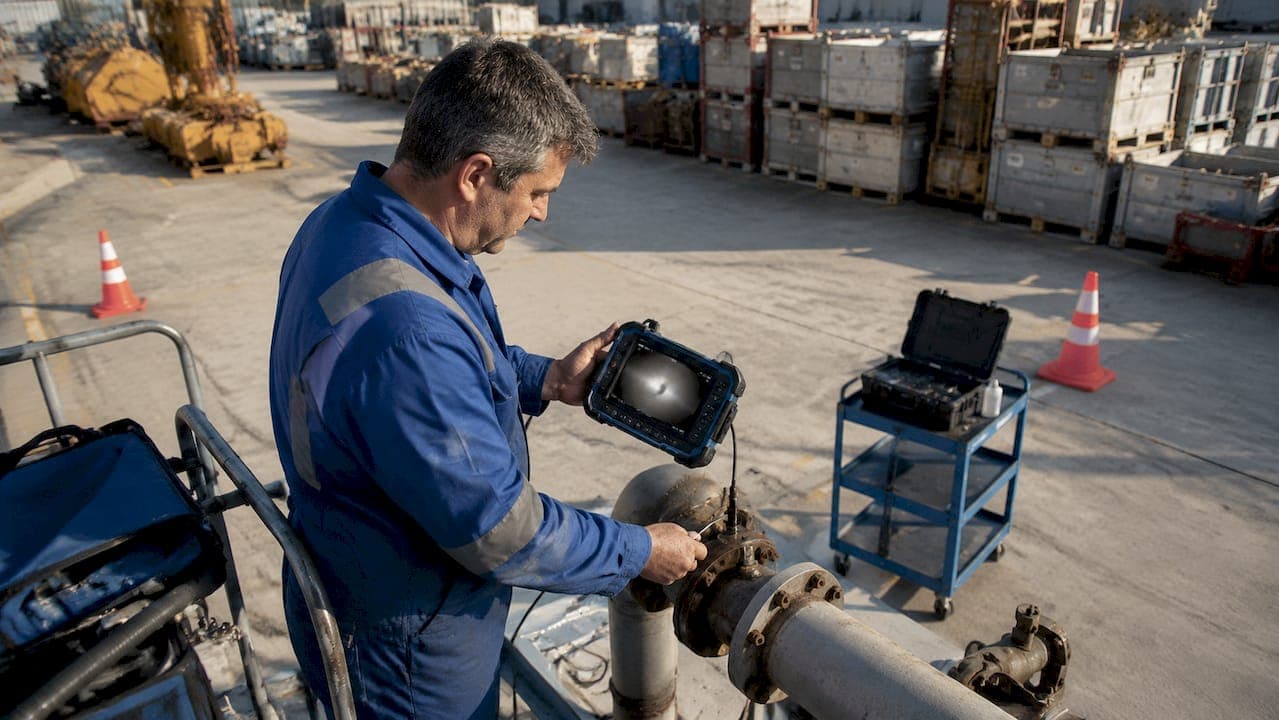
Video recording in nondestructive testing (NDT) is defined as the systematic capture of visual inspection data to create objective, time-stamped evidence that supports defect detection, regulatory compliance, and audit traceability. The industry term for this practice is visual documentation, and it sits at the core of modern NDT quality assurance. Why video recording matters in NDT goes beyond convenience. It replaces subjective field notes with verifiable footage that multiple engineers can review, dispute, or act on. Industrial videoscopes and borescopes from manufacturers like those cataloged at 1800endoscope have made high-resolution video capture standard practice across aerospace, oil and gas, power generation, and manufacturing.
Why video recording matters in NDT accuracy
Traditional NDT methods rely heavily on a single technician's real-time judgment. That judgment is valuable, but it is also variable. Two inspectors examining the same weld can reach different conclusions based on lighting, fatigue, or experience level. Visual evidence removes this subjective interpretation and provides a factual baseline that regulators expect from defensible inspection records.
Video capture augments the technician's natural perception in ways that static photography cannot. A recorded clip shows how a crack propagates along a surface as the probe advances, reveals surface texture changes under different lighting angles, and captures real-time reactions from the equipment under test. This temporal dimension is what separates video from a single still frame.
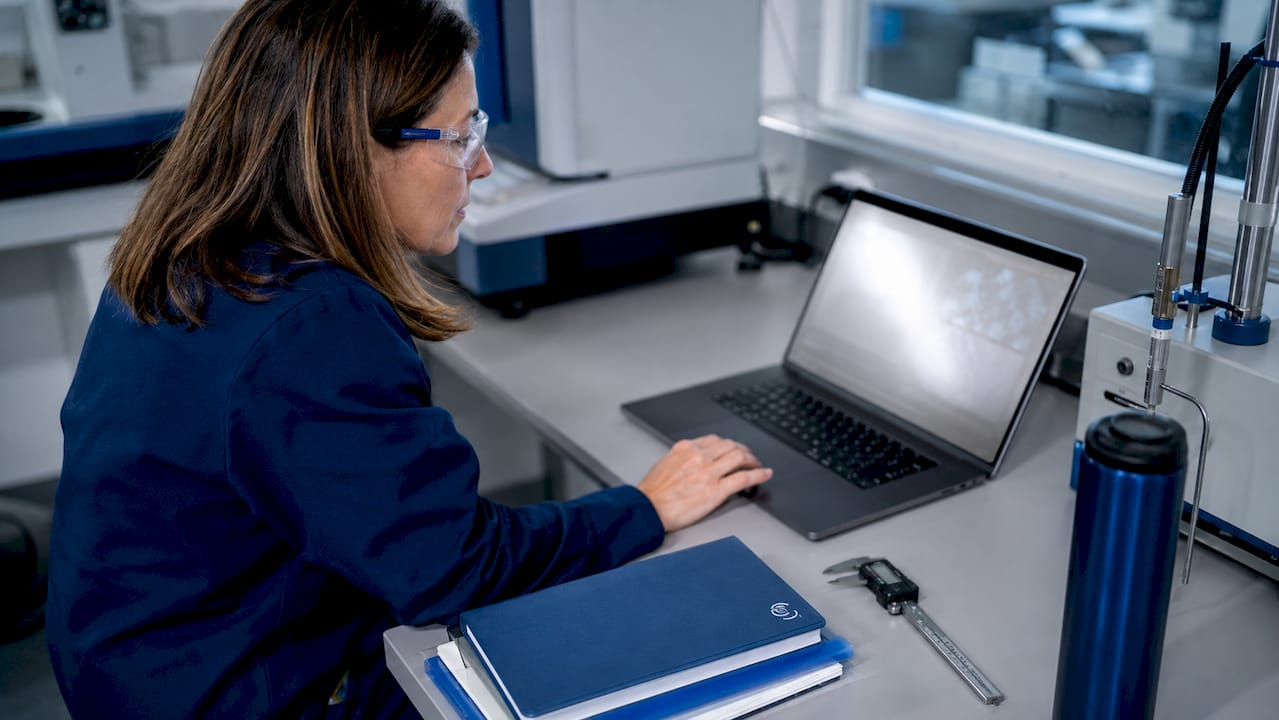
Recording also enables quality control collaboration that was impossible with paper-based reports. A senior engineer in a different facility can review the same footage the field technician captured, flag a questionable indication, and request a second pass without scheduling a return visit. Modern industrial videoscopes have evolved from simple viewing tools into documentation platforms that reduce repeat inspections and eliminate communication delays between field and office teams.
Pro Tip: When reviewing footage for defect confirmation, watch each clip at half speed before full speed. Subtle surface discontinuities that appear normal at real-time playback often become obvious at reduced speed, especially in weld root inspections.
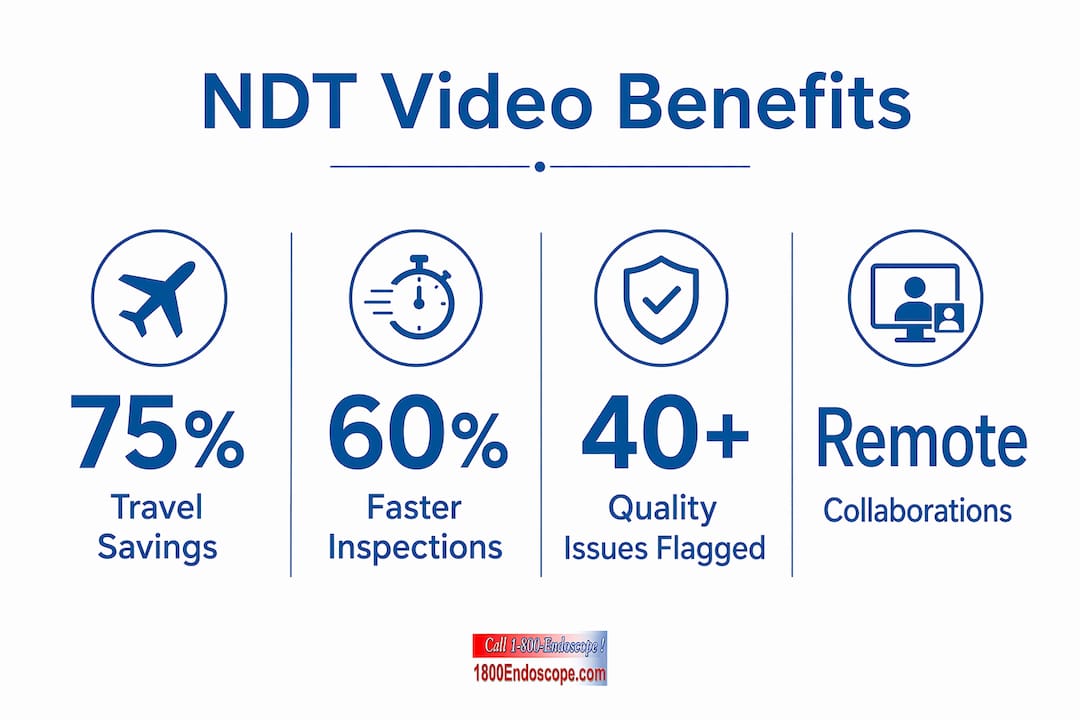
The limits of video are real and worth stating plainly. Specialized equipment handles 60% of routine inspections remotely, but 40% still require onsite presence for subtle defect detection that video feeds can obscure. Vibration artifacts, lens distortion at tight bend radii, and compressed dynamic range in high-contrast environments all reduce the diagnostic value of footage. The best NDT programs treat video as a primary record, not a replacement for trained onsite judgment.
- Video captures temporal defect behavior that static images miss
- Multi-expert review becomes possible without repeat site visits
- HD footage supports measurement tools built into modern videoscope software
- Recorded evidence satisfies regulatory bodies that require objective inspection records
- Footage can be cross-referenced against previous inspection cycles to track defect progression
What are the operational benefits of video in NDT?
The operational case for video documentation in NDT is grounded in measurable efficiency gains. Remote video inspection workflows reduce travel costs by up to 75%, a figure that translates directly to project margins for inspection firms managing large asset portfolios. That cost reduction compounds when you factor in reduced mobilization time, lower per-diem expenses, and faster turnaround on compliance reports.
Routine inspection cycles also move faster with video. Virtual inspection workflows process routine checks about 60% faster than traditional onsite methods. For a refinery running quarterly inspections on hundreds of heat exchanger tubes, that speed difference means less production downtime and faster return to service.
Video documentation also closes what quality engineers call the context gap. Video in production quality control captures the "why" behind outcomes by showing operator adherence and environmental conditions at the moment of inspection. This accelerates root cause analysis when a defect is discovered during a later audit, because the footage shows exactly what the technician saw and how the equipment behaved.
| Operational benefit | Impact |
|---|---|
| Travel cost reduction | Up to 75% savings on remote inspection deployments |
| Routine inspection speed | 60% faster processing compared to traditional onsite methods |
| Audit readiness | Encrypted, time-stamped footage satisfies regulatory traceability requirements |
| Root cause analysis | Contextual footage reduces investigation time after defect discovery |
| Repeat inspection reduction | High-quality video eliminates unnecessary return visits for clarification |
The hybrid model combining onsite and remote video review is the most effective structure for 2026 industry standards. Onsite technicians capture footage with calibrated videoscopes, and remote engineers analyze that footage in real time or asynchronously. This model preserves the physical judgment of the field technician while extending analytical capacity across the organization.
Best practices for recording and archiving NDT footage
Capturing video is only half the work. Footage that lacks structure becomes a liability rather than an asset during audits. The first principle is quality over quantity. Technicians should capture short, well-framed clips rather than long, unfocused recordings. A 30-second clip of a specific weld indication with stable lighting and minimal probe movement is worth more than 10 minutes of wandering footage.
The second principle is metadata discipline. Timestamps and equipment identifiers embedded in video files transform raw footage into searchable, defensible assets. A clip labeled with the inspection date, asset ID, probe serial number, and operator name can be retrieved in seconds during an audit. The same clip without that metadata is nearly useless in a legal or regulatory context.
- Label every file with asset ID, inspection date, operator name, and probe model before archiving
- Store footage in a structured directory that mirrors your asset register hierarchy
- Back up all recordings to at least two locations, including one offsite or cloud-based repository
- Restrict editing access to prevent alteration of original files, maintaining chain of custody
- Schedule periodic archive reviews to purge duplicate or low-quality clips that inflate storage costs
Consistent labeling and structured archives also improve cross-inspection trend analysis. When footage from five consecutive annual inspections on the same pressure vessel is organized and searchable, engineers can track crack growth rates, surface corrosion progression, and coating degradation over time. That longitudinal view is impossible with paper reports or unstructured video files.
Pro Tip: Use your videoscope's built-in annotation feature, if available, to record a brief voice note at the start of each clip identifying the component location and inspection objective. This eliminates ambiguity when reviewing footage weeks or months later.
For teams building or refining their archiving process, the inspection footage best practices guide covers structured workflows that apply directly to industrial NDT environments.
How advanced video technologies are changing NDT
The most significant shift in NDT video inspection over the past three years is the move from passive recording to active data generation. Ultra-thin videoscopes combined with modular processing now unlock 3D spatial modeling and cloud workflows for small-space inspection. Scopes with insertion tubes as small as 2.2 mm can access turbine blade cooling channels, fuel injector bores, and heat exchanger tubes that were previously inaccessible without destructive disassembly.
3D video modeling adds a dimensional layer that flat footage cannot provide. Instead of estimating pit depth from a 2D image, engineers receive a spatial model that quantifies surface geometry with measurable accuracy. This capability changes how fitness-for-service decisions are made, shifting them from experienced guesswork to data-supported engineering judgment.
Cloud connectivity completes the workflow by enabling real-time collaborative analysis. A field technician in a power plant captures footage with a connected videoscope, and that footage streams directly to a cloud platform where a remote engineer reviews it simultaneously. Decisions happen in minutes rather than days. For HD video and inspection accuracy, the resolution quality of the capture device determines the diagnostic ceiling of the entire workflow.
| Technology | Key advantage | Best application |
|---|---|---|
| Ultra-thin videoscopes (2.2 mm) | Access to micro-spaces without disassembly | Turbine blades, fuel injectors, heat exchangers |
| 3D video modeling | Quantified surface geometry from video data | Pit depth measurement, weld profile analysis |
| Cloud-connected platforms | Real-time multi-expert review and decision making | Remote asset management, cross-facility audits |
| HD recording with annotation | Searchable, defensible documentation with context | Regulatory compliance, trend analysis |
The videoscope applications across industrial and specialty inspection contexts show how the same core video technology adapts to radically different access and resolution requirements.
Key takeaways
Video recording in NDT is the most reliable method for creating objective, traceable inspection evidence that satisfies regulatory requirements and supports multi-expert defect analysis.
| Point | Details |
|---|---|
| Video reduces human error | Objective footage replaces variable technician notes with verifiable visual evidence. |
| Operational efficiency gains | Remote video workflows cut travel costs by up to 75% and speed routine checks by 60%. |
| Metadata is non-negotiable | Timestamps and equipment IDs transform clips into defensible, searchable audit assets. |
| Hybrid models outperform pure remote | Onsite capture combined with remote review maximizes both accuracy and analytical reach. |
| Advanced tools expand access | 2.2 mm videoscopes and 3D modeling extend NDT capability into previously inaccessible spaces. |
What I've learned from watching NDT teams adopt video recording
The teams that get the most value from video documentation are not the ones with the most expensive equipment. They are the ones with the clearest protocols. I have seen inspection firms invest in top-tier videoscopes and then archive footage in a shared drive with filenames like "inspection_final_v3." That footage is worthless in an audit because no one can find it, and no one can prove it was unaltered.
The harder lesson is that video quality depends on operator skill more than camera resolution. A technician who knows how to hold probe advancement steady, position the light source correctly, and frame the indication before recording will produce better diagnostic footage on a mid-range scope than an untrained operator using a premium system. Training on video capture technique deserves the same attention as training on defect recognition.
The regulatory argument for video adoption is also underappreciated. When an inspector's written report is challenged in a compliance review, a time-stamped video record is the difference between a defensible position and a costly re-inspection. Regulators in aerospace under FAA oversight and in oil and gas under API standards increasingly expect visual evidence to accompany written findings. Video is no longer a nice-to-have. It is the standard of care.
My honest recommendation is to start with the archive structure before buying new equipment. Define your naming convention, your metadata requirements, and your backup protocol. Then evaluate whether your current videoscopes produce footage that meets those standards. If they do not, the upgrade decision becomes straightforward.
— Endoscope
Upgrade your NDT video capability with 1800endoscope
The inspection insights covered in this article depend on equipment that actually delivers the resolution, durability, and recording functionality NDT professionals require in the field. 1800endoscope carries a full range of industrial borescopes and videoscopes built for the access constraints and documentation demands of real NDT work. Whether you need a portable system for onsite recording or a small-diameter scope for confined-space inspection, the catalog covers both entry-level and advanced configurations. For teams that need a reliable, affordable starting point, the portable 6mm inspection system offers direct SD card recording with a built-in monitor at a price point that fits field inspection budgets.
FAQ
What is video recording in NDT?
Video recording in NDT is the systematic capture of visual inspection footage using tools like industrial videoscopes and borescopes to create objective, time-stamped evidence of component condition. It supports defect detection, regulatory compliance, and multi-expert review.
How does video improve NDT inspection accuracy?
Video removes subjective interpretation by providing a verifiable visual record that multiple engineers can review independently. It also captures temporal defect behavior, such as crack propagation, that static images cannot show.
Can remote video inspection replace onsite NDT work?
Remote video handles approximately 60% of routine inspections effectively, but 40% of cases still require onsite presence for subtle defect detection that video feeds can obscure. A hybrid model combining onsite capture with remote analysis produces the best results.
What metadata should be included in NDT video files?
Every NDT video file should include the inspection date, asset ID, probe serial number, and operator name. This metadata transforms raw footage into searchable, defensible assets that hold up in regulatory audits and legal reviews.
What are the newest video technologies used in NDT?
Ultra-thin videoscopes with insertion diameters as small as 2.2 mm now generate 3D spatial models of internal surfaces, while cloud-connected platforms enable real-time collaborative defect analysis across multiple locations simultaneously.