
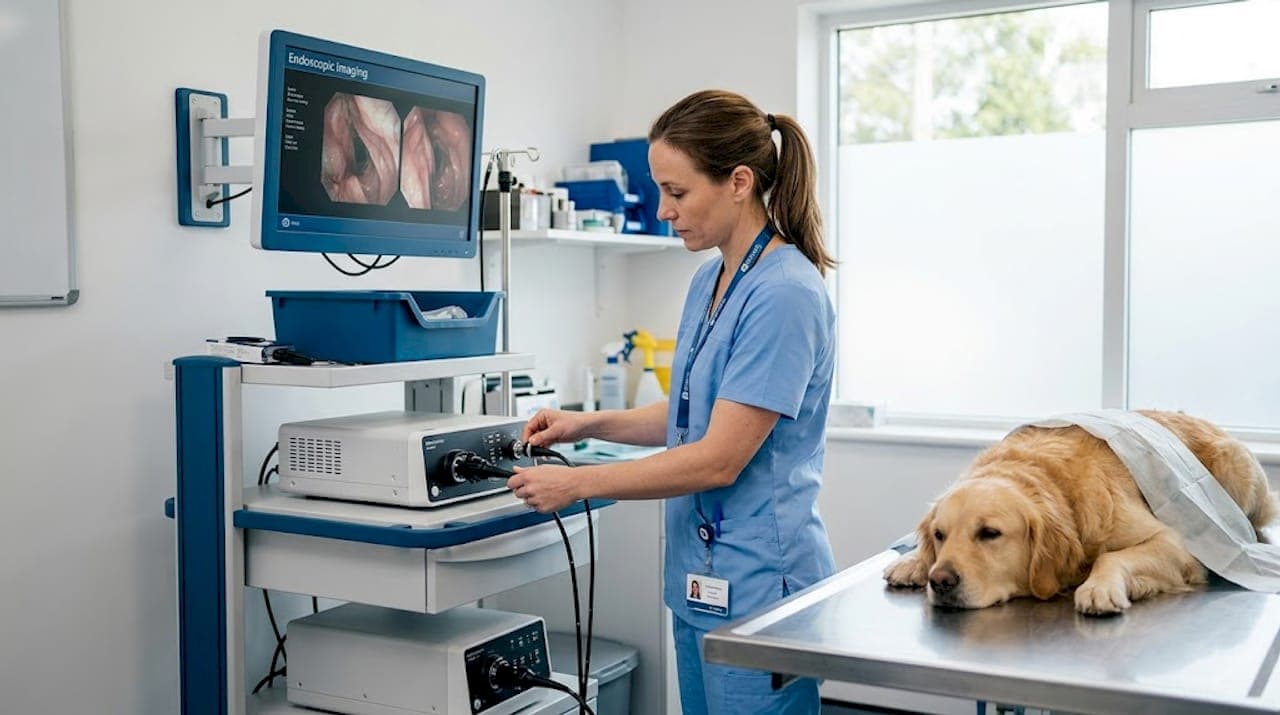
Veterinary endoscopy lives or dies by image quality, and image quality lives or dies by light. Whether you're scoping a dog's airway, examining a horse's guttural pouches, or performing a gastrointestinal workup on a feline patient, the light source you choose shapes every diagnostic call you make. Too dim and you miss lesions. Wrong color spectrum and tissue color looks off. Poor heat management and you risk discomfort to the patient or damage to your scope. This guide breaks down exactly what to evaluate, which technologies lead the field today, and how to match the right light source to your specific clinical workflow.
Table of Contents
- What to consider when evaluating endoscopy light sources
- Leading light source options: LED, xenon, and more
- Feature comparison: Which light source fits your case?
- Making the right choice for your veterinary practice
- Expert perspective: How real-world use trumps specs every time
- Explore reliable veterinary endoscope light solutions
- Frequently asked questions
Key Takeaways
| Point | Details |
|---|---|
| Prioritize illumination quality | Choose light sources based on clarity, color rendering, and distal tip brightness for veterinary endoscopy. |
| Compare LED and xenon | LED offers longevity and efficiency, while xenon provides high intensity and excellent color rendering. |
| Evaluate total cost | Factor in maintenance, energy, and lamp replacement when selecting a light source. |
| Test in practice | Real-world testing ensures compatibility and effectiveness with your endoscopy setup. |
| Tailor to your workflow | Consider mobility, clinical setting, and patient size for an endoscopy lighting solution that fits your needs. |
What to consider when evaluating endoscopy light sources
Before you look at product listings or compare prices, you need a clear set of criteria. Specifications on a box can be misleading without clinical context, and a number that looks impressive at the device level may translate poorly to actual illumination at the scope tip where it actually counts.
Here are the core criteria worth evaluating carefully:
- Brightness and output consistency: Measured in lumens or lux at the distal tip, not just the light box. Consistent output across the full working session matters more than peak brightness.
- Color rendering index (CRI): A CRI above 90 is preferred for clinical tissue evaluation. Low CRI sources distort the subtle color differences you rely on to identify inflammation, bleeding, or abnormal mucosa.
- Spectrum stability: Some technologies drift in color temperature or intensity over the lamp's lifespan. A source that performs differently at 500 hours versus 5,000 hours creates inconsistency in your diagnostic baseline.
- Heat output: Excessive heat at the tip is a patient safety concern, especially in small animal patients with delicate mucosal tissue. Heat at the lamp itself also affects scope fiber longevity.
- Operational cost: Factor in lamp replacement costs, energy consumption, and maintenance intervals. A lower upfront cost can easily be offset by expensive bulb replacements over three years.
- Color temperature control: Some procedures benefit from warmer or cooler light settings. Adjustability is a genuine clinical advantage, not just a marketing feature.
- Scope compatibility: Not every light source works with every scope connection type. Verify compatibility before committing to a system.
LED advantages in longevity and adjustable color temperature, while xenon is often associated with very high intensity and broad/stable spectrum for natural tissue color rendering. Knowing these differences before you evaluate options helps you prioritize criteria that fit your practice.
You can also cross-reference current options available through the endoscope light source catalog to see how real products align with these performance benchmarks.
Pro Tip: Always request a demonstration or borrow a loaner unit and evaluate illumination at the distal tip using an actual scope, not just the product data sheet. Ask vendors to show output in a dark space using your most commonly used scope diameter.
Leading light source options: LED, xenon, and more
Now that the evaluation criteria are clear, it's time to examine the light source technologies most commonly found in veterinary practice. Understanding the practical strengths and limitations of each helps you avoid expensive mismatches between your light source and your clinical demands.
LED light sources
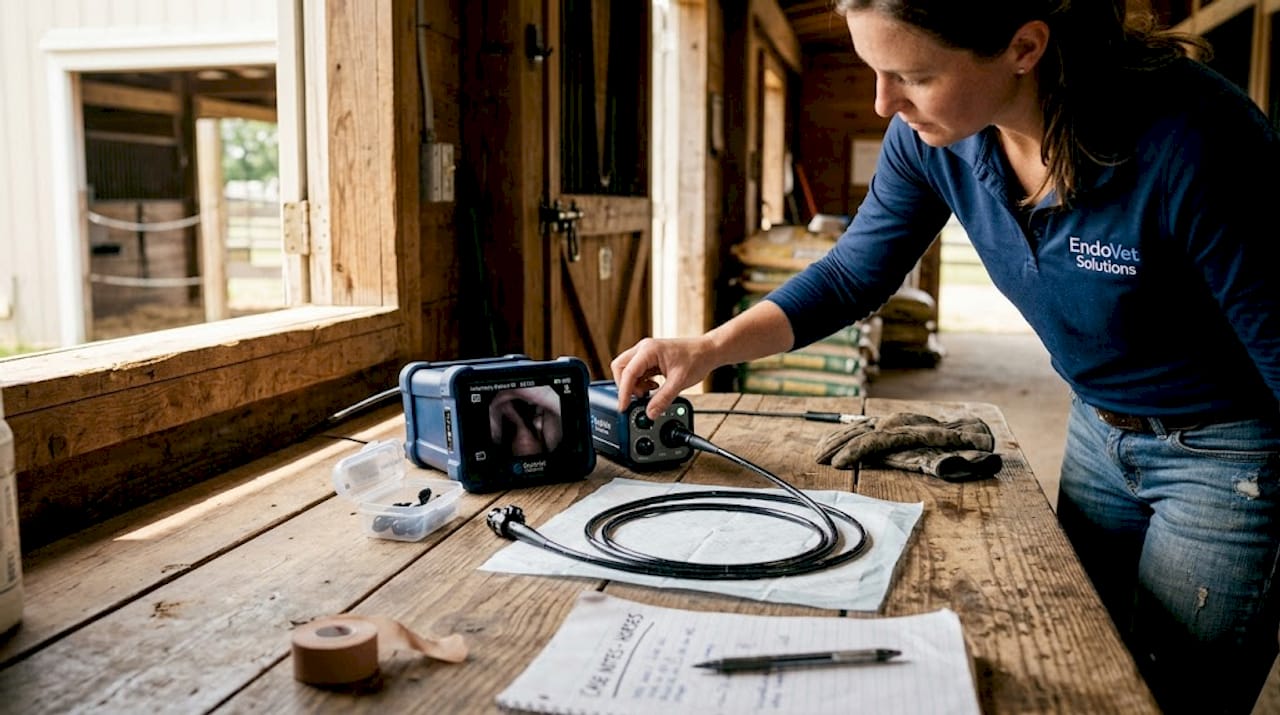
LED technology has become the dominant choice for new installations in both small and large animal veterinary settings. The reasons are practical.
- Long service life: Quality LED sources typically offer 20,000 to 50,000 hours of use before output degrades meaningfully. That is a dramatic contrast to xenon lamps, which typically require replacement every 300 to 500 hours.
- Low energy consumption: LEDs draw significantly less power, which matters for mobile or battery-operated systems used in field settings.
- Adjustable color temperature: Many modern LED units allow clinicians to dial in color temperature settings, ranging from warm white to cool white, depending on the tissue type being examined.
- Minimal heat generation: LED sources produce very little thermal output at the distal end, which reduces risk to delicate mucosal surfaces in small animals.
- Rapid startup: No warm-up time required. LED units reach full output instantly.
The portable veterinary endoscope system is a strong example of LED-integrated design for clinical and mobile field use, where these advantages are most evident.
Xenon light sources
Xenon technology remains relevant in practices where maximum illumination intensity is a priority, particularly for large animal procedures or complex gastrointestinal cases where deep cavity visualization matters.
- High intensity output: Xenon produces some of the highest lumen outputs available in endoscopic lighting.
- Broad, stable spectrum: The xenon arc closely mimics natural daylight, delivering reliable CRI values and predictable tissue color rendition.
- Established clinical track record: Xenon has been used in endoscopy for decades, and experienced clinicians often have strong familiarity with its visual characteristics.
The tradeoffs are real, though. Bulb replacement intervals are short, the lamps themselves are expensive, and xenon units generate significant heat that requires active cooling and careful scope management. For field deployment, the size and fragility of xenon systems can be impractical.
Halogen and legacy sources
Halogen light sources were standard in veterinary endoscopy for many years but are increasingly rare in modern practice. They run hotter, have shorter lamp lives than xenon, and deliver lower CRI values than either LED or xenon. If you encounter halogen-based systems in older clinic inventory, plan for replacement rather than investment.
A clinical example: A mixed practice veterinarian performing dental exams on horses at a farm needed a portable, battery-supported system. A xenon-based unit offered excellent brightness but required a generator, was too bulky for a truck kit, and the replacement bulb costs added up quickly. Switching to an LED-powered equine dental videoscope resolved all three problems while maintaining sufficient brightness for the procedure.
Pro Tip: For field veterinarians doing equine or large animal work, verify whether your light source operates on battery power or has an efficient DC power option. Clinic-grade xenon units are rarely designed for mobile use, and trying to adapt them creates reliability problems.
Feature comparison: Which light source fits your case?
With each technology introduced, a side-by-side comparison makes the tradeoffs clear for the veterinary context. The table below summarizes how LED, xenon, and halogen stack up on the factors that matter most in practice.
| Feature | LED | Xenon | Halogen |
|---|---|---|---|
| Brightness | High (adjustable) | Very high | Moderate |
| Color rendering index | 85 to 95+ | 95 to 100 | 70 to 80 |
| Spectrum stability | Excellent over lifespan | Good (may shift near end of lamp life) | Moderate, degrades with age |
| Lamp longevity | 20,000 to 50,000 hours | 300 to 500 hours | 50 to 150 hours |
| Heat output | Very low | High | High |
| Upfront cost | Moderate to high | Moderate to high | Low |
| Maintenance cost | Very low | High (frequent bulb replacement) | High |
| Portability | Excellent | Limited | Moderate |
| Startup time | Instant | 1 to 3 minutes | Near instant |
The standalone endoscope light source market is projected to reach $204 million, growing at a CAGR of 6.3% from 2026 to 2032, which reflects increasing clinical demand for high-performance illumination systems across veterinary and medical applications.
One point worth emphasizing: the comparison table values reflect box-level specifications. Actual performance depends on how efficiently your endoscope's fiber bundle or video sensor transmits that light. For practices evaluating rigid endoscope options, the scope's optical efficiency plays a major role in how much of that light reaches the tissue. A well-matched rigid scope with a solid LED source often outperforms a poorly matched xenon setup in real clinical conditions.
For a broader view of how endoscopic tool comparisons apply across equipment categories, the laboratory consumables comparison framework offers a useful parallel approach to systematic equipment evaluation.
Mobile and field settings consistently favor LED over xenon on almost every dimension. Clinic-based practices with high case volumes and premium imaging demands may still find xenon justified, but the gap is narrowing as LED technology improves.
Making the right choice for your veterinary practice
Seeing how the options stack up, practical recommendations tailored to real-world veterinary scenarios help clarify the best fit. Here are the most common clinical situations and the light source strategy that fits each one best.
-
Small animal clinic, general practice: An LED source with a CRI above 90 covers the full range of small animal endoscopic procedures. Prioritize adjustable color temperature and compatibility with your flexible scope connector. LED's low heat output is a significant patient safety advantage in small-bore scopes used for airway and gastrointestinal work.
-
Equine practice, clinic-based: If your large animal work happens primarily in a clinic environment, a high-output xenon unit provides the intensity needed for long-working-length flexible scopes in airway or gastric evaluations. Pair it with a robust scope like the equine airway inspection scope and factor in a realistic bulb replacement budget.
-
Mobile or field-based equine work: LED wins here with minimal debate. Battery compatibility, low weight, instant startup, and negligible ongoing costs make LED the practical standard for ambulatory work. Xenon's intensity advantage is not worth the logistical burden in a truck-based kit.
-
Value-driven small practice: Modern LED units have dropped considerably in price and now deliver clinical-grade output at accessible price points. For practices watching capital expenditures closely, a quality LED source paired with a durable scope delivers reliable performance without the recurring cost burden of xenon bulb replacement cycles.
-
Premium diagnostic imaging focus: Practices specializing in endoscopic diagnostics, internal medicine, or oncology screening may prioritize the highest-possible CRI and spectral accuracy. In this case, a premium xenon or high-CRI LED with color temperature control is worth the additional investment.
As LED and xenon are both established for clinical use, the decision ultimately comes down to maintenance burden and specific use case rather than a blanket quality advantage for either technology.
For future-proofing, favor systems where the light source is modular and can be upgraded or replaced without replacing the entire scope system. Ask vendors directly whether firmware updates, lamp module swaps, or connector adapters are available.
"The most important measurement in endoscopic illumination is not the number printed on the box. It is the light that actually reaches the tissue at the end of the scope. Verify that. Everything else is secondary."
Expert perspective: How real-world use trumps specs every time
Here's something the equipment catalogs don't often say plainly: the correlation between published specs and clinical performance is imperfect at best. We've seen setups where a lower-wattage LED system outperformed a high-intensity xenon unit in actual tissue visualization, simply because the scope's fiber bundle was better matched to the LED's output wavelength and the LED's consistent color temperature helped differentiate subtle mucosal changes more clearly.
The veterinarians who consistently get the best diagnostic outcomes from their endoscopy setups are not the ones who purchased the highest-spec equipment. They're the ones who tested before buying, evaluated illumination at the actual distal tip under realistic conditions, and chose a system that fit how they actually work, not how they imagined they might work in ideal circumstances.
Field veterinarians frequently choose LED over xenon despite xenon's intensity advantage because the practical constraints of mobile work matter more than a few hundred extra lumens. The light source that stays in the truck, starts instantly, and doesn't strand you when a bulb fails at 6 a.m. on a farm call is the better light source for that practice, regardless of what the spec sheet says.
Post-purchase support also matters more than most buyers anticipate. A light source with a responsive technical support channel, available replacement parts, and a repair pathway has a meaningfully longer useful life than a cheaper unit with no support infrastructure. When evaluating vendors, ask specifically about lamp module availability, repair turnaround, and whether loaner units are available during service periods.
Test before you commit whenever possible. Request demo units, visit practices using the equipment you're considering, and evaluate the system with your own scopes on your own patient types. Specs inform the shortlist. Real-world testing makes the final call.
Explore reliable veterinary endoscope light solutions
Once equipped with clear decision-making criteria, finding solutions built specifically for veterinary applications streamlines the process considerably.
At 1800endoscope.com, you'll find light sources and endoscope systems matched to actual veterinary clinical needs, from the compact veterinary endoscope for small animal and field use to the equine dental endoscope for large animal applications. Rather than sorting through generalist medical catalogs, you can browse the full light source options catalog organized for veterinary scope compatibility and clinical settings. We also support practitioners in matching light source specifications to their scope systems so that what you order actually performs the way you need it to in the clinic or field.
Frequently asked questions
Why is color rendering important in veterinary endoscopy?
High color rendering ensures accurate tissue assessment during endoscopy, helping distinguish between healthy and abnormal animal tissues. Xenon-based systems may provide high, daylight-like color rendering, which is particularly valuable when evaluating subtle mucosal changes.
What's the main difference between LED and xenon light sources?
LEDs typically provide longer life and lower heat, while xenon lights offer higher intensity and a broader, more stable spectrum. LED advantages in longevity and adjustable color temperature, while xenon is often associated with very high intensity and broad spectral coverage for natural tissue color rendition.
How do I know if a light source matches my endoscope?
Check scope-to-light connector compatibility and test brightness at the distal tip to confirm effective clinical illumination. Fiber bundle diameter and transmission efficiency vary across scope models, so actual output testing is essential.
Are newer light sources worth the investment for small practices?
Yes, modern LEDs and efficient xenon units usually reduce operating costs and minimize maintenance long-term. LED approaches are positioned for long service life and lower heat development, making them a sound financial choice even for budget-conscious small practices.