
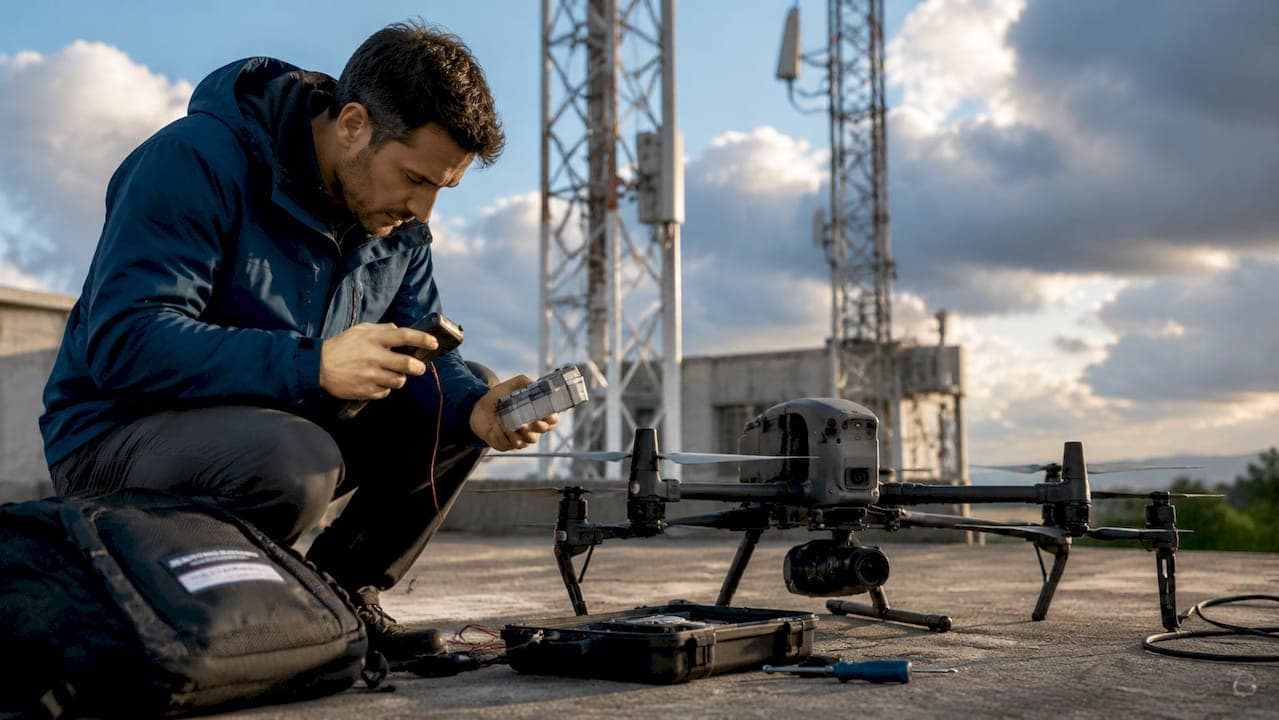
Battery life is the single most critical performance variable in field inspection work, determining whether a technician completes a full shift or abandons a job mid-task. The role of battery life in field inspections extends far beyond simple runtime. It governs voltage stability under load, thermal behavior in harsh environments, and the reliability of every reading your equipment produces. Battery life ranks as the top priority for 80% of buyers selecting portable inspection devices. That figure tells you something direct: the field has already decided what matters most.
How does battery performance affect field inspection operations?
Battery performance shapes every operational outcome in a field inspection, from the number of sites a technician can cover to the accuracy of data collected at each one.
The most underappreciated failure mode is not a dead battery. It is a battery that appears charged but delivers inconsistent voltage under load. Voltage sag and thermal buildup cause more mission aborts than peak current limitations. For drone-based inspections, this means a sortie ends early not because the battery is empty, but because the voltage dropped below the threshold needed to maintain stable flight and sensor operation.
The practical consequences compound quickly:
- Incomplete inspections: A device that shuts down mid-scan forces a technician to reschedule, return to site, and repeat setup. That doubles labor cost for a single inspection point.
- Data gaps: Voltage instability corrupts sensor readings on thermal cameras, borescopes, and ultrasonic probes before the device actually powers off.
- Unplanned downtime: Battery failures that occur in the field, rather than during pre-shift checks, create cascading schedule disruptions across a fleet.
- Safety exposure: Inspectors working in confined spaces or at height cannot simply pause a job when a battery fails. A sudden shutdown creates real risk.
"Stable voltage under sustained load improves flight predictability for drone inspections, reducing aborted sorties and improving asset utilization. The metric that matters is not peak discharge capability. It is how consistently the battery holds voltage across the full duty cycle."
Field inspection battery performance is best measured by sortie completion rate and unplanned downtime per shift, not by the nameplate capacity printed on the battery label. Teams that track these operational KPIs catch battery degradation weeks before a failure occurs in the field.
What technical factors determine inspection battery longevity?
Battery longevity in inspections depends on four variables: state-of-charge management, ambient temperature, internal resistance, and the difference between continuous and pulse discharge ratings.
State-of-charge management
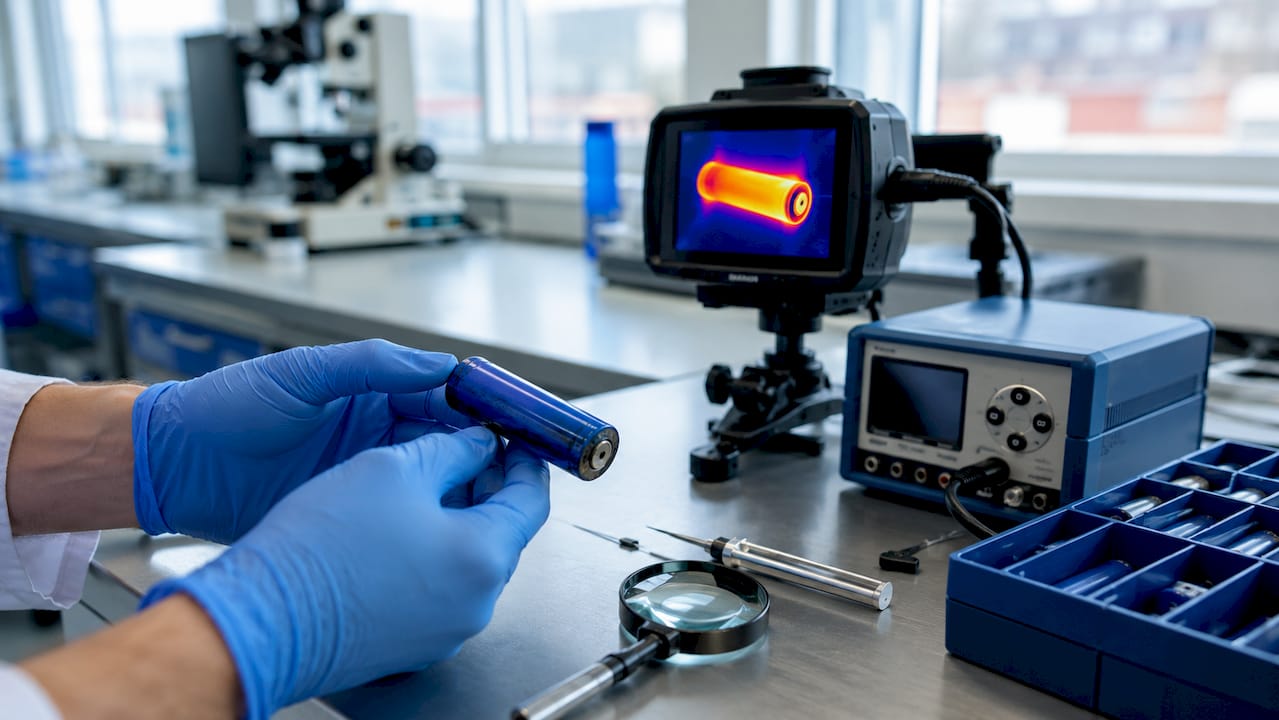
Maintaining state-of-charge between 20% and 80% minimizes diffusion resistance inside the cell and extends battery life well past standard warranty periods. Full cycling from 0% to 100% accelerates electrode degradation with every charge. For inspection equipment used daily, partial cycling is the single most effective longevity strategy available without any hardware investment.
Temperature effects
Every 10°C increase in ambient temperature roughly halves the expected battery life. That is not a marginal effect. A borescope or inspection camera stored in a vehicle in summer heat degrades faster than one stored in a climate-controlled case, even if both see identical use cycles. Thermal cycling, where a battery heats during use and cools during storage, compounds the damage over time.
Key technical metrics
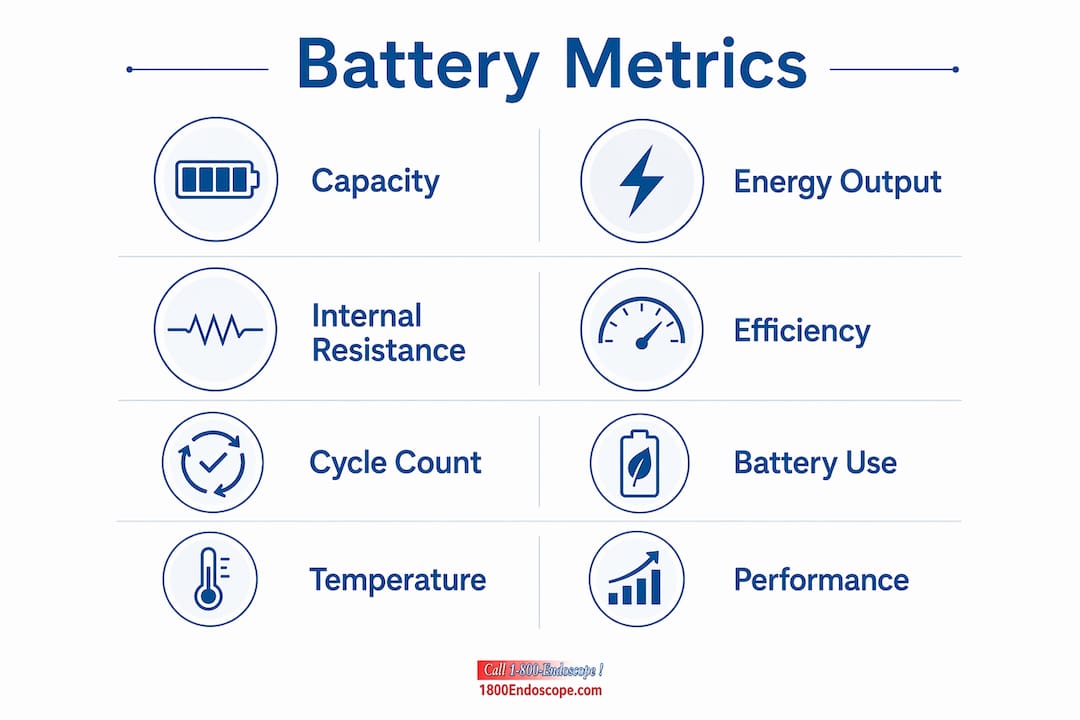
The table below shows the primary metrics technicians should track for any inspection battery:
| Metric | What it measures | Replacement threshold |
|---|---|---|
| Capacity | Actual energy delivered vs. nameplate rating | Below 80% per IEEE 1188 and 450 |
| Internal resistance | Ohmic deviation from commissioning baseline | Above 20% deviation per IEEE 1188 |
| Voltage under load | Stability during active discharge | Sag exceeding device spec |
| Operating temperature | Cell temperature during discharge | Exceeds manufacturer limit |
Continuous vs. pulse C-ratings
A battery's C-rating describes how fast it can discharge relative to its capacity. Continuous C-rating applies to sustained loads, like a borescope running its light source and camera simultaneously. Pulse C-rating applies to brief high-demand events, like a drone motor spike during a maneuver. Selecting a battery rated for your device's continuous draw, not just its peak demand, prevents the voltage sag that causes mid-inspection failures.
Pro Tip: Check the continuous C-rating on any replacement battery before purchase. A battery with a high peak C-rating but a low continuous rating will sag under the steady load of most inspection equipment, even if it looks adequate on the spec sheet.
How do you monitor and maintain battery health for inspections?
Effective battery maintenance for field inspections follows a three-layer approach: routine visual checks, telemetry-based tracking, and threshold-triggered replacement.
Routine visual and thermal inspection catches the earliest signs of degradation before they affect performance:
- Check for swelling, case deformation, or electrolyte leakage at the start of every shift.
- Use a thermal camera or infrared thermometer to scan batteries after a full discharge cycle. Hot spots indicate internal resistance buildup.
- Log any battery that runs noticeably shorter than its peers. Outliers in a fleet signal early-stage capacity loss.
Battery Management System (BMS) telemetry transforms battery health from a guessing game into a trackable asset. BMS telemetry tracking internal resistance and cycle counts is more reliable for predicting uptime than voltage readings alone. A battery can show acceptable voltage at rest while carrying internal resistance high enough to cause failure under load. Telemetry catches that gap.
Replacement triggers should be defined in writing before a battery fails in the field:
- Replace any battery delivering below 80% of nameplate capacity per IEEE 450 and IEEE 1188 standards.
- Replace any battery showing ohmic deviation above 20% from its commissioning baseline per IEEE 1188-2025.
- Schedule capacity tests at intervals aligned with your inspection frequency. High-use fleets benefit from quarterly testing.
Pro Tip: Build a simple battery log for each unit in your fleet. Record capacity test results, cycle counts, and any field anomalies. Three data points over time reveal trends that a single test never will.
The industrial inspection equipment lifespan factors that most shorten service life are preventable with consistent monitoring. Reactive replacement after a field failure costs more in labor and schedule disruption than a proactive program ever will.
Selecting the right battery for different inspection equipment types
Different inspection platforms impose different demands on their batteries, and a strategy that works for a handheld borescope will not transfer directly to a drone or an electric inspection vehicle.
Handheld and portable inspection devices
Portable devices like borescopes and inspection cameras draw steady, moderate loads. The priority for these devices is capacity and voltage stability at low-to-moderate discharge rates. Battery life comparison factors for borescopes include cell chemistry, capacity rating, and how the device manages power during idle periods. Lithium-ion cells with integrated BMS protection circuits are the standard for professional-grade portable inspection equipment.
Inspection drones
Drones demand high continuous C-ratings and low internal resistance because motor loads are both sustained and variable. The optimal battery for drone inspections prioritizes voltage stability across the full discharge curve, not just peak capacity. A battery that holds 3.7V per cell from 80% down to 20% state-of-charge outperforms a higher-capacity battery that sags to 3.4V mid-flight.
Electric inspection vehicles
Auxiliary 12V batteries in electric inspection vehicles are the most commonly overlooked component in fleet maintenance. A failed 12V auxiliary battery immobilizes the vehicle regardless of how much charge remains in the main propulsion pack. Inspection teams that maintain the main battery perfectly but neglect the auxiliary battery face the same downtime as teams that ignore battery health entirely.
Pro Tip: Add the auxiliary 12V battery to your pre-shift checklist as a separate line item from the main pack. A load test takes under two minutes and prevents the most avoidable cause of vehicle-based inspection downtime.
State-of-charge management between 20% and 80% extends battery life past typical warranty periods across all three equipment categories. The strategy is the same regardless of platform. Only the specific capacity and C-rating targets change.
What I've learned about battery life that most guides skip
Battery life discussions in the inspection industry almost always focus on capacity. How many milliamp-hours? How many hours of runtime? Those numbers matter, but they are the least predictive metrics for field reliability.
The metric that actually determines whether your inspection day goes smoothly is voltage stability under your specific load profile. I have seen batteries with impressive capacity ratings fail mid-inspection because their internal resistance had climbed past the point where they could sustain the device's operating voltage. The capacity test showed 85%. The ohmic deviation test would have shown 23%. Nobody ran the ohmic test.
Telemetry changes this completely. When BMS data logs internal resistance, cycle count, and temperature history for every battery in a fleet, you stop reacting to failures and start scheduling replacements. That shift from reactive to predictive is where the real efficiency gains live. It is not glamorous, but it is the difference between a fleet that runs on schedule and one that generates constant field calls.
The other thing most guides miss: vendor spec sheets are starting points, not guarantees. Validate battery performance under your actual operating conditions before committing to a fleet purchase. A battery rated for 45 minutes of drone flight in a lab at 20°C may deliver 30 minutes in a desert inspection environment at 38°C. Field validation is not optional. It is the only data that actually reflects your operational reality.
Build a standardized monitoring program. Define your replacement triggers in writing. Run capacity and ohmic tests on a schedule. The inspectors who do this consistently are the ones who never get surprised by a battery failure at the worst possible moment.
— Endoscope
Reliable portable inspection equipment from 1800endoscope
Field inspectors need equipment that performs through a full shift without battery anxiety cutting the workday short.
1800endoscope carries portable inspection systems built for extended field use, including the fully portable 6mm airway inspection system with direct monitor output and SD card video recording. For technicians who need a broader selection, the borescope and endoscope catalog covers a full range of portable devices suited to veterinary, medical, and industrial inspection work. Every product in the catalog is selected with portability and field reliability in mind, so you spend your time inspecting, not troubleshooting equipment.
Key takeaways
Battery reliability in field inspections depends on voltage stability under load, state-of-charge management, and threshold-based replacement, not on nameplate capacity alone.
| Point | Details |
|---|---|
| Voltage stability over capacity | Batteries that hold voltage under load outperform high-capacity units that sag mid-inspection. |
| 20–80% charge window | Keeping state-of-charge in this range extends battery life past standard warranty periods. |
| IEEE replacement thresholds | Replace batteries below 80% capacity or above 20% ohmic deviation per IEEE 1188 and 450. |
| BMS telemetry is non-negotiable | Internal resistance and cycle tracking predict failures before they happen in the field. |
| Auxiliary batteries matter | A failed 12V auxiliary battery immobilizes electric inspection vehicles regardless of main pack charge. |
FAQ
What is the role of battery life in field inspections?
Battery life determines how long inspection equipment operates reliably under load, directly affecting how many sites a technician can cover per shift and the accuracy of data collected. Voltage stability throughout the discharge cycle matters as much as total runtime.
When should I replace an inspection battery?
Replace any battery that delivers below 80% of its nameplate capacity or shows ohmic deviation above 20% from its commissioning baseline, per IEEE 1188 and IEEE 450 standards. Waiting for a complete failure in the field costs more in downtime than proactive replacement.
How does temperature affect battery longevity in inspections?
Every 10°C increase in ambient temperature roughly halves expected battery life. Storing and operating inspection batteries within the manufacturer's recommended temperature range is the most direct way to preserve longevity.
What is the best state-of-charge range for inspection batteries?
Keeping batteries between 20% and 80% state-of-charge minimizes internal degradation and extends service life beyond typical warranty periods. Full 0–100% cycling accelerates electrode wear with every charge cycle.
Why does BMS telemetry matter for field inspection battery management?
BMS telemetry tracks internal resistance, cycle count, and temperature history, giving technicians the data needed to predict failures before they occur. Voltage readings alone do not reveal the internal resistance buildup that causes mid-inspection shutdowns.