
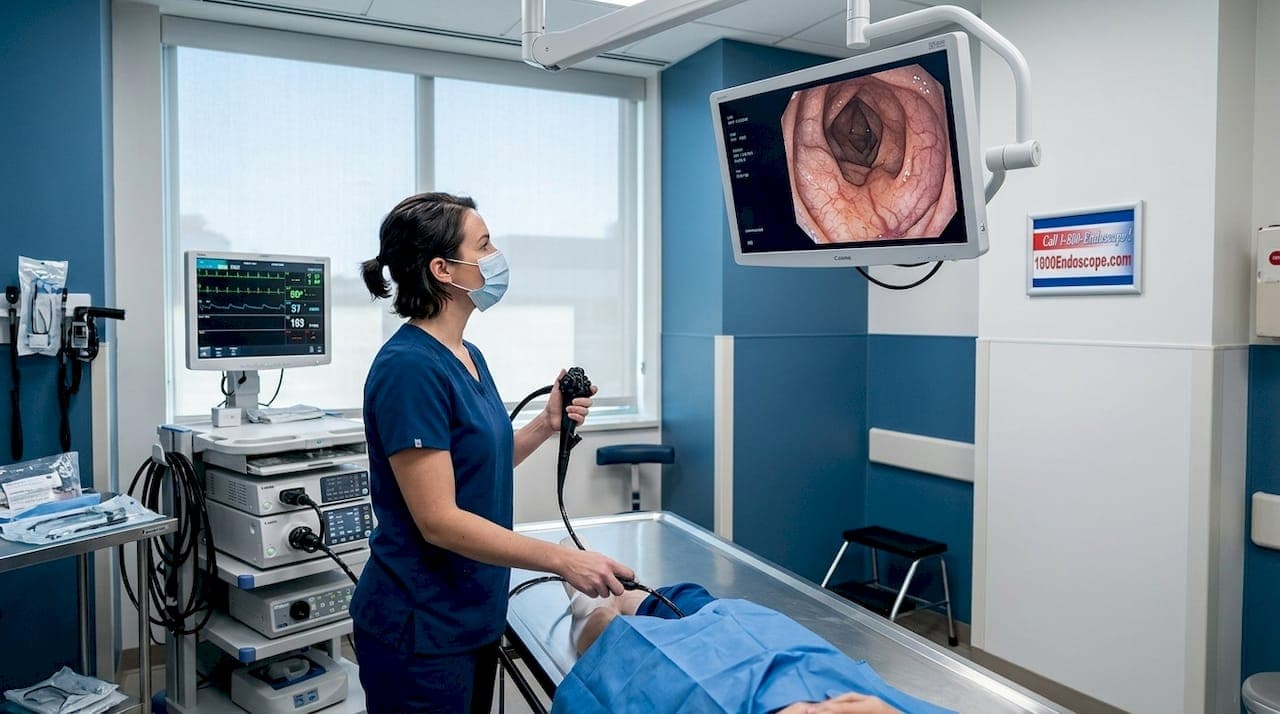
Most professionals assume endoscopes are rigid tubes — the kind used in surgery, inserted quickly and removed. That picture is incomplete. A flexible endoscope is a bendable, camera-equipped instrument that threads through curved anatomical passages or industrial cavities that no rigid device could reach. From gastrointestinal diagnostics covering the pharynx to the cecum, to inspecting the interior of aircraft engines, these devices operate across fields most people never connect. This guide breaks down how they work, where they excel, and what separates them from their rigid counterparts.
Table of Contents
- Key Takeaways
- What a flexible endoscope actually is
- Core components you need to know
- Diagnostic and procedural uses in healthcare and veterinary medicine
- Flexible vs rigid endoscopes: choosing the right tool
- Reprocessing: the most underestimated challenge
- Industrial applications: flexible borescopes in the field
- My take on what this device category demands from you
- Explore 1800endoscope's flexible endoscope systems
- FAQ
Key Takeaways
| Point | Details |
|---|---|
| Flexible endoscope defined | A bendable shaft with an integrated camera and light source enables access to curved or narrow internal spaces. |
| Medical and veterinary reach | These devices perform biopsies, ultrasound-guided sampling, and minimally invasive treatment in both human and animal patients. |
| Rigid vs flexible tradeoffs | Rigid scopes offer durability and simplicity; flexible scopes win on maneuverability and patient comfort in complex anatomy. |
| Reprocessing is non-negotiable | Heat-sensitive construction demands manual pre-cleaning plus chemical high-level disinfection or low-temperature sterilization every cycle. |
| Industrial applications are growing | Flexible borescopes inspect pipes, engines, and cavities where rigid probes cannot navigate, using the same core design principles. |
What a flexible endoscope actually is
The formal industry term is flexible endoscope, and it covers a broad family of devices built around one core principle: a long, articulating insertion shaft that bends on command rather than forcing the anatomy to conform to the instrument. At its simplest, a flexible endoscope consists of a flexible insertion tube, a proximal control handle, a light source connection, an image sensor or fiber optic bundle, and one or more internal channels for flushing or instrument passage.
What makes this deceptively complex is the engineering packed into a tube that might be only 6 to 10 millimeters in diameter. Inside that narrow shaft, designers fit optical fibers or a CCD/CMOS chip, light-carrying fiber bundles, at least one working channel, and the mechanical cables that control tip deflection. That last element, the Bowden cable bending system, translates hand movements on the control knobs into precise tip articulation, sometimes in four directions simultaneously.
Understanding this construction matters because it directly shapes how you use, clean, and select these devices. Every lumen, every joint, and every sealed component is a potential retention point for biological or industrial contamination.
Core components you need to know
The insertion shaft is the most visible feature, but the control head is where clinical or inspection decisions happen. Here is what you will find in most professional-grade units:
- Insertion tube: A multi-layer construction with a stainless steel spiral, mesh braid, and outer polymer coating that balances flexibility with torque transmission.
- Distal tip: Houses the imaging sensor (or fiber bundle exit), LED or fiber optic illumination, and the working channel openings. Tip deflection typically ranges from 180 to 210 degrees in each plane.
- Operating channels: Allow passage of biopsy forceps, cytology brushes, injection needles, or flushing fluids. Medical scopes commonly carry channels from 2.0 to 3.7 mm in diameter.
- Control knobs: Drive the Bowden cables that bend the distal tip. Most four-way articulating scopes have two concentric knobs on the handle.
- Light post and video connector: Connect to external processors and light sources in traditional systems, or integrate directly in portable videoscope designs.
Medical and veterinary versions prioritize small outer diameters and large channel-to-shaft ratios to minimize patient trauma. Industrial flexible borescopes sit in the 4 to 10 mm diameter range and often trade channel size for rugged outer coatings that resist oils, solvents, and abrasion.
Pro Tip: When evaluating a flexible endoscope for purchase, check the working channel diameter before the outer shaft diameter. A larger channel gives you significantly more procedural flexibility, especially in veterinary settings where you may need to pass multiple accessory types.
Diagnostic and procedural uses in healthcare and veterinary medicine
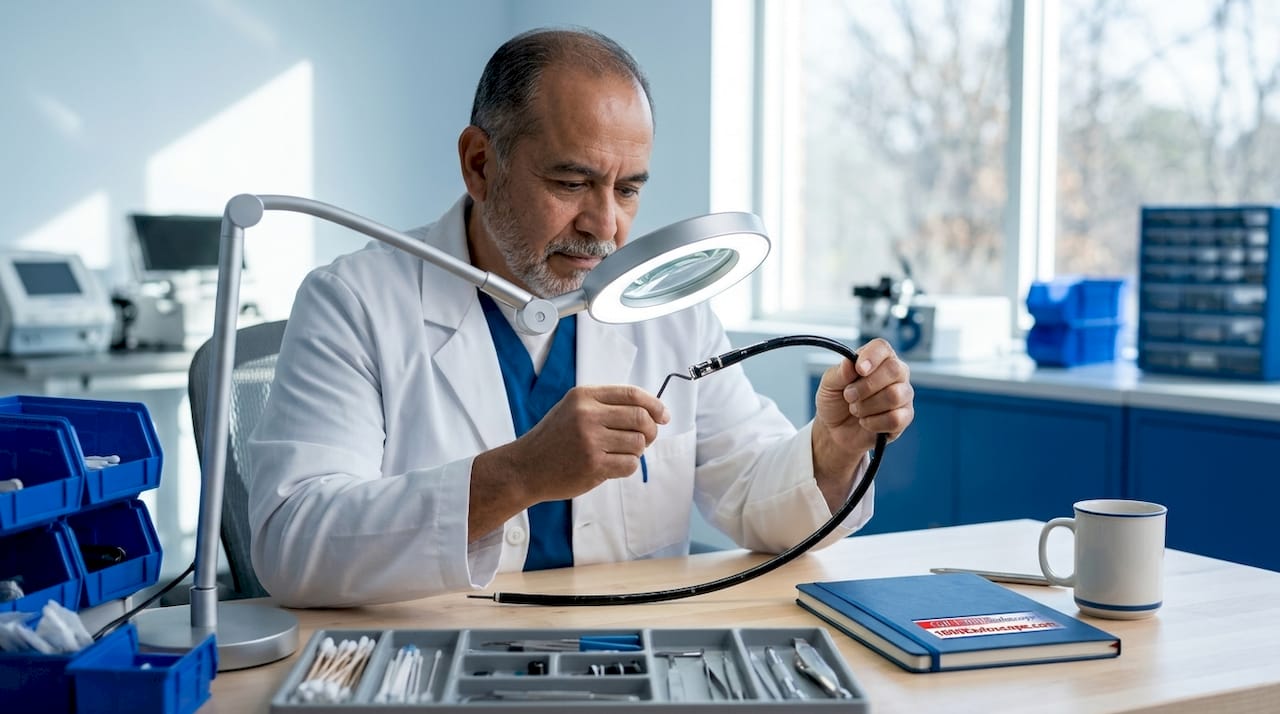
This is where the importance of flexible endoscopes becomes concrete. In human medicine, flexible gastroscopes examine the esophagus, stomach, and duodenum. Colonoscopes reach from the rectum to the cecum. Bronchoscopes navigate the tracheobronchial tree. Specialized devices like double balloon enteroscopes extend visualization into the small intestine beyond what standard scopes can reach.
The procedural capability goes well beyond looking. Through the working channel, clinicians can pass tools for:
- Biopsy forceps to sample suspicious mucosal tissue
- Polypectomy snares to remove polyps without open surgery
- Injection needles for hemostasis or submucosal lifting
- Cytology brushes for collecting cellular samples
- Ultrasound probes that assess lesion depth and guide fine-needle aspiration in real time
That last point is worth pausing on. Endoscopic ultrasound transforms a visual tool into a layered diagnostic system. You can characterize a submucosal mass, stage a cancer, or sample a lymph node, all through a single flexible instrument without any incision.
Veterinary medicine draws on the same benefits, and in some ways demands even more from device design. A small diameter scope suited for a cat's nasal passage operates in a completely different size range than a three-meter gastroscope used for equine stomach examination. Flexible scopes in veterinary practice enable minimally invasive diagnosis and treatment across species, reducing anesthesia time and recovery compared to exploratory surgery. Common veterinary applications include upper and lower GI examination, rhinoscopy, cystoscopy, and airway assessment in large animals.
Pro Tip: For veterinary clinics handling multiple species, consider a system with interchangeable insertion tubes of different diameters rather than purchasing separate complete units. This approach reduces per-procedure cost significantly.
Flexible vs rigid endoscopes: choosing the right tool
The debate around flexible vs rigid endoscopes is not about which is better. It is about matching the device to the anatomical reality and procedural goal.
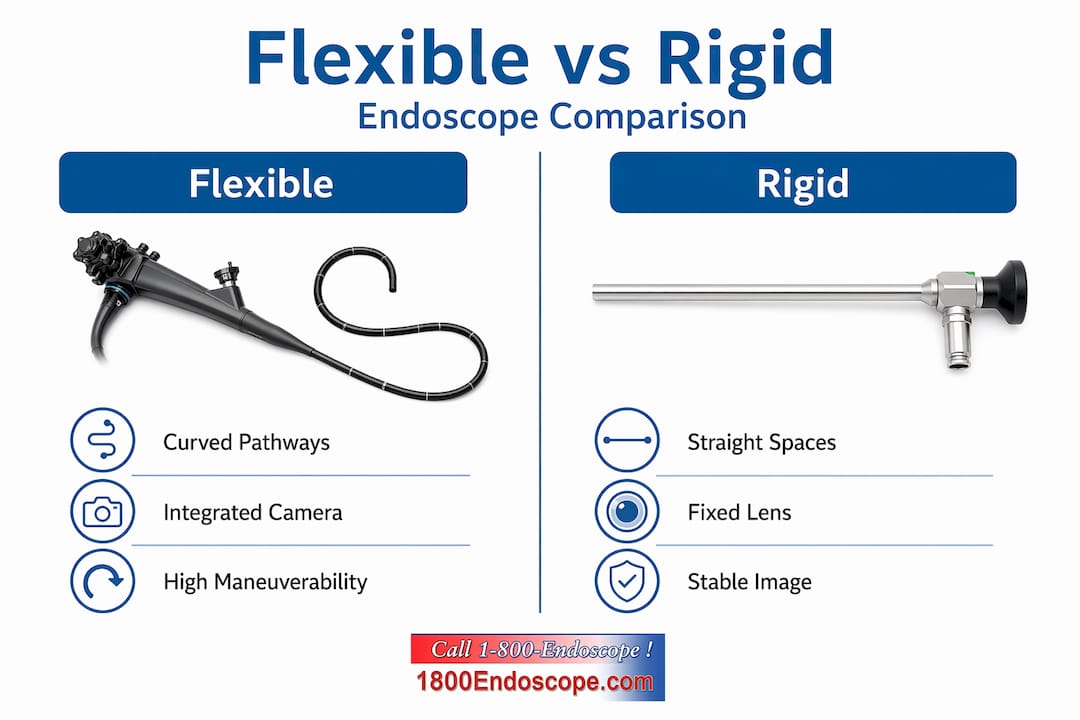
| Feature | Flexible endoscope | Rigid endoscope |
|---|---|---|
| Maneuverability | Navigates curved passages and complex anatomy | Limited to straight or gently angled paths |
| Patient comfort | High, with less tissue stress during insertion | Lower for passages that require alignment |
| Image quality | Excellent; chip-on-tip designs deliver HD | Very high; short optical path reduces distortion |
| Durability | Moderate; complex construction increases wear risk | High; fewer moving parts, simpler construction |
| Cost | Higher purchase and maintenance cost | Generally lower initial investment |
| Best use cases | GI, bronchoscopy, veterinary, industrial ducts | Orthopedics, ENT (rigid sinus), laparoscopy |
| Reprocessing complexity | High; multiple lumens require meticulous cleaning | Lower; fewer channels and smooth surfaces |
Rigid scopes work well when the anatomy cooperates. In laparoscopy, the surgeon creates working space and controls the geometry. In rigid bronchoscopy, the airway is held open. In those contexts, the rigid device's superior image path and rugged construction are genuine advantages.
Where the passage curves, narrows, or changes direction, the flexible design wins without contest. This is why the benefits of flexible endoscopes are clearest in gastrointestinal and respiratory work, and why industrial inspectors reach for flexible borescopes when examining bent pipe runs or turbine blade passages.
Reprocessing: the most underestimated challenge
Here is what most device discussions leave out. The clinical or inspection value of a flexible endoscope means nothing if the reprocessing protocol fails. And failure is more common than the field acknowledges.
Flexible endoscopes require extensive manual cleaning followed by either chemical high-level disinfection (HLD) or low-temperature sterilization. Steam sterilization is not an option because the heat damages the polymer components, adhesives, and sealed optics. That constraint pushes facilities toward chemical methods with their own complexity.
The correct reprocessing sequence follows this order:
- Immediate pre-cleaning at point of use: Wipe the insertion tube and flush channels with enzymatic solution within seconds of scope withdrawal. Bioburden dries rapidly inside narrow lumens and becomes nearly impossible to remove completely.
- Leak testing: Pressurize the scope before immersion to detect any breach in the outer sheath. A missed perforation allows fluid infiltration that destroys the instrument and can harbor contamination.
- Manual channel cleaning: Brush and flush every lumen, valve port, and opening with enzymatic detergent. This step is indispensable. No downstream chemical process compensates for inadequate soil removal.
- Automated endoscope reprocessor (AER) or manual HLD soak: Follow manufacturer-specified chemical contact times precisely.
- Rinsing with high-quality water: Use filtered or sterile water for the final rinse. Tap water introduces microorganisms that can form biofilm in damp channels.
- Drying and storage: Extended drying with forced air through channels before hanging in a ventilated cabinet is non-negotiable. Residual moisture is the primary driver of biofilm formation.
For facilities requiring the highest sterility assurance, low-temperature sterilization with ethylene oxide or vaporized hydrogen peroxide achieves a sterility assurance level of 10-6, the gold standard for critical devices. The tradeoff is cycle time and the need for aeration after EO sterilization.
Infection risks from flexible endoscopes stem overwhelmingly from human error during manual cleaning, not from chemical failure. Training, documentation, and direct observation of technique matter more than the choice of disinfectant.
Pro Tip: Build your reprocessing protocol directly from the manufacturer's Instructions for Use (IFU), not from generic facility guidelines. Scope designs vary enough that a protocol optimized for one brand can miss critical steps for another.
Industrial applications: flexible borescopes in the field
Outside healthcare, flexible endoscopes used industrially are called borescopes, and the crossover in design principles is direct. The same Bowden cable articulation, the same internal lumen architecture, and the same tradeoff between outer diameter and functional channel size apply.
Industrial flexible borescopes typically share these characteristics:
- Shaft diameters from 4 to 10 mm, with longer working lengths than most medical scopes
- Outer sheaths rated for contact with oils, fuels, and mild solvents
- Operating channels that allow flushing of debris or passage of retrieval tools
- LED illumination integrated at the distal tip for consistent brightness in dark cavities
- HD video output with on-board recording, often to SD card or wireless transmission
Common inspection tasks include examining pipe interior corrosion, turbine blade condition, weld quality inside closed structures, and engine component wear without disassembly. The inspection of hard-to-reach areas like engine blocks, heat exchangers, and structural cavities gives maintenance teams the information they need without taking equipment offline for teardown.
The key difference from medical use is that industrial borescopes prioritize mechanical ruggedness and environmental resistance over biocompatibility. They are not designed for reprocessing in the clinical sense, but they do require cleaning protocols that prevent cross-contamination of inspected systems.
My take on what this device category demands from you
I've worked alongside both veterinary clinicians and industrial inspection teams long enough to see a consistent pattern. The professionals who get the most from flexible endoscopes are not necessarily the ones with the most expensive equipment. They are the ones who respect the full lifecycle of the device.
What I've found is that most problems, whether it is a missed diagnosis, a contaminated scope, or a failed industrial inspection, trace back to underestimating how much the device design shapes the outcome. A flexible endoscope is not just a camera on a flexible stick. It is a system where every component, from the tip articulation to the working channel diameter to the drying protocol after reprocessing, affects what you can do and how safely you can do it.
The emerging trend I find genuinely exciting is integration. Advanced videoscope platforms now combine HD imaging, wireless data transmission, and on-board AI-assisted measurement into portable units that work equally well in a veterinary clinic and an industrial inspection bay. That cross-applicability is where I see the next decade of growth for this technology.
My practical advice: invest in training before you invest in equipment upgrades. A team that executes reprocessing correctly and reads imaging output accurately will outperform a team with a premium scope and poor technique every time.
— Endoscope
Explore 1800endoscope's flexible endoscope systems
If this guide has clarified what you need in a flexible endoscope for your practice or inspection program, 1800endoscope carries the specific systems to match those requirements.
From the portable 6mm airway inspection system with direct monitor output and SD card recording, to a full catalog of industrial borescopes built for demanding inspection environments, 1800endoscope serves veterinary clinics, medical facilities, and industrial inspection teams with equipment that is priced for real-world budgets. The platform also stocks accessories including biopsy forceps, light sources, valves, and cleaning tools, so you can build a complete system rather than piecing one together from multiple vendors. Reach out to the 1800endoscope team directly to discuss your application and get matched to the right scope for your specific anatomy or inspection target.
FAQ
What is a flexible endoscope used for?
A flexible endoscope is used for minimally invasive examination and treatment of internal spaces including the GI tract, airways, urinary system, and, in industrial settings, pipes and mechanical cavities. It allows visualization, tissue sampling, and therapeutic procedures through a single insertion.
How does a flexible endoscope differ from a rigid one?
A flexible endoscope uses an articulating shaft to navigate curved passages, while a rigid endoscope maintains a fixed shape suited to straight anatomical paths. Flexible scopes offer greater maneuverability; rigid scopes offer simpler construction and often lower cost.
Can flexible endoscopes be steam sterilized?
No. The polymer components, adhesives, and sealed optics in flexible endoscopes cannot tolerate the heat of steam sterilization. These devices require manual cleaning followed by chemical high-level disinfection or low-temperature sterilization methods such as ethylene oxide or vaporized hydrogen peroxide.
What are the main benefits of flexible endoscopes in veterinary medicine?
Flexible endoscopes allow veterinarians to examine internal anatomy across a wide range of species with minimal trauma, reducing the need for exploratory surgery. Small diameter designs make it possible to scope nasal passages, airways, and the GI tract in animals as small as cats.
What diameter are industrial flexible borescopes?
Industrial flexible borescopes typically range from 4 to 10 mm in outer diameter, with longer insertion lengths than most medical scopes. This size range balances the mechanical requirements for tip articulation and flushing channels against the access constraints of pipes, engines, and structural cavities.