
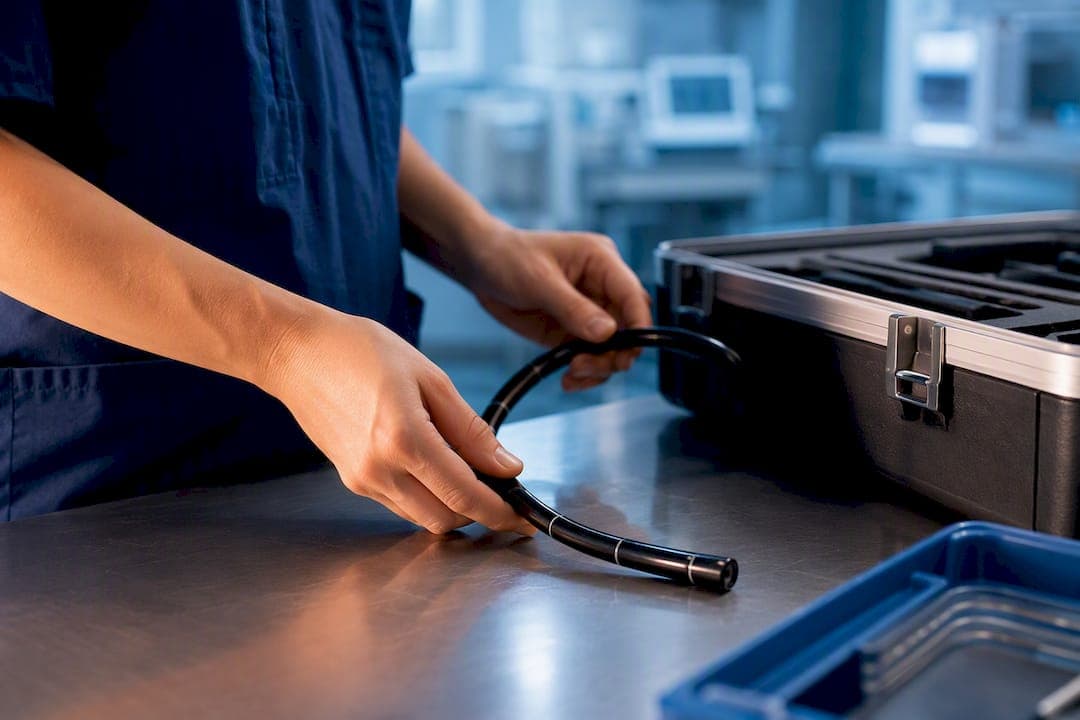
For 2026, eligible businesses can deduct up to $2,560,000 of qualifying equipment under Section 179, with a phase-out that starts once purchases hit $4,090,000 and disappears entirely at $6,650,000. Nearly all tangible business equipment qualifies, new or used, as long as it goes into service and gets used more than half the time for business. The catch: your deduction can't exceed your active business income for the year.
TL;DR:
- Businesses must ensure equipment is placed in service before December 31 to qualify for the deduction this year.
- SUVs used more than 50% for business are capped at a $32,000 deduction, while certain trucks and vans over 14,000 pounds GVWR qualify for full expensing.
- Equipment purchases from related parties disqualify the deduction, and proper documentation of business use and placement date is essential to avoid recapture or audits.
- State conformity varies; many states do not follow federal Section 179 limits, which can impact overall tax savings.
- Bonus depreciation at 100% applies to assets acquired after January 19, 2025, and is used after electing Section 179 to maximize deductions.
Table of Contents
- What Are the 2026 Section 179 Numbers You Need to Know?
- What Equipment Qualifies for the Section 179 Deduction?
- Do Trucks and SUVs Qualify for Full Section 179 Expensing?
- Should You Use Section 179 or Bonus Depreciation First?
- How Do You Actually Claim the Section 179 Deduction?
- What Mistakes Trigger Section 179 Recapture or Audit Flags?
- Does Your State Follow the Federal Section 179 Rules?
- How Much Can Section 179 Actually Save You? A Worked Example
- Why Endoscopes and Borescopes Usually Qualify for Section 179
- Three Moves to Make Before Year-End
- Get Qualifying Equipment Placed in Service Before Year-End
- Where to Verify These Section 179 Rules Yourself
- Sources
What Are the 2026 Section 179 Numbers You Need to Know?
The math starts with three key limits: the maximum deduction, a phase-out that begins at a specific purchase amount, and complete elimination once a higher threshold is crossed, according to IRS Publication 946. The deduction for SUVs used for business is capped at a set amount for vehicles with certain weight classifications.
| 2026 Section 179 Figure | Amount |
|---|---|
| Maximum deduction | $2,560,000 |
| Phase-out threshold begins | $4,090,000 |
| Deduction fully eliminated | $6,650,000 |
| SUV deduction cap | $32,000 |
Before you commit to a purchase, run through this: confirm the equipment actually qualifies, check that business use clears 50%, and nail down exactly when it goes into service. That last one trips up more businesses than any other rule on this list.
What Equipment Qualifies for the Section 179 Deduction?
Most tangible personal property used in a trade or business qualifies. Think machinery, computers, office furniture, off-the-shelf software, and certain building improvements classified as Qualified Improvement Property (QIP), such as HVAC units, security systems, and roofing on nonresidential buildings.
- Manufacturing and shop equipment, from CNC machines to diagnostic tools
- Computers, servers, and off-the-shelf software
- Office furniture and fixtures
- QIP items: HVAC, fire protection, security systems, interior improvements to nonresidential buildings
- Specialized professional equipment, including medical and industrial inspection tools
Used equipment counts too, as long as it's new to you and bought from someone who isn't related to your business. The business-use threshold matters more than people realize: if you use an asset 60% for business and 40% personally, you can only deduct the business-use portion, and dropping below 50% kills eligibility entirely. A veterinary clinic buying a used ultrasound machine from a retiring colleague, for instance, still qualifies under the used property qualifies rule, since it's new to that clinic.
Do Trucks and SUVs Qualify for Full Section 179 Expensing?
Vehicles get their own rulebook, and the SUV cap catches a lot of buyers off guard. Any SUV weighing between 6,001 and 14,000 pounds GVWR and used more than 50% for business is capped at $32,000 for 2026, regardless of what you actually paid for it.
Some vehicles dodge the cap entirely:
- Full-size pickups with a cargo bed at least six feet long
- Cargo vans with no seating behind the driver and no side windows
- Trucks and vans over 14,000 pounds GVWR
If your vehicle exceeds the $32,000 cap, the remaining basis doesn't just vanish. You can typically apply bonus depreciation or standard MACRS depreciation to the leftover amount, spreading it across future years or capturing it immediately depending on your strategy.
Pro Tip: Keep the manufacturer's GVWR sticker, the window sticker, or a spec sheet in your files. Auditors ask for weight verification more often than you'd think, and "I'm pretty sure it's over 6,000 pounds" doesn't hold up.
Should You Use Section 179 or Bonus Depreciation First?
The order matters. You elect Section 179 first, picking specific assets up to your income limit, then apply bonus depreciation to whatever basis remains. For property acquired after January 19, 2025, bonus depreciation runs at 100% with no dollar cap and no taxable-income restriction.
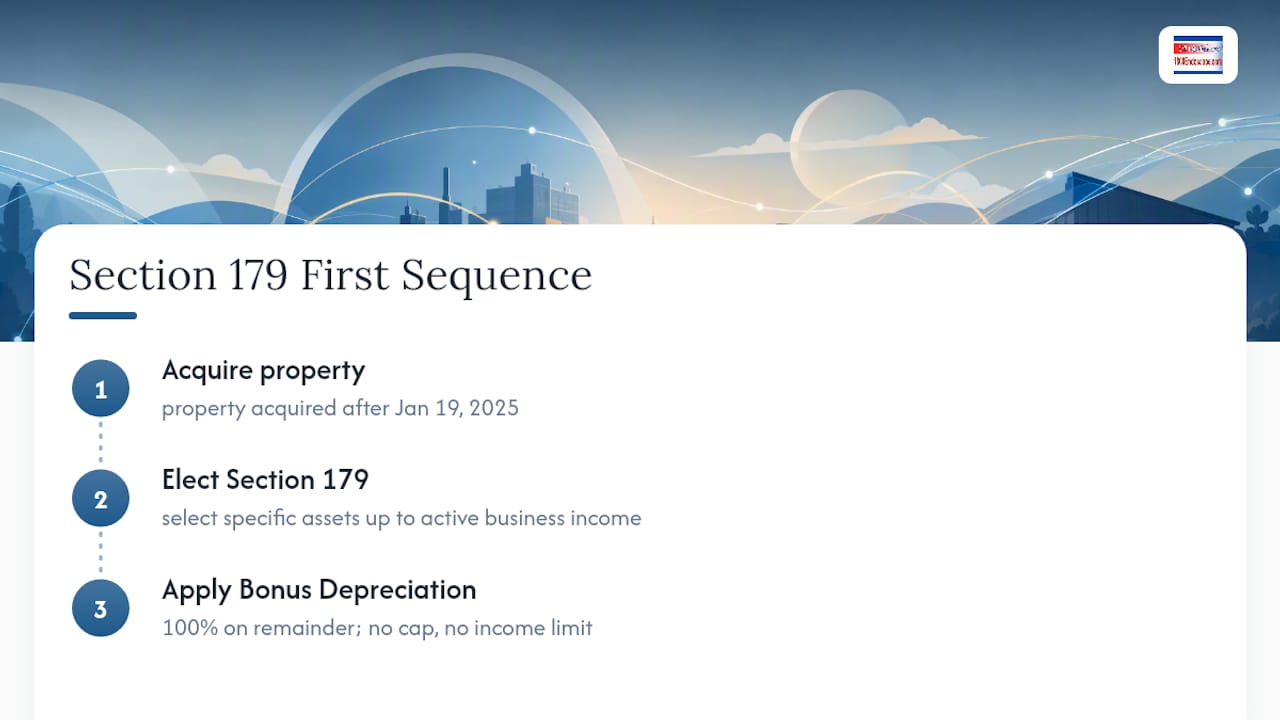
That distinction drives the strategy. Section 179 is capped by your active business income; bonus depreciation isn't, and it can push you into a net operating loss. Businesses use Section 179 selectively for a reason: maybe your state doesn't conform to federal bonus depreciation rules, or you're managing Qualified Business Income (QBI) calculations, or you simply don't want to create an NOL this year. Bonus depreciation becomes the tool for everything else.
How Do You Actually Claim the Section 179 Deduction?
Claiming the deduction comes down to paperwork done right, in the right order.
- Identify every piece of qualifying property purchased and placed in service during the tax year.
- Total the aggregate cost of the equipment you're electing to expense.
- Complete Form 4562, Part I, listing each asset and the amount elected.
- Attach Form 4562 to your business tax return.
- Retain documentation proving placed-in-service date and business-use percentage.
The phrase "placed in service" trips up more taxpayers than any other part of this process. It doesn't mean purchased, and it doesn't mean delivered. It means the asset is ready and available for its intended use, according to IRS guidance on placed-in-service timing. Equipment sitting in a loading dock unopened on December 31 doesn't count for that tax year, even if you paid for it in November. Keep the vendor invoice, evidence of installation or first use (a dated photo works), and a log showing business-use percentage.
What Mistakes Trigger Section 179 Recapture or Audit Flags?
The most common errors are predictable once you've seen a few. Wrong placed-in-service dates top the list, followed by thin documentation on business-use percentage, purchases from related parties (a spouse's other business, for example), and misapplying the vehicle caps to trucks that actually qualify for full expensing.
- Claiming a deduction before the asset was ready for use
- Failing to log business-use percentage consistently
- Buying equipment from a related party, which disqualifies the purchase
- Applying the $32,000 SUV cap to a vehicle that's actually exempt
Recapture hits when business use drops below 50% in a later year or when you dispose of the property early. The IRS then requires you to report the excess deduction as income in the year the drop happens.
Pro Tip: Build a simple folder for every asset the day you buy it: invoice, installation date, photo, and a one-line note on expected business use. That five-minute habit is the single best audit defense you can build.
Does Your State Follow the Federal Section 179 Rules?
Plenty of business owners assume their state deduction mirrors the federal one. It often doesn't. Many states decouple from federal Section 179 limits and bonus depreciation entirely, which means you might deduct $2,560,000 federally but face a state add-back that pushes real state taxable income much higher, per Section179.
Check your state's specific conformity rules before you finalize purchase timing. Some businesses respond by electing Section 179 selectively, some by timing purchases around state fiscal-year boundaries, and most benefit from a short conversation with a state tax advisor before year-end rather than after.
How Much Can Section 179 Actually Save You? A Worked Example
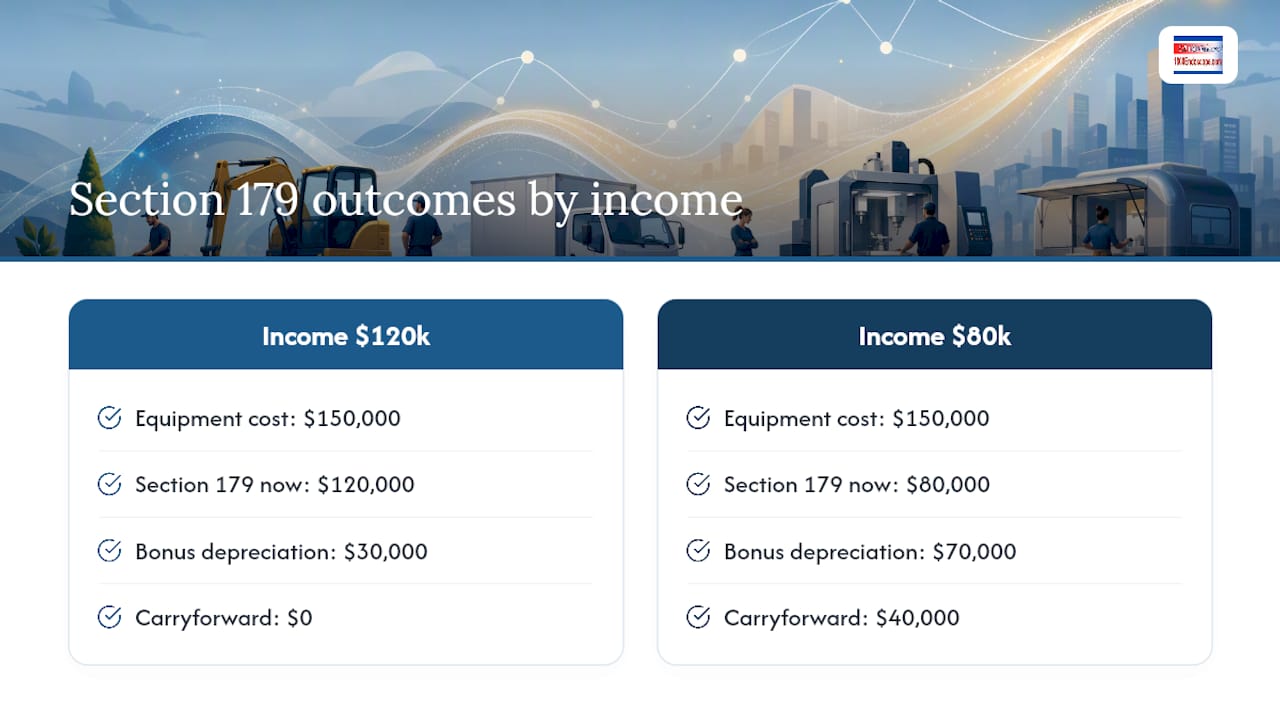
Say a veterinary clinic buys $150,000 in equipment this year, including a videoscope system and diagnostic tools, and the clinic's pre-deduction active business income is $120,000.
If that same clinic's income were only $80,000, the Section 179 election would cap at $80,000, and the unused $40,000 carries forward indefinitely until income allows it. Bonus depreciation still covers the remaining $70,000 basis that year regardless, since it isn't limited by income. Beyond the immediate cash savings, front-loading this deduction lowers current net income on your books while shrinking future depreciation write-offs. You're not avoiding tax. You're moving it to years when the deduction does you more good.
Why Endoscopes and Borescopes Usually Qualify for Section 179
Endoscopes, videoscopes, and industrial borescopes fall squarely into tangible personal property under IRC §179's statutory language, which means a clinic or inspection shop buying one for diagnostic or inspection work typically clears the eligibility bar without complication.
Financing the purchase doesn't change that. As long as the endoscope you select is placed in service and used over 50% for business, a financed unit qualifies the same as one paid for outright. Keep the vendor invoice, the unit's serial number, the installation or first-use date, and your financing agreement in one file. That's the exact documentation set an examiner will ask for.
Three Moves to Make Before Year-End
Get your placed-in-service evidence together before December 31, not after. Call your tax advisor about state conformity and how to sequence Section 179 against bonus depreciation for your specific income situation. And if cash flow is tight, look at financing routes that let you get equipment installed and running before the deadline instead of waiting until you can pay cash.
— Endoscope
Get Qualifying Equipment Placed in Service Before Year-End
Suppliers of tangible, professional-use equipment typically provide items that qualify for Section 179: portable videoscopes, industrial borescopes, and the accessories clinics and inspection shops actually use daily. That matters because the deduction only helps if the equipment is bought, delivered, and running before your tax year closes.
If cash flow is the obstacle, flexible financing routes can get equipment installed and placed in service well before the deadline, and financed purchases still qualify under the same rules as cash purchases. For businesses juggling equipment costs alongside payment processing decisions, a partner like Merchant Solutions Corp's POS systems can help keep purchase records organized for tax time. Ready to see what fits your operation? Check the portable airway inspection endoscope system built for veterinary and industrial use, or browse the full borescope catalog to compare options before you place an order this quarter.
Where to Verify These Section 179 Rules Yourself
Every figure and rule here traces back to primary sources your accountant will want on file.
- IRS Publication 946: full depreciation guidance, including Section 179 limits and placed-in-service definitions
- Form 4562 instructions: the actual election form and filing requirements
- 26 U.S.C. § 179: the statutory text authorizing the deduction
- Section179: state-by-state differences from federal rules
This article is general information, not a substitute for advice from a qualified financial advisor. Consult a qualified financial professional about your own circumstances before acting on anything here.
Sources
- Publication 946 (IRS) — How to Depreciate Property
- About Form 4562 (IRS)
- 26 U.S.C. § 179 (statute)
- Bonus depreciation updates and interaction with Section 179 (analysis)