
Most endoscope repair warranties run 90 days, refurbished units typically carry 6 to 12 months, and new equipment usually gets 12 months or more, sometimes longer on specific components. Coverage generally means parts and labor for a manufacturing or repair defect, not consumables, misuse, or work done by an outside shop. The part that trips up buyers isn't the duration. It's that almost every claim requires a return authorization number and decontaminated equipment before anyone even looks at the fault.
TL;DR:
- Most warranties for endoscopes range from 90 days for repairs to 12 months for new equipment, with some covering specific components longer.
- Warranty claims require that the failure be caused by a manufacturing defect and are often limited by strict exclusions like misuse, sterilization damage, or unauthorized repairs.
- Filing a claim demands immediate authorization (RGA), proper documentation, and decontamination before shipping, with delays common if procedures are not followed precisely.
- Refurbished equipment's warranty typically lasts six to eight months and may not transfer if resold, unlike new units which usually come with a full 12-month guarantee.
- Vendors often provide a short, 90-day warranty on repairs, and procurement should include specific clauses on coverage, turnaround time, and return shipping responsibility in contracts.
Table of Contents
- What Are Standard Endoscope Warranty Terms and Durations?
- What Do Endoscope Warranties Cover and Exclude?
- What Voids an Endoscope Warranty?
- How to File an Endoscope Warranty Claim
- Refurbished vs. New Equipment Warranty Terms
- Liability Limits and Post-Repair Warranty Coverage
- What Contract Language Should Procurement Require?
- Real-World Notes From 1800Endoscope
- What Procurement Teams Should Prioritize First
- Where 1800Endoscope Fits Into Your Warranty Strategy
- Sources
- FAQ
What Are Standard Endoscope Warranty Terms and Durations?
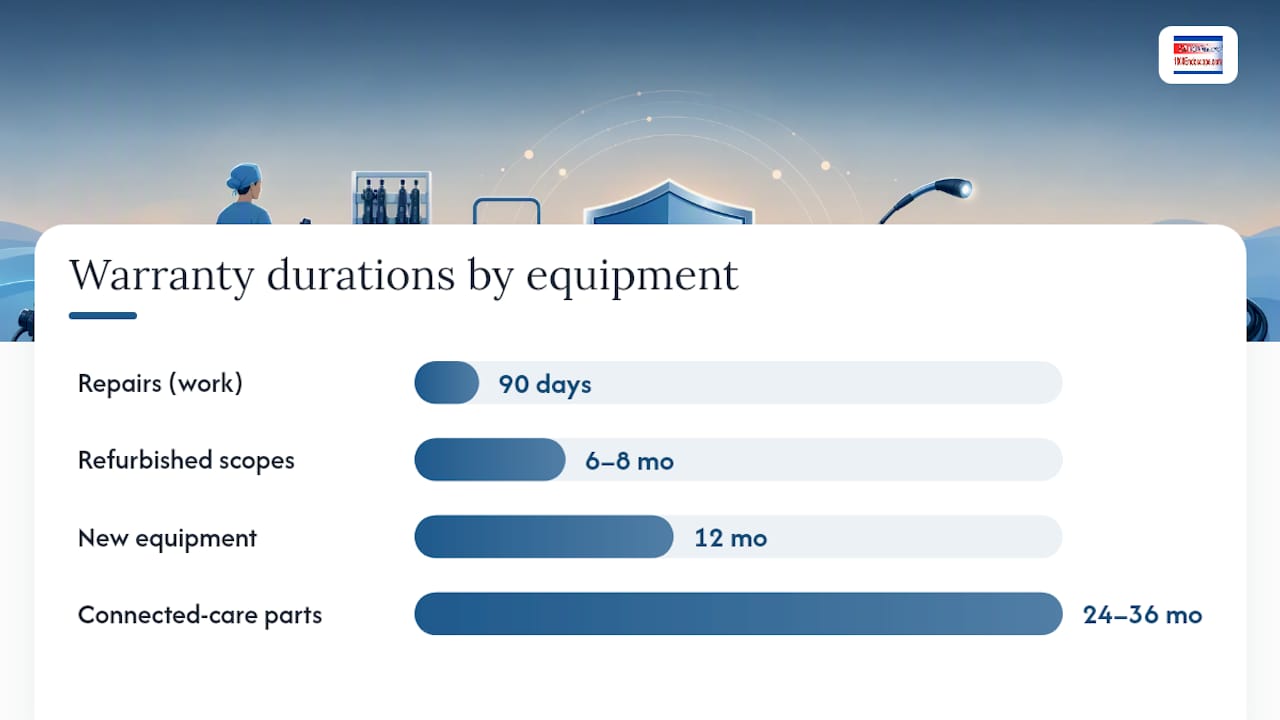
Warranty length depends on what you bought, not just who made it. A repair typically ships with a 90-day warranty on the work performed. A refurbished scope commonly carries 6 to 8 months, sometimes stretched to 12 depending on the vendor, according to GSA Advantage's contract terms. New equipment is usually backed by a 12-month warranty, and some connected-care systems split terms by component, covering the base unit for 12 months while certain parts get 24 to 36 months under Philips' connected care warranty.
The start date matters more than buyers realize. Some vendors count from the invoice date, others from shipment, and repair warranties almost always start at repair completion, not when you get the unit back on your bench. A prorated remedy also changes your risk profile substantially. If a vendor prorates value based on age rather than replacing the item outright, a failure in month 10 of a 12-month term might net you a fraction of what you paid.
What Do Endoscope Warranties Cover and Exclude?
Warranty coverage answers a narrow question: was the failure caused by a defect in materials or workmanship, or by something that happened on your end? Vendors typically cover:
- Defects in materials or workmanship discovered during normal use
- Parts and labor tied directly to the specific repair performed
- Certain components with extended, separately stated coverage periods
Exclusions are where most disputes start. Manufacturer terms from Stryker's endoscopy division list unauthorized repairs, non-approved replacement parts, and improper maintenance as standard exclusions. Common exclusion categories include:
- Consumables and normal wear and tear
- Physical damage from misuse, drops, or fluid ingress outside normal use
- Any repair performed by a technician not authorized by the manufacturer
- Sterilization damage when a facility used an unapproved method or chemical
Watch for phrasing like "at the manufacturer's sole discretion" attached to coverage decisions. That clause hands the vendor full control over whether your claim even qualifies.
What Voids an Endoscope Warranty?
Three actions void coverage faster than anything else: unauthorized repairs, use of non-approved parts, and removing or defacing the serial number. Olympus's terms of sale.pdf) reserve the right to deny a claim entirely if the equipment shows evidence of third-party service.
Sterilization method matters just as much. Using an autoclave cycle or chemical not specified in the manufacturer's instructions for use can void coverage even if the resulting damage looks unrelated. Vendors typically want to see cleaning logs, sterilization records, and proof that only authorized technicians touched the device before it failed. Keep those records tied to serial numbers, not just dates. A service log that can't be matched to a specific unit is functionally useless during a claim dispute.
How to File an Endoscope Warranty Claim
The claims process rewards speed and paperwork discipline. Here's the sequence that actually gets claims approved:
- Get an RGA before shipping anything. Never send equipment back without a return authorization number. Unauthorized returns get refused or delayed at the dock.
- Confirm your reporting window. Some manufacturers require notification within 30 days of discovering a failure, a standard reflected in Medtronic's warranty reference guide.
- Assemble your documentation. Include the original invoice, serial number, photos or video of the fault, repair history, and any registration paperwork the vendor required at purchase.
- Decontaminate before shipping. Follow the vendor's stated protocol exactly, and include a decontamination certificate if one is required.
- Ship according to the RGA instructions, with the authorization number clearly labeled on the outside of the package.
Once the vendor receives the unit, expect inspection and testing before any coverage decision. If the fault is excluded, most vendors will send a repair estimate rather than fixing it for free.
Pro Tip: Photograph the fault and the serial number plate before you box anything up. If the vendor claims the damage happened in transit, you'll have proof of the unit's condition at the moment you shipped it.
Refurbished vs. New Equipment Warranty Terms
Refurbished endoscopes carry shorter, more conditional coverage than new units. Where a new scope might get a full 12-month warranty, a refurbished one often runs 6 to 8 months, and some individual components may be excluded entirely if they were not replaced during refurbishment.
"Certified refurbished" sounds reassuring, but the term isn't standardized across vendors. Before buying, ask specifically whether replacement parts used during refurbishment were new, refurbished, or reclaimed from another unit. That detail affects how long those parts are likely to last past the warranty window. Also ask whether the warranty transfers if you resell the equipment. Some vendors tie coverage to the original purchaser only, which matters if you're buying used gear from a clinic that's upgrading.
Liability Limits and Post-Repair Warranty Coverage
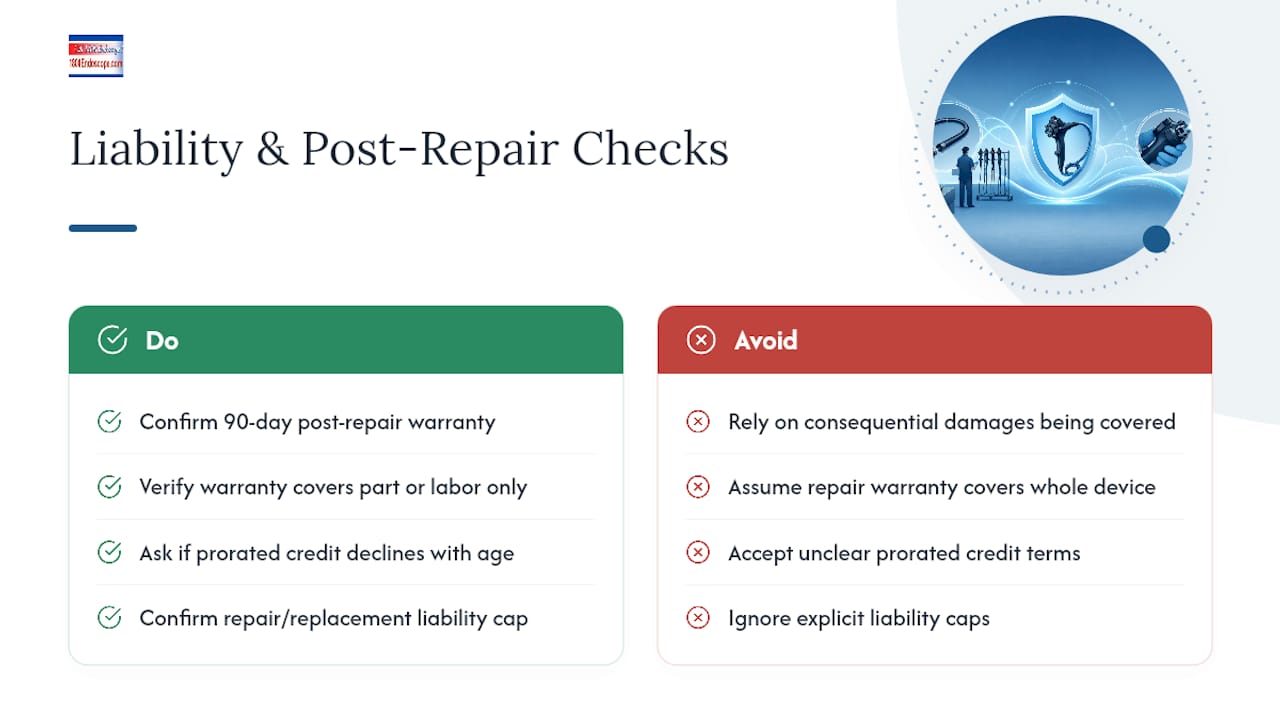
Nearly every manufacturer warranty caps its own liability at the cost of repair or replacement, and explicitly excludes consequential damages like lost revenue from downtime. That's standard industry language, not a red flag specific to one vendor.
What does help you: most vendors extend a fresh, short warranty on the specific repair they just performed, commonly 90 days, even if the original equipment warranty had already expired. That follow-on warranty covers the part or labor performed, not the entire device. Prorated credit structures still show up occasionally on older or specialized equipment, so ask directly whether any credit toward a replacement declines with age.
What Contract Language Should Procurement Require?
Before signing a purchase order, push for explicit language on these points:
- Warranty period and its exact start date (invoice, shipment, or installation)
- The remedy sequence: repair first, replace only if repair isn't possible, refund only as a last resort
- A defined RGA process with a named contact and expected response time
- Repair turnaround time, stated as a number of business days, not "promptly"
- Who pays return freight, both ways
- Decontamination procedures and any fees charged for non-compliant returns
Also ask the vendor directly: are replacement parts new or refurbished? Is the warranty transferable to a future owner? Is there a documented service level agreement for turnaround, or just a verbal estimate? Request a sample warranty clause in writing before you commit budget, not after the equipment arrives.
Real-World Notes From 1800Endoscope
Clinics and inspection teams that document repairs carefully tend to have fewer rejected claims. Guidance on endoscope repair costs walks through realistic turnaround expectations and pricing patterns that help buyers set fair SLA terms with any vendor. A sterilization guide covers cleaning protocols that keep decontamination records defensible if a claim gets questioned. Before you buy, ask for written RGA procedures and warranty confirmation. A verbal promise doesn't hold up when a scope fails in month 11.
What Procurement Teams Should Prioritize First
Warranty language is negotiable more often than buyers assume, but only if you ask before signing. Insist on written RGA procedures, a specific repair turnaround SLA, and a documented cleaning log requirement spelled out in the contract, not left to a sales rep's verbal assurance. Negotiate return freight responsibility and get a named escalation contact in writing. Vendors that won't commit to those terms on paper usually won't honor them informally either.
— Endoscope
Where 1800Endoscope Fits Into Your Warranty Strategy
If a scope is out of warranty, sitting in a repair dispute, or you just need a straight answer on what a repair will cost before committing, A service handles documented repair and RGA support without the runaround that comes from routing everything through a manufacturer's call center. That's the real difference from waiting on a hospital-grade vendor's service desk: faster answers, clear pricing, and a team that treats decontamination guidance as part of the service, not an afterthought.
Buyers replacing rather than repairing can browse new medical endoscopes and accessories with warranty terms confirmed before purchase. They can also check rigid scopes and arthroscopes for procedures where a shorter turnaround matters more than brand name. If you're not sure whether your current equipment even qualifies for a warranty claim, reach out and ask for a written RGA confirmation before you ship anything back to anyone.
Sources
For primary source language on warranty terms, review Boston Scientific's limited warranty, Medtronic's warranty reference guide, and Olympus's terms of sale for verbatim clause examples.
- GSA Advantage contract excerpt
- Medtronic warranty reference guide (2024)
- Stryker endoscopy additional terms (warranty excerpt)
FAQ
What Are the Basic Terms of an Endoscope Warranty?
A basic warranty covers defects in materials or workmanship for a set period, commonly 90 days for repairs and 12 months for new equipment under GSA contract terms. Remedies are typically limited to repair or replacement, and claims usually require a return authorization number plus decontaminated equipment.
What Is Not Covered by an Endoscope Warranty?
Consumables, normal wear and tear, and damage from misuse or unauthorized repairs are standard exclusions across manufacturer terms. Sterilization damage from an unapproved cleaning method is also commonly excluded, along with any unit that shows a removed or defaced serial number.
Can I Still Claim Warranty Without a Receipt?
Most manufacturers require proof of purchase, often tied to a serial number, to confirm the warranty start date and original buyer. Without an invoice or registration record, a claim can still move forward if the vendor can verify purchase history through the serial number, but it slows the process considerably.
How Long Does an Endoscope Warranty Claims Process Take?
Turnaround varies by vendor and fault complexity, but most claims move through RGA issuance, inspection, and a coverage decision within a few weeks once decontaminated equipment arrives. Guidance on repair timelines through repair cost guidance helps buyers set realistic expectations with any vendor.
Does a Repaired Endoscope Get a New Warranty?
Yes. Most vendors extend a short follow-on warranty, commonly 90 days, covering the specific part or labor involved in that repair, even if the original equipment warranty had already expired.