
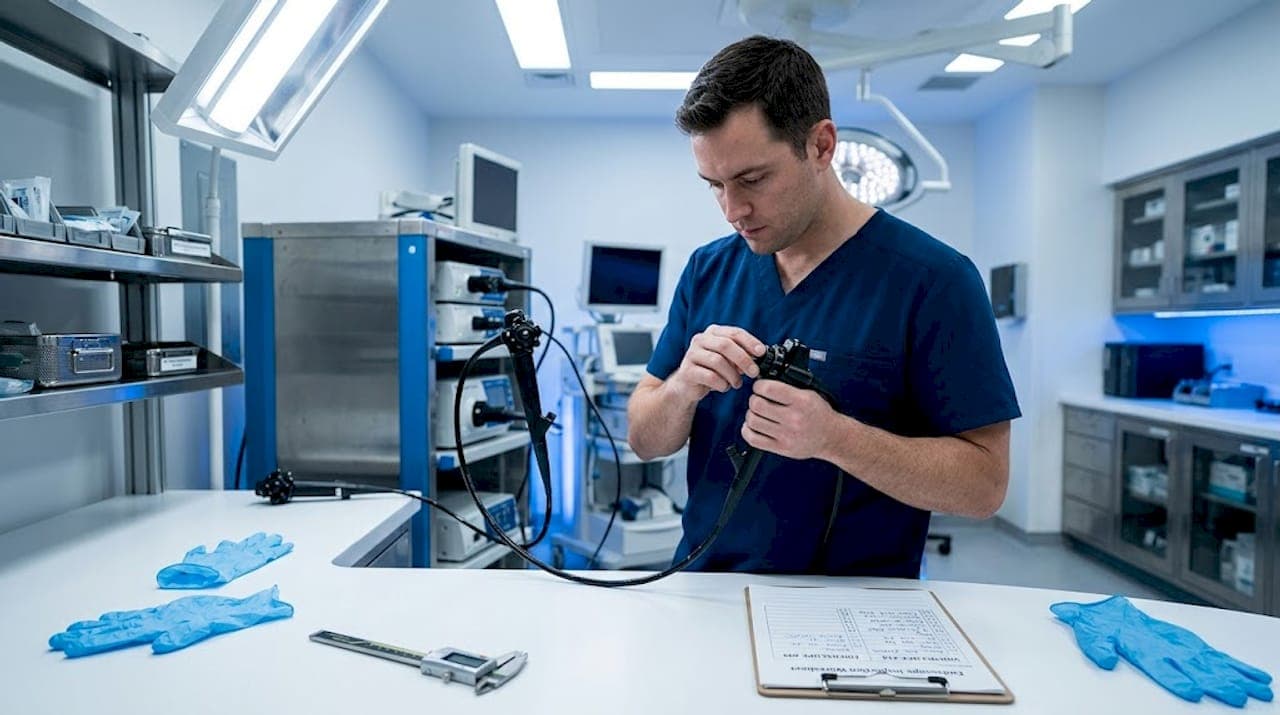
Picking the wrong scope for a veterinary airway exam or an industrial turbine inspection does not just slow you down. It costs you diagnostic accuracy, documentation quality, and in some cases, the ability to do the job at all. Understanding the difference videoscope vs fiberscope comes down to more than price or brand. These two technologies transmit images in fundamentally different ways, handle physical stress differently, and produce outputs that suit very different professional workflows. This guide cuts through the confusion so you can match the right tool to your actual inspection demands.
Table of Contents
- Key takeaways
- The core difference videoscope vs fiberscope
- Durability, flexibility, and handling
- Image quality, resolution, and recording capabilities
- Application scenarios: when to use which scope
- Cost considerations and total cost of ownership
- My perspective on where these tools actually stand today
- Find the right scope for your inspection needs
- FAQ
Key takeaways
| Point | Details |
|---|---|
| Core technology differs | Fiberscopes use optical fiber bundles; videoscopes use a digital camera chip at the tip for higher resolution output. |
| Videoscopes handle rough use better | Digital construction makes videoscopes more resistant to bending damage and shock than fragile fiber bundles. |
| Image and documentation quality | Videoscopes produce 720p to 1080p video with digital storage; fiberscopes are limited by fiber bundle pixel density. |
| Application determines the right choice | Fiberscopes suit tight, simple inspections on a budget; videoscopes fit complex diagnostics requiring multi-user viewing and data records. |
| Total cost extends beyond price | Training, maintenance frequency, and workflow integration affect the real cost of ownership for both device types. |
The core difference videoscope vs fiberscope
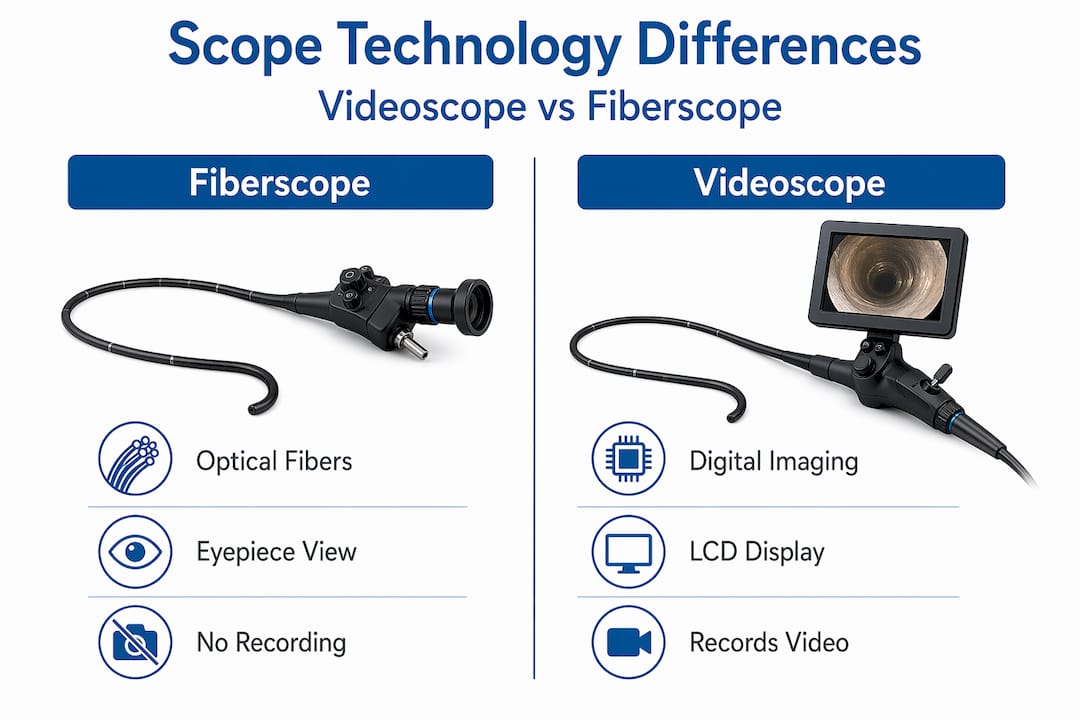
The technology inside these devices is where everything starts. A fiberscope is built around a coherent fiber optic bundle. Thousands of individual glass or plastic fibers run the length of the insertion tube, and each fiber carries one pixel of light from the distal tip to the eyepiece or an attached camera adapter at the proximal end. The image is transmitted optically, which means resolution is capped by the number and quality of fibers in the bundle.
A videoscope takes the opposite approach. Instead of transmitting light down the full length of the scope, it places a miniature digital camera sensor directly at the distal tip. The image is captured electronically and transmitted as a digital signal up the insertion tube to a display monitor. This single design choice produces sharper images, eliminates the honeycomb artifact common to fiber bundles, and makes digital recording native to the device.
Here is a quick breakdown of what separates the two at the hardware level:
- Fiberscope: Fiber optic bundle transmits light; image viewed through eyepiece or camera adapter; resolution limited by bundle density
- Fiberscope: Thinner diameter possible in some configurations; no onboard image processing
- Videoscope: Digital CCD or CMOS sensor at the tip; image displayed on integrated or external monitor; supports real-time video and photo capture
- Videoscope: Digital imaging advantages include zoom, brightness control, and direct storage to SD card or cloud
Pro Tip: If you are evaluating technology longevity, note that the industrial videoscope market is projected to reach $2.253 billion by 2032, growing at 6.9% annually. Investment in videoscope technology now means you are buying into an expanding ecosystem of accessories, software, and support.
Durability, flexibility, and handling
Physical performance matters enormously when a scope needs to pass through an equine airway, a jet engine inspection port, or a heat exchanger tube. Fiberscopes are inherently more delicate. The fiber bundle is susceptible to damage from repeated bending, sharp kinking, and impact. When fibers break, you see dark spots in the image. Enough broken fibers and the scope is effectively unusable, often requiring expensive repair or replacement.

Videoscopes are built for tougher conditions. Videoscopes have buffer protection devices and materials specifically designed to absorb shock and handle repeated articulation without the fragility associated with fiber bundles. The Waygate Technologies Everest Mentor Flex+, for example, operates up to 100°C and carries IP ratings that allow use in wet, oily, or dusty industrial environments without cooling delays before insertion.
For veterinary field work, moisture resistance is equally critical. A scope used in a barn or during a field call faces mud, fluids, and temperature swings that would shorten the service life of an unprotected fiberscope quickly. Consider these physical performance factors before making a purchase:
- Bend radius tolerance: Videoscopes articulate more predictably without fiber damage risk
- Ingress protection: Look for IP54 or IP68 ratings for wet or dirty environments
- Temperature range: Industrial videoscopes typically operate from below freezing to well above 100°C
- Repair economics: A broken fiber bundle often means replacing a major sub-assembly; a videoscope camera tip repair is typically modular
Pro Tip: Regardless of which scope type you choose, always store the insertion tube in a loose coil rather than a tight wrap. Tight coiling is the single most common cause of early fiber damage and articulation cable wear in both device categories.
Image quality, resolution, and recording capabilities
This is where the fiberscope vs videoscope comparison becomes most decisive for diagnostic professionals. Fiberscopes produce images with a characteristic pixel grid pattern because each individual fiber carries one point of light. You can mitigate this with a high-quality camera adapter on the eyepiece, but you cannot eliminate the resolution ceiling set by the fiber count.
Videoscopes produce genuinely digital images. Typical specifications include probe diameters from 2mm to 6mm, with 720p to 1080p video resolution and color IPS displays. Some models offer 360-degree bending with wireless transmission and onboard power options for field deployment. This matters in practice: a veterinarian examining a horse's upper respiratory tract can record the entire procedure, share it with a specialist remotely, and attach the video to the patient record before leaving the facility.
The table below compares typical performance specifications across the two device categories:
| Feature | Fiberscope | Videoscope |
|---|---|---|
| Image transmission | Optical fiber bundle | Digital CCD/CMOS sensor |
| Resolution | Limited by fiber count | 720p to 1080p HD video |
| Onboard recording | Requires external adapter | Native SD card or USB storage |
| Multi-user viewing | Single eyepiece only | Monitor display, shareable |
| Wireless connectivity | Not available | Available on advanced models |
| 3D measurement | Not available | Available on select models |
Industrial NDT professionals gain an additional layer of value from videoscope recording. Digital recording and data management integration allows inspectors to tag defects automatically, generate cloud-based reports, and compare inspection results across maintenance cycles. The Everest Mentor Flex+ specifically offers Real3D defect measurement, which converts a visual image into a dimensional measurement without additional tools.
Pro Tip: When comparing models, check whether the recording format is proprietary or standard MP4/JPEG. Proprietary formats can create long-term access problems and limit your ability to integrate recordings into existing documentation systems.
Application scenarios: when to use which scope
The difference between videoscopes and fiberscopes becomes clearest when you map device capabilities to specific inspection scenarios. Fiberscopes still have a genuine role. They tend to cost less upfront, require no screen or display system, and can reach diameters that make them practical for some inspection channels where digital sensors do not yet fit. For a quick visual check where no documentation is required and the professional is working alone, a fiberscope can be a practical choice.
Videoscopes, however, cover a broader range of demanding applications. Video-based endoscopy dominates veterinary and medical fields precisely because the ability to display images simultaneously for multiple observers changes what is possible in a diagnostic session. A veterinary technician, the attending veterinarian, and a client can all observe the same endoscopic view in real time, which improves both diagnostic collaboration and client communication.
In industrial NDT contexts, 3D measurement and wireless cloud connectivity features built into modern videoscopes have changed what inspectors can deliver from a single visit. Rather than returning with photos to review later, an inspector can deliver a dimensionally measured defect report with annotated images before leaving the site.
Key factors to evaluate when selecting a scope for your application:
- Documentation requirements: Do you need a retrievable record? A videoscope is the only practical answer.
- Team viewing: Any scenario with more than one observer requires a monitor-based videoscope.
- Environment: Wet, hot, or high-vibration environments favor videoscopes with rated ingress protection.
- Channel diameter: Extremely tight access may still favor thinner fiberscope designs depending on the application.
- Budget and frequency of use: High-frequency users recover the videoscope cost premium quickly through workflow gains.
- Field portability: Portable, battery-operated videoscopes now serve field veterinary and remote industrial inspections without tethering to a cart.
A useful resource when evaluating models for veterinary rigid endoscopy is reviewing scope catalogs organized by clinical application, which simplifies the comparison process significantly.
Cost considerations and total cost of ownership
Upfront price is the first number everyone looks at, but it is rarely the most important one. Entry-level fiberscopes can be purchased for a fraction of the cost of a full videoscope system. That gap narrows considerably once you factor in the full lifecycle of each device.
Consider these cost factors in sequence:
- Initial purchase: Fiberscopes have lower entry costs; basic videoscopes start at moderate prices, while advanced models with 3D measurement and wireless features carry premium pricing.
- Repair frequency: Broken fiber bundles are common with heavy use, and repairs can cost a significant fraction of the original purchase price. Videoscope components are typically more modular and easier to service.
- Training time: Videoscope interfaces are closer to operating a standard digital device; fiberscopes with camera adapters require more setup knowledge. However, learning to read and manage digital inspection data does take time.
- Workflow value: Full data management ecosystem integration with automated tagging and cloud reports reduces administrative time per inspection. For a clinic or inspection firm running multiple procedures daily, this adds up quickly.
- Upgrade path: Videoscope platforms from major manufacturers support accessory upgrades and probe swaps; fiberscopes offer limited upgrade options once purchased.
Pro Tip: Before approving a purchase based on sticker price alone, calculate your estimated number of inspections per month and divide the price difference by that number. You may find the videoscope pays for itself in avoided repair costs and documentation time within 12 to 18 months.
My perspective on where these tools actually stand today
I've been watching professionals agonize over this decision for years, and the pattern is consistent. People reach for fiberscopes out of habit or because the upfront number looks safer. What I've learned is that the fiberscope vs videoscope debate stopped being close for most professional applications several years ago.
The shift is not just about image quality. It is about what happens to the inspection data after the scope comes out. The digitization of inspection tools has moved them from visual aids into data collection devices, and workflow integration and cloud connectivity now influence device choice as much as resolution does. A clinic or NDT firm that cannot export, tag, and store inspection results efficiently is leaving real value on the table regardless of which scope they use.
That said, I do not think fiberscopes are obsolete. In specific scenarios, particularly very small diameter access and low-volume single-user inspections with no documentation requirement, a quality fiberscope is still a practical and affordable choice. The mistake is assuming either device works everywhere. My honest recommendation is to start with your documentation and collaboration requirements, then work backward to the hardware. That order of thinking leads to better decisions than starting with price.
— Endoscope
Find the right scope for your inspection needs
Whether you are performing equine airway evaluations or turbine blade inspections, 1800endoscope carries a catalog of videoscopes and fiberscopes built for both environments. The portable 6mm airway videoscope includes direct monitor output, SD card recording, and an affordable price point that makes HD documentation accessible without a large capital commitment.
For veterinary professionals performing dental and oral examinations, the equine dental videoscope offers specialized imaging geometry designed for animal anatomy. Industrial teams needing field-portable options will find USB-enabled and SD card systems in the full product catalog. If you are unsure where to start, the 1800endoscope team can help you match a scope to your specific inspection channel, environment, and documentation workflow. Browse the full range at 1800endoscope.com to find current pricing and specifications.
FAQ
What is the main difference between videoscopes and fiberscopes?
A fiberscope transmits images through a fiber optic bundle to an eyepiece or camera adapter, while a videoscope uses a digital camera sensor at the tip to send HD video directly to a monitor. This distinction determines resolution quality, recording capability, and multi-user viewing.
Which scope is more durable for industrial inspections?
Videoscopes are generally more durable. Fiber bundles break under repeated bending and shock, while videoscopes are constructed with buffer protection materials and often carry IP54 or IP68 ingress protection ratings for harsh environments.
Can a fiberscope record video?
Not natively. A fiberscope requires an external camera adapter attached to the eyepiece to capture images or video, which adds cost, setup complexity, and a reduction in image quality compared to the onboard sensor of a videoscope.
What videoscope features matter most for veterinary use?
Multi-user monitor display, SD card recording, and portable battery operation are the most practically valuable features for veterinary diagnostics. These allow simultaneous team viewing, complete procedure documentation, and field deployment without a power cart.
How do I choose a videoscope for industrial NDT applications?
Prioritize probe diameter matched to your inspection channel, IP rating for your environment, and whether the platform supports 3D measurement and cloud report export. Models like the Waygate Everest Mentor Flex+ represent the current benchmark for feature-complete industrial videoscopes.