
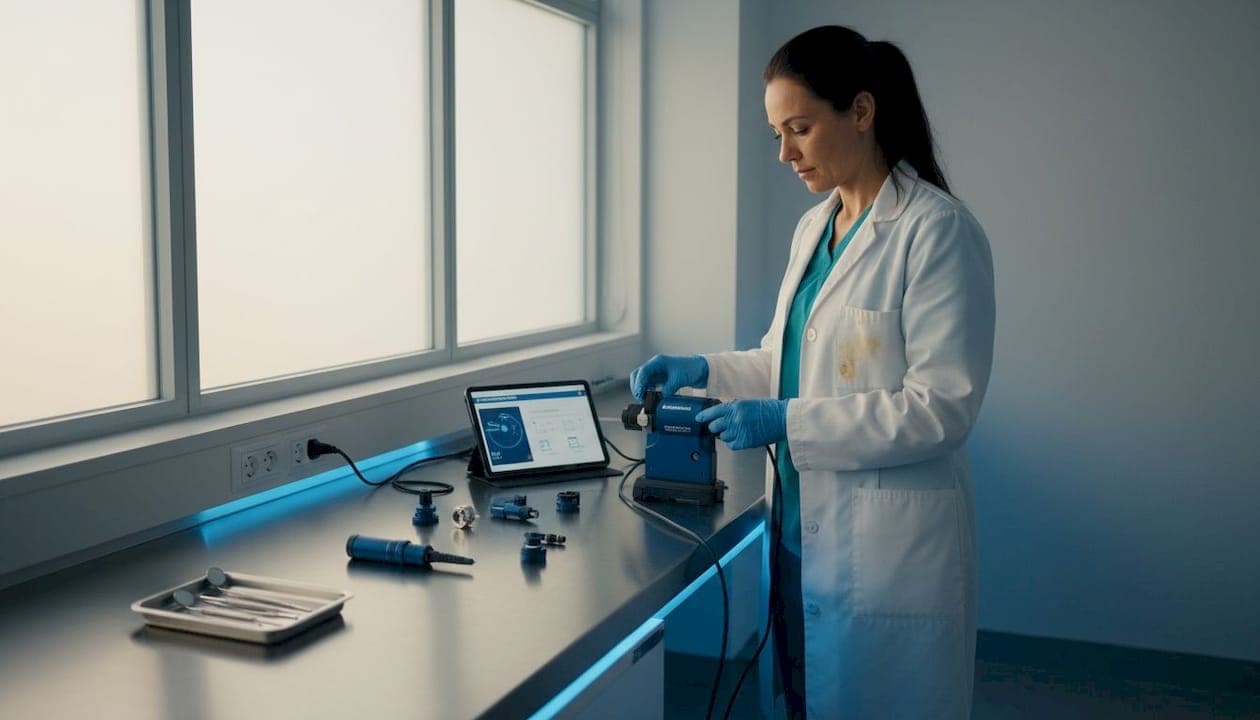
When you're standing in a barn at 6 a.m. trying to scope a horse's upper airway, or crouched next to a turbine housing with a 6mm probe, the last thing you need is a videoscope that can't keep up. The market is flooded with options, and the spec sheets all look impressive until you actually try to match them to your workflow. Selecting the right advanced videoscope requires cutting through the noise and understanding which features genuinely improve diagnostic accuracy, which ones are worth the premium, and which are simply marketing checkboxes. This article walks you through exactly that.
Table of Contents
- Key criteria for choosing a modern videoscope
- Top features and technology highlights
- Feature comparison: Performance in real-world scenarios
- Making the right choice: Key takeaways and selection workflow
- The overlooked features that matter most in clinical and field diagnostics
- Explore advanced veterinary and industrial videoscope solutions
- Frequently asked questions
Key Takeaways
| Point | Details |
|---|---|
| Prioritize clinical needs | Select features based on your procedural and field requirements. |
| Understand core technologies | Key advancements include dual cameras, thermal imaging, and multi-directional articulation. |
| Check sanitation compatibility | Choose scopes that withstand repeated sterilization for safety and longevity. |
| Balance cost and benefits | Higher-end video scopes improve diagnostics but may carry a greater cost. |
| Utilize workflow boosters | Features like WiFi sharing and data cards speed collaboration and documentation. |
Key criteria for choosing a modern videoscope
Now that the need for clarity in selection is established, we can break down the specific features that set current top-tier videoscopes apart from the rest.
Video resolution and camera quality sit at the top of nearly every checklist, and for good reason. A fully portable 6mm endoscope delivering HD video gives you image clarity that fiber optic bundles simply cannot match at the same diameter. You can detect mucosal lesions, hairline cracks in welds, or early-stage inflammation with far greater confidence when your image isn't pixelated or washed out.
Probe diameter is equally critical. In veterinary practice, a 6mm probe is often the sweet spot for equine airway work, small ruminant procedures, and canine gastroscopy. Industrial applications may call for even smaller diameters to access tight cavities in engines or pipelines. Matching probe size to the target anatomy or access port is non-negotiable.
Key selection criteria to evaluate before purchasing:
- Sterilization resistance: Biocompatibility and sterilization resistance at 100 to 200°C are baseline requirements for any scope used in clinical settings. Repeated autoclaving or chemical sterilization cycles will degrade materials not designed for it.
- Hermetic sealing: Prevents fluid ingress during washing or wet field procedures, extending scope lifespan significantly.
- WiFi connectivity: Enables real-time image sharing with remote specialists or team members, which is invaluable in large-animal field work.
- Articulation range: Four-way tip articulation opens up anatomical regions that a fixed or two-way scope simply cannot reach.
- Cost vs. image quality tradeoff: Video scopes outperform fiber optic models on image quality, but carry a higher upfront investment.
For equine dental inspection or oral cavity work, you also need to consider working length and the ability to irrigate the field without compromising image quality. These factors rarely appear prominently on spec sheets but matter enormously in practice.
Pro Tip: Before finalizing any scope purchase, run a sterilization compatibility check against your clinic's or facility's specific protocols. A scope rated for chemical sterilization only will fail quickly in a practice that relies on steam autoclaving.
The cost-benefit calculation between video and fiber optic technology is real. Video provides superior diagnostic imagery but costs more upfront. For high-volume practices or inspection firms running multiple jobs per day, that investment pays back quickly. For occasional use, rigid endoscopy options or fiber optic systems may still be the smarter financial choice.
Top features and technology highlights
Understanding the criteria allows us to appreciate why certain features mark a genuine technology leap. Let's examine today's standout capabilities in detail.
Dual camera and HD camera configurations are now appearing across both veterinary and industrial product lines. A dual-camera setup lets you capture a standard forward view alongside a side-view simultaneously, which is particularly useful when inspecting the inner walls of tubular structures like tracheas, esophagi, or pipe interiors. Single HD cameras with wide-angle lenses are often sufficient for most diagnostic tasks, but dual configurations reduce the need to reposition the scope repeatedly.
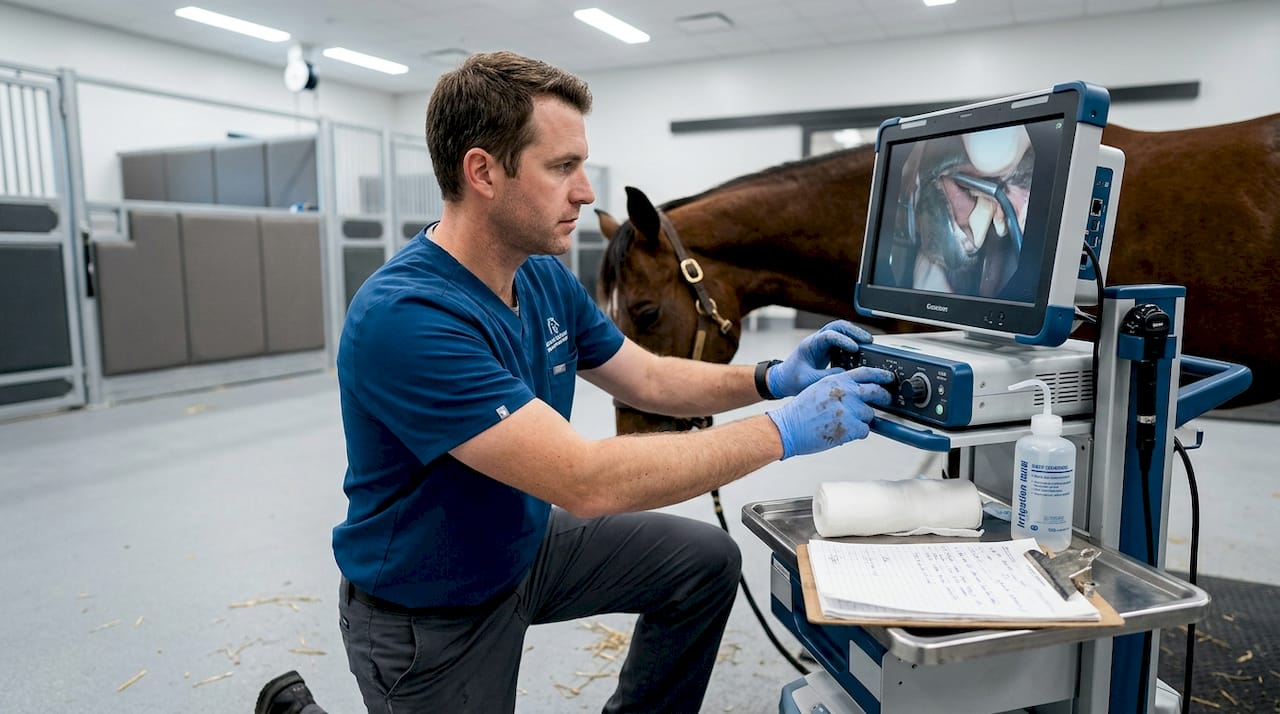
Thermal imaging modules add a layer of diagnostic capability that standard video cannot provide. Industrial-grade thermal sensors operating at 160x120 pixel resolution can detect hot spots in electrical panels, heat buildup around bearings, or abnormal thermal signatures in mechanical assemblies. In veterinary contexts, thermal overlays are less common but emerging for certain musculoskeletal assessments.
Four-way articulation is one of the most underrated features in the field. Most entry-level scopes offer two-way bending, which limits your navigation in complex anatomies or machinery. Four-way articulation gives you up, down, left, and right control, allowing precise positioning without torquing the insertion tube. This matters enormously when navigating equine sinuses or inspecting the interior of a turbine blade channel.
"Four-way articulation combined with real-time WiFi sharing represents the current benchmark for field-deployable videoscopes in both veterinary and industrial inspection contexts."
Orientation indicators and live overlays help technicians and clinicians maintain spatial awareness during long procedures. Knowing which direction the scope tip is pointing without pulling back and repositioning saves time and reduces patient stress or equipment wear.
WiFi sharing and remote viewing have moved from luxury to near-necessity. The equine USB field scope with wireless output lets a field vet transmit live footage to a consulting specialist miles away, getting a second opinion without delaying treatment. Industrial teams use the same capability to loop in engineers who aren't on-site.
| Feature | Veterinary application | Industrial application | Priority level |
|---|---|---|---|
| HD video camera | Mucosal lesion detection | Weld crack identification | High |
| Four-way articulation | Sinus and airway navigation | Turbine and pipe inspection | High |
| Thermal imaging | Emerging musculoskeletal use | Electrical and mechanical faults | Medium to high |
| WiFi sharing | Remote specialist consultation | Off-site engineering review | High |
| Hermetic sealing | Wet field procedures | Fluid-filled industrial cavities | High |
| SD card recording | Case documentation | Inspection reporting | Medium |
Browsing the comprehensive endoscope catalog gives you a practical sense of how these features are distributed across current product lines and price points.
Feature comparison: Performance in real-world scenarios
With the main features outlined, it's essential to see how these work in actual practice. Here's a hands-on comparison in the field.
Probe specifications matter more than branding. A thermal probe at 19mm diameter is excellent for industrial surface scanning but completely impractical for small animal or equine airway work. A 4-way articulating 6mm probe with resistance to thermal aging is the more versatile choice for mixed-use veterinary and light industrial applications. Microcracking risks in probe sheaths increase dramatically when scopes are exposed to repeated temperature extremes without appropriate material ratings.
| Scope type | Probe diameter | Articulation | Temp. tolerance | Camera quality | Best use case |
|---|---|---|---|---|---|
| Portable HD videoscope | 6mm | 4-way | Up to 130°C | Full HD | Equine airway, small animal GI |
| Thermal videoscope | 19mm | 2-way | Up to 200°C | HD + thermal | Industrial heat detection |
| USB field scope | 6mm | 2-way | Up to 100°C | HD | Field triage, equine dental |
| Economy monitor gastroscope | 9mm | 4-way | Up to 120°C | Standard HD | Bovine and equine GI |
| Rigid inspection scope | 4mm | Fixed | Up to 134°C | HD | Small animal arthroscopy |
How to evaluate scope fit for your specific procedure and environment:
- Define the target anatomy or access point. Measure or estimate the diameter of the cavity you'll be working in. This immediately eliminates scopes that are too large.
- Identify your sterilization protocol. Steam, chemical, or cold sterilization? Cross-reference with the scope's rated tolerance before anything else.
- Assess your imaging needs. Do you need thermal data, standard HD, or dual-view? Match the camera configuration to the diagnostic question you're trying to answer.
- Evaluate articulation requirements. Simple, straight-path procedures can work with two-way articulation. Complex anatomies or machinery require four-way.
- Check connectivity options. If your workflow involves remote consultation or multi-location teams, WiFi output is not optional.
- Run total cost of ownership. Factor in replacement insertion tubes, sterilization consumables, and repair costs alongside the purchase price.
The economy monitor gastroscope is a strong example of a scope that hits the right balance for high-volume bovine and equine GI work without the premium price of a fully featured HD system. For reproductive procedures, the artificial insemination scope illustrates how specialized the probe geometry and working length requirements can be.
Pro Tip: When comparing scopes for field veterinary use, prioritize battery life and ruggedness ratings alongside camera specs. A scope with stunning image quality that dies after 45 minutes or fails in light rain is a liability, not an asset.
Industrial vs. veterinary environments also differ in one critical way that many buyers overlook: contamination type. Veterinary scopes encounter biological fluids, mucus, and tissue. Industrial scopes face oils, coolants, carbon deposits, and metal particulates. A scope rated for one environment may degrade rapidly in the other.
Making the right choice: Key takeaways and selection workflow
Having compared features and applications, let's wrap up with a decisive action plan for choosing the ideal videoscope for your specific situation.
The selection workflow breaks down into four clear stages. First, assess your core need. Are you doing diagnostic imaging, therapeutic procedures, or inspection reporting? Each has different image quality, working length, and documentation requirements. Second, judge your operating environment. Temperature extremes, fluid exposure, sterilization frequency, and portability requirements all shape which physical specifications matter most.
Third, match features to those requirements. Don't pay for thermal imaging if your work is purely veterinary GI. Don't skimp on articulation if you're navigating complex industrial assemblies. Video provides superior image quality over fiber optics, but the cost difference is real. For high-frequency diagnostic use, that cost difference is recovered quickly through better diagnostic accuracy and fewer repeat procedures.
Fourth, review total cost, not just sticker price. A premium HD videoscope that lasts five years with minimal repair costs will outperform a budget scope that needs replacement tubes every six months.
Common mistakes to avoid in the selection process:
- Choosing probe diameter based on what you've always used rather than what the procedure actually requires.
- Ignoring sterilization compatibility until after purchase, then discovering the scope can't handle your standard protocols.
- Prioritizing camera megapixels over articulation range, when navigation capability often has a bigger impact on diagnostic yield.
- Overlooking WiFi or SD card output when your team operates across multiple locations or needs to generate inspection reports.
- Failing to account for accessory compatibility, including biopsy channels, irrigation ports, and light source connections.
The explore videoscope options page is a practical starting point for filtering by probe size, application type, and feature set without wading through irrelevant products.
The overlooked features that matter most in clinical and field diagnostics
Here's the uncomfortable truth about videoscope selection: most buyers focus heavily on camera resolution and overlook the features that actually determine whether a scope stays in rotation for years or ends up on a shelf after six months.
Probe flexibility and insertion tube durability outlast pixel counts in real clinical reliability. A scope with a slightly lower resolution sensor but a highly flexible, kink-resistant insertion tube will be used more often, more confidently, and in more challenging anatomical positions than a high-resolution scope with a stiff shaft. The portable airway endoscope is a good example of a system where insertion tube flexibility directly enables its clinical utility in standing horse procedures.
WiFi connectivity and SD card access are similarly undervalued. Multi-location veterinary practices and inspection firms with distributed teams gain enormous practical benefit from being able to share footage instantly. A field technician who can transmit live video to a senior engineer or specialist vet in real time is effectively multiplying the expertise available at the point of care or inspection. That capability has a measurable impact on diagnostic speed and accuracy that no camera upgrade can replicate.
Sterilization compatibility is the silent killer of scope longevity. We've seen practices invest in premium scopes only to accelerate their degradation through incompatible sterilization methods. Material fatigue, microcracking in the insertion tube sheath, and seal failure all follow predictably when scopes are pushed beyond their rated sterilization parameters.
The practical lesson here is straightforward: build your selection criteria around workflow fit first, then layer in the imaging and connectivity features that support that workflow. Chasing the latest spec sheet is a reliable way to end up with an expensive scope that doesn't match how your team actually works.
Explore advanced veterinary and industrial videoscope solutions
If the features and comparisons in this article have helped clarify what you need, the next step is matching those requirements to a specific system.
At 1800endoscope.com, we carry a curated range of advanced videoscope systems built for real veterinary and industrial field conditions. Whether you need a portable 6mm videoscope for equine airway work, a dedicated system for equine dental inspection, or you want to browse the full videoscope catalog to compare probe sizes, articulation specs, and camera configurations side by side, we have the inventory and the product knowledge to help you match the right scope to your specific application. Our team understands the difference between clinical and industrial demands, and our product lines reflect that.
Frequently asked questions
What is the advantage of 4-way articulation in videoscopes?
Four-way articulation allows precise navigation within narrow or complex anatomies or machinery, enabling more accurate inspections without repositioning the scope repeatedly.
How does thermal imaging benefit videoscope inspections?
Thermal imaging detects heat patterns using sensors such as 160x120 thermal arrays, helping diagnose mechanical or biological issues that are completely invisible with standard video alone.
Why is sterilization resistance important in veterinary videoscopes?
Sterilization resistance at 100 to 200°C ensures a scope can withstand repeated high-temperature cycles without material degradation, which is crucial for maintaining patient safety and scope longevity.
Is WiFi sharing a necessary feature for modern videoscopes?
WiFi sharing allows images and video to be transmitted in real time, which can significantly speed up diagnosis and facilitate remote collaboration across distributed teams.
Are video-based scopes worth the cost over fiber optic versions?
Video scopes offer superior image quality and greater diagnostic capability, but generally carry a higher initial cost compared to fiber optic models, making the value calculation dependent on procedure frequency and diagnostic demands.
Recommended
- Videos of PVS PortaScopes in use, Operation and Cleaning Procedures
- Equine Dental Inpection Videoscope
- Medical Veterinary Endoscope Endoscopy Systems, Light Sources, Accessories, Industrial NDT Borescopes
- Medical Veterinary Endoscope Endoscopy Systems, Light Sources, Accessories, Industrial NDT Borescopes